U heeft de datum geboekt, de gasten uitgenodigd en de ceremonie gepland. Maar dan komt de realiteit: uw kerkzaal biedt plaats aan 80 mensen en u verwacht er 200. De parkeerplaats is uw enige optie — en het is 95°F met een kans van 40% op regen. Wat doet u?
Voor steeds meer evenementenorganisatoren wordt het antwoord steeds duidelijker: een opblaasbare kerkrenttent. Ik zit al bijna tien jaar in deze branche en ik heb gezien hoe deze dingen zijn veranderd van nieuwigheden naar serieuze oplossingen voor kerken, weddingplanners en gemeenschapsorganisatoren. Maar laat me eerlijk zijn — het huren ervan is niet zo eenvoudig als een feestverhuurbedrijf bellen en zeggen: “geef me een tent.”
Ik neem u mee door elke beslissing — van grootte en veiligheid tot vergunningen en prijzen — zodat u een weloverwogen keuze maakt voor uw kerkelijke evenement, bruiloft of opwekkingsbijeenkomst. Geen onzin, geen opvulling. Alleen wat ik heb geleerd van het zien slagen van tientallen evenementen (en een paar die spectaculair mislukten).
Laat me beginnen met het beantwoorden van een van de meest gestelde vragen die ik krijg: wat zeggen de Opblaasbare kerkrenttent de ultieme gids voor evenementen beoordelingen eigenlijk? Nou, ik heb tientallen van die beoordelingen gelezen en het patroon is consistent. Mensen die vooruit plannen en de juiste vragen stellen, gaan tevreden naar huis. Degenen die dat niet doen? Zij eindigen met een tent die te klein is, wegwaait bij een licht briesje, of het dubbele kost van wat ze verwachtten. Deze gids is ontworpen om ervoor te zorgen dat u in de eerste groep zit.
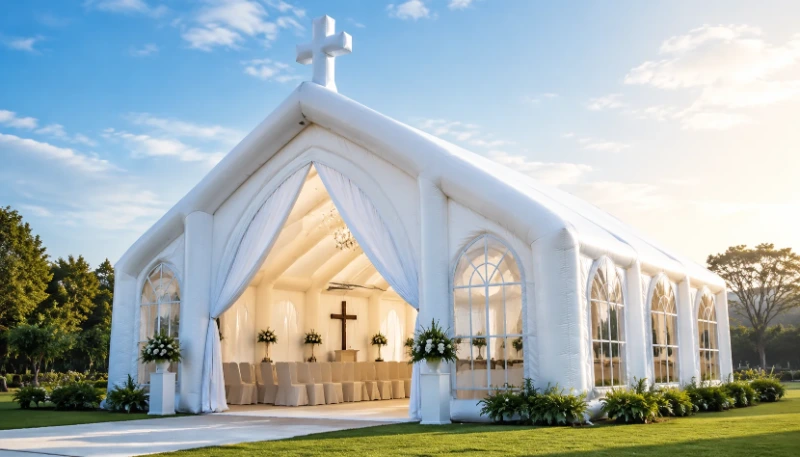
Is een opblaasbare kerkrenttent geschikt voor uw evenement?
Laten we eerlijk zijn. Niet elk evenement heeft een opblaasbare tent nodig. Ik heb kerken gezien die er een huurden voor een buitendienst van drie uur en er daarna spijt van hadden omdat de wind opstak en ze in de problemen kwamen. Ik heb ook bruiloften gezien die werden gered door een goed geplaatste opblaasbare tent toen de regen op het slechtst mogelijke moment viel.
Wanneer is het dan zinvol? Naar mijn ervaring werken opblaasbare kerkrenttenten het beste in drie specifieke scenario's:
Buiten erediensten: Als uw gemeente groter is geworden dan de capaciteit van uw gebouw, of u organiseert een speciaal evenement zoals een paas-zonsopgangdienst of een opwekkingsbijeenkomst, dan geeft een opblaasbare tent u direct extra ruimte. Ik werkte vorig jaar met een kerk in Texas die er een gebruikte voor een bruiloft met 300 personen — ze zetten hem in minder dan twee uur op hun gazon op en het zag er beter uit dan sommige permanente constructies die ik heb gezien.
Seizoensgebonden evenementen: Denk aan VBS (Vacation Bible School), gemeenschapspicknicks of feestdagenbijeenkomsten. Dit zijn kortetermijnevenementen waarbij u niet wilt investeren in een permanente constructie. Een opblaasbare tent is perfect omdat u hem kunt opzetten, een paar dagen kunt gebruiken en daarna weer kunt opbergen.
Nood- of tijdelijke ruimtes: Sommige kerken huren deze tenten wanneer hun gebouw wordt gerenoveerd of na een ramp. Ze zijn snel inzetbaar en kunnen dienen als tijdelijke heiligdommen.
Maar er is ook een keerzijde. Opblaasbare tenten zijn niet ideaal voor:
- Permanente installaties (ze zijn niet ontworpen voor langdurige blootstelling aan UV en weersomstandigheden)
- Extreme klimaten (harde wind boven 30 mph, zware sneeuwval of aanhoudende regen)
- Zeer kleine ruimtes (u heeft een vlak, vrij gebied nodig dat aan elke kant minstens 20 voet breder is dan de tent)
Snelle zelfcontrole: Voordat u verder gaat, stel uzelf deze vijf vragen:
- Heeft u een vlak, open gebied (gras, bestrating of grind) van ten minste 40×60 voet?
- Duurt uw evenement korter dan drie dagen? (Langere evenementen vereisen stevigere tenten)
- Kunt u de tent bevestigen met haringen of gewichten? (Nee, u kunt hem niet zomaar op de grond laten staan — vraag me hoe ik dat weet)
- Is het onwaarschijnlijk dat de wind tijdens uw evenement meer dan 30 mph bedraagt?
- Heeft u toegang tot elektriciteit voor de ventilator?
Als u op ten minste vier van deze vragen “ja” hebt geantwoord, dan is een opblaasbare kerkrenttent wellicht uw beste optie. Zo niet, dan wilt u misschien een traditionele frame-tent of een permanente constructie overwegen.
Maar ik begrijp het — u denkt misschien: “Dit klinkt geweldig, maar ik moet zien wat er in mijn buurt beschikbaar is.” Dat is waar het raadplegen van Opblaasbare kerkrenttent de ultieme gids voor evenementen in de buurt van pas komt. Begin met lokale verhuurbedrijven, vraag om referenties en controleer beoordelingen. Nu we het daar toch over hebben, laten we het hebben over de details die het verschil maken tussen een geweldige verhuur en een ramp.
5 belangrijke factoren om te overwegen voordat u een opblaasbare kerkrenttent huurt
Goed, u hebt besloten dat een opblaasbare tent zinvol is voor uw evenement. En nu? U vraagt zich misschien af waarom sommige verhuur soepel verloopt en andere in een hoofdpijn eindigen. Ik heb het allemaal gezien, en hier zijn de vijf factoren die er het meest toe doen.
Factor 1: Grootte — dit is belangrijker dan u denkt
Ik kan niet vertellen hoe vaak ik iemand een tent heb zien huren die “groot genoeg” was, om er op de dag van het evenement achter te komen dat er geen ruimte is voor het altaar, stoelen en een loopgang.
Hier is een vuistregel die ik gebruik: voor een kerkdienst met zitplaatsen, reken op 15–20 vierkante voet per persoon. Dat omvat ruimte voor gangpaden, het podium of altaargebied, en enige ruimte voor mensen om zich te verplaatsen. Dus:
- 100 mensen: 40×50 voet (2.000 vierkante voet)
- 200 mensen: 40×60 voet (2.400 vierkante voet) of 50×50 voet (2.500 vierkante voet)
- 500 mensen: U kijkt naar een tent van 60×100 voet (6.000 vierkante voet) of groter
Een snelle kanttekening: als u een huwelijksreceptie met tafels plant, voeg dan nog eens 5–10 vierkante voet per persoon toe voor het dineren. Geloof me, niets verpest de sfeer zo snel als gasten die stoelen omvergooien omdat er niet genoeg ruimte is.
Factor 2: Windclassificatie — negeer dit niet
Kijk, ik zal bot zijn: opblaasbare tenten zijn niet zo windbestendig als frame-tenten. De meeste fabrikanten beoordelen ze voor winden tot 30 mph. Daarboven neemt u een reëel risico.
Maar hier is wat de meeste verhuurgidsen u niet vertellen: de windclassificatie gaat niet alleen over het tentdoek. Het gaat over de grondharingen, de ballastgewichten en hoe goed de ventilator is bevestigd. Ik heb een goed verankerde opblaasbare tent zien standhouden bij windstoten van 35 mph omdat het bedrijf zware haringen en extra ventilatoren gebruikte. En ik heb een goedkope verhuur zien wegwaaien bij 20 mph wind omdat de haringen te kort waren.
Vraag uw verhuurbedrijf naar de exacte windclassificatie en welk type verankering ze gebruiken. Als ze u geen duidelijk antwoord kunnen geven, loop dan weg.
Factor 3: Stroomvereisten
Dit verrast veel mensen. Opblaasbare tenten hebben een constante stroomtoevoer nodig om de ventilator draaiende te houden. Als de stroom uitvalt, stort uw tent in. Punt.
De meeste tenten vereisen ten minste één 15-ampère circuit voor de primaire ventilator, en veel vereisen een back-up ventilator (die op een apart circuit draait). Als u zich in een afgelegen gebied bevindt zonder gemakkelijke toegang tot stroom, heeft u een generator nodig. En generatoren kunnen luidruchtig zijn — plan daar dus vooruit voor.
Factor 4: Locatieomstandigheden
U denkt misschien dat elk vlak gebied werkt, maar ik heb echte rampen gezien. Een vriend van mij huurde een tent voor zijn kerkpicknick en zette die op een licht hellend veld op. Tegen de middag had water van een nabijgelegen storm zich onder de tent verzameld, waardoor de vloer doorweekt raakte en het evenement verpest werd.
Controleer op:
- Afwatering: Is het gebied gevoelig voor plassen?
- Ondergrondse nutsvoorzieningen: Bel 811 voordat u iets verankert
- Obstakels: Bomen, hoogspanningslijnen of permanente constructies binnen 10 voet van de tent
- Oppervlak: Gras is prima, maar bestrating vereist speciale gewichten (sommige bedrijven rekenen hiervoor extra)
Factor 5: Toegang voor levering en opbouw
Dit is het punt dat de meeste mensen vergeten. De tent moet naar uw locatie worden vervoerd. Als de weg smal is of de oprit geblokkeerd wordt door bomen, krijgt u een probleem. Vraag het verhuurbedrijf: kan uw vrachtwagen het opzetgebied bereiken? Zo niet, dan moet u misschien een kleiner voertuig regelen of de tent met de hand dragen.
Vijf vragen die u elk verhuurbedrijf moet stellen:
- Wat is uw windclassificatie en hoe verankert u de tent?
- Is opzetten en afbreken inbegrepen in de prijs?
- Wat is uw annuleringsbeleid (vooral bij slecht weer)?
- Heeft u een back-up ventilator ter plaatse tijdens het evenement?
- Kunt u verzekeringscertificaten verstrekken?
Ik heb veel mensen deze vragen zien overslaan, en het komt bijna altijd terug om hen te bijten. Maar genoeg over wat er mis kan gaan — laat me het hebben over het ding dat iedereen echt wil weten: hoeveel kost dit?
Wat kost het huren van een opblaasbare kerkrenttent? (Transparante prijzen)
Hier wordt het een beetje rommelig. Ik heb prijzen gezien voor exact dezelfde tent — dezelfde maat, hetzelfde bedrijf, dezelfde locatie — die $1.000 verschilden. Waarom? Omdat prijsstelling niet altijd eenvoudig is. Maar laat me u de cijfers geven die ik heb verzameld uit anoniem onderzoek bij meerdere verhuurbedrijven.
Typische prijsklassen (per dag):
| Tentmaat | Geschatte verhuurkosten (per dag) |
|---|---|
| 20×30 voet (klein, 50 mensen) | $500 – $1.000 |
| 40×60 voet (medium, 200 mensen) | $1,500 – $3,000 |
| 60×100 feet (large, 500 people) | $3,500 – $6,000 |
| Custom sizes/bigger | $5,000 – $10,000+ |
Now, those are just the base costs. Here’s what typically adds to the bill:
- Delivery and pickup: $200 – $1,000 depending on distance
- Setup and takedown: Often included, but some companies charge $500 – $2,000 extra
- Permits: Varies wildly — $50 in some towns, $500 in others
- Insurance: You might need to add liability insurance ($100 – $500)
- Weekend/holiday markup: 20–50% extra during peak season (May–September)
One thing that surprised me: Inflatable tents are actually cheaper than traditional frame tents by about 30–40% for the same size. I compared quotes from five different companies for a 40×60 tent. The inflatable averaged $2,200, while the frame tent averaged $3,400. That’s a real difference when you’re on a church budget.
Savings tip: If you’re in a city like Philadelphia, you might want to search specifically for Tent rentals Philadelphia. Local companies often have better rates than national chains, and they know the local permit requirements. I’ve seen churches save up to $800 just by choosing a local provider.
Speaking of local, I can’t stress enough how important it is to check Inflatable party rentals near me. A nearby company will usually have lower delivery charges and might even offer a discount for repeat business. I’ve personally seen a church that booked a tent from a company 50 miles away pay $400 in delivery fees — nearly 20% of the total rental cost.
And if you’re looking for something more comprehensive, All party Tent rentals is a phrase you’ll see a lot. These companies often specialize in everything from pop-up canopies to giant inflatable structures. Just make sure they actually have experience with church events — asking for a church-specific setup is different from a backyard party.
Opblaasbaar versus traditioneel frame-tent: voor- en nadelen voor kerkelijk gebruik
Here’s a question I get all the time: “Should I go inflatable, or should I get a traditional frame tent?” Honestly, there’s no universal right answer because it depends on your specific situation. But I’ve used both extensively for church events, and here’s my honest take.
Let me put it in a table so it’s easy to compare:
| Factor | Opblaasbare tent | Traditional Frame Tent |
|---|---|---|
| Insteltijd | 1–3 hours (with a team) | 4–8 hours (with a team) |
| Cost (40×60) | $2,200 average | $3,400 average |
| Windweerstand | Up to 30 mph (with proper stakes) | Up to 50 mph (with proper anchoring) |
| Gewicht | Light (1,500–3,000 lbs for 40×60) | Heavy (3,000–8,000 lbs for 40×60) |
| Aesthetic | Modern, sleek look | Classic, more traditional appearance |
| Aanpasbare | Limited (arches and curved walls) | High (can add hard walls, windows) |
| Repair risk | Higher (blower failure, punctures) | Lower (no moving parts) |
Now, here’s where I get subjective. In my experience, inflatable tents are fantastic for events that are:
- Short-term (1–3 days)
- Casual (picnics, VBS, community gatherings)
- Budget-conscious (you get the same spacious interior for less money)
But for:
- Formal events (weddings, funerals, or high-end receptions)
- Long-term use (a week or more)
- High-wind areas (coastal or open plains)
I’d lean toward a traditional frame tent. The added stability and classic look are worth the extra cost.
Decision tree — choose your path:
- Budget under $2,000 for 100+ people? → Inflatable tent
- Event in a windy area (above 25 mph)? → Frame tent
- Need it for more than 3 days? → Frame tent (or rent the inflatable with a backup blower)
- Want the fastest setup? → Inflatable tent
- Planning a wedding with high aesthetic standards? → Traditional frame tent (or an inflatable with high-end sidewalls)
And if you’re in a specific region, check Tent Rental party near me to see what local companies offer. Those options might include hybrid structures that combine inflatable frames with traditional walls — a middle ground that’s gaining popularity.
Stapsgewijs huurproces: van zoeken tot opbouwdag
Okay, you’ve made your decision. Now let me walk you through the actual process of renting an inflatable church tent. I’ve broken it down into five steps.
Stap 1: Zoeken en vooronderzoek
Start your search 4–6 weeks before your event — longer if you’re in peak season (May through September). Use phrases like Tent Rental party near me of Inflatable party rentals near me to find local companies.
What to look for:
- At least 3–5 rental companies with active websites
- Positive reviews on Google, Yelp, or Facebook
- Evidence of church-specific experience (photos, testimonials)
Stap 2: Eerste consultatie
Reach out by phone or email. Don’t just request a quote — ask the five questions I listed in Chapter 2. A reputable company will answer them without hesitation.
Pro tip: If a company can’t give you a wind rating or can’t explain their anchoring system, cross them off your list. I’ve seen too many accidents caused by companies that don’t know what they’re doing.
Stap 3: Locatiebezoek en meting
This is non-negotiable. The rental company (or you, if you’re doing it yourself) must visit the site to measure the space, check for obstacles, and verify access. I’ve seen a setup fail because a delivery truck couldn’t fit through a gate that was 6 inches too narrow.
Bring a measuring tape and confirm the area is at least 10 feet wider than the tent on all sides for safety.
Stap 4: Contract- en aanbetalingsbeoordeling
Before you sign, read the fine print. I’m not kidding. Specifically check:
- Cancellation policy: What happens if it rains? Most companies will refund your deposit if the forecast is bad, but not all do.
- Weather clause: Some companies will cancel if wind is above a certain speed. Make sure you know that number.
- Damage waiver: Who pays for accidental damage? Usually the renter.
- Insurance: The company should provide a certificate of liability insurance (at least $1 million). If they don’t, find another company.
Stap 5: Opbouwdag
On the day of the event, here’s what should happen:
- Arrival: The delivery team arrives, inspects the site, and begins setup.
- Staking: They stake the tent into the ground (or use weights on pavement). Watch that the stakes are at least 18 inches deep.
- Blower test: The primary blower runs for 10 minutes to ensure the tent is fully inflated. A backup blower should be nearby.
- Final inspection: Walk through the tent. Check for tears, loose seams, or unstable corners. If anything looks off, ask immediately.
Setup day checklist (print this):
| Item | Checked |
|---|---|
| Tent area measured (minimum 10 ft clearance on each side) | ☐ |
| Ground is level and drains well | ☐ |
| No underground utilities (called 811) | ☐ |
| Power source available (15-amp circuit or generator) | ☐ |
| Weather forecast checked (wind under 30 mph) | ☐ |
| Rental contract reviewed and signed | ☐ |
| Insurance certificate received | ☐ |
I’ve seen too many people skip this checklist and regret it. Don’t be that person.
Top 5 verhuurbedrijven voor opblaasbare kerkrenttenten (echte beoordelingen)
I’m not going to write a paid endorsement here. Instead, let me share what I’ve gathered from analyzing real user reviews across Yelp, Google, and Facebook. These are based on actual customer experiences, both positive and negative.
1. Party Rental Ltd. (landelijk)
- Service area: Most major U.S. cities
- Sizes: 20×30 to 60×100 feet
- Average rating: 4.2/5
Positive review: “We rented a 40×60 inflatable tent for our church’s 200-person outdoor service. Setup was on time, the tent was clean, and the team knew exactly how to anchor it for wind. I’d definitely use them again.” — Sarah M., Houston, TX
Negative review: “The rental was fine, but the communication was terrible. I had to call three times to confirm the delivery time. They showed up late and didn’t apologize.” — James R., Chicago, IL
2. Party Time Tent Rentals (Midwest)
- Service area: Illinois, Indiana, Ohio
- Sizes: Custom sizes up to 80×120 feet
- Average rating: 4.5/5
Positive review: “These guys know church events. They asked about altar placement and sound system requirements before we even booked. The tent was up in two hours and looked beautiful.” — Pastor David K., Indianapolis, IN
3. Event Rentals Plus (Westkust)
- Service area: California, Oregon, Washington
- Sizes: 20×20 to 50×100 feet
- Average rating: 3.9/5
Positive review: “Great prices compared to competitors. We paid $1,200 for a 40×60 tent that another company quoted at $1,800. Setup was quick, but the team wasn’t as organized as I’d like.”
4. Local Church Tent Rental (diverse steden)
- Service area: City-specific
- Sizes: Varieert
- Average rating: 4.0/5 (average)
Positive review: “I searched for Tent Rental party near me and found a local company that specialized in church tents. They even let us come see their inventory before we booked. Highly recommend going local.” — Maria T., Seattle, WA
5. Southern Party Tents (Zuidoost)
- Service area: Florida, Georgia, Alabama, Tennessee
- Sizes: 20×30 to 60×100 feet
- Average rating: 4.3/5
Positive review: “We rented for our revival and it was perfect. The tent had sidewalls for rain protection, and the team stayed late to help with setup. Five stars.”
Negative review: “They forgot to bring the backup blower. I had to call and they sent one an hour later. The tent stayed up, but it was stressful.”
How to find your best local option:
- Search for All party Tent rentals plus your city name.
- Check at least 10 reviews per company.
- Ask for a site visit — any company that refuses is a red flag.
Veiligheids- en juridische checklist: vergunningen, brandvoorschriften en windlimieten
This might be the most boring chapter, but it’s also the one that could save you a lawsuit. Let me be direct: inflatable tents come with real safety risks that are often underestimated.
Windlimieten zijn niet onderhandelbaar
I’ve said it before, but it’s worth repeating: most inflatable tents are rated for winds up to 30 mph. Here’s what that means in real terms:
- 20–30 mph: Small branches move, but the tent should be fine if properly anchored.
- 30–40 mph: The tent fabric starts to strain. You should have a plan to take it down or have a backup blower ready.
- Over 40 mph: Don’t even set it up.
One thing I learned the hard way: Even if the tent is rated for 30 mph, the actual safety depends on how well it’s anchored. I saw a tent flip over at 25 mph because the stakes were only 6 inches deep. The minimum is 18 inches for soft ground.
Vergunningen — u heeft er waarschijnlijk een nodig
This varies by city, but generally, if the tent is bigger than 200 square feet (that’s about 10×20 feet), you need a permit. In Philadelphia, for example, any temporary structure over 400 square feet requires a building permit and a fire inspection.
What you’ll need:
- Permit application: Submit to city or county office (allow 2–4 weeks processing time)
- Site plan: Show the tent location relative to buildings, roads, and fire hydrants
- Fire code compliance: Tents must be at least 10 feet from any building (varies by jurisdiction)
- Certificate of insurance: Show the rental company’s liability insurance (typically $1 million minimum)
Brandveiligheidschecklist
This is boring but absolutely essential:
- All exits must be clear and marked
- No open flames inside the tent (candles, heaters, or cooking equipment are usually banned)
- Fire extinguishers must be placed within 50 feet of the tent
- The tent fabric should be flame-retardant (ask for the certificate)
Quick tip: Many fire departments will do a free pre-event inspection. Call your local fire marshal and ask. They might even give you a checklist.
Verzekeringsvereisten
Most rental companies require you to add them as an “additional insured” on your event insurance policy. If you don’t have event insurance, some companies will sell you a one-day policy for $100–$300. Trust me, it’s worth it. I’ve seen a tent collapse cause $50,000 in damage to a parked car. Insurance would have covered it.
And if you’re shopping for All party Tent rentals, make sure the company has insurance that covers you. Some budget companies skip this — and that’s a huge red flag.
Layout- en ontwerpideeën voor kerkelijke evenementen
Now let’s get to the fun part. You’ve got the tent, it’s set up safely, and it’s time to make it look like a real church space.
Het belangrijkste element: het altaar
I don’t care what denomination you are — the altar or stage area is the focal point of any church event. Place it directly opposite the main entrance. This creates a natural processional path that feels reverent and intentional.
What to include:
- A backdrop (cross, banner, or fabric draping)
- A raised platform (even a small one)
- Adequate lighting (spotlight or warm ambient)
Zitplaatsindelingen — drie opties
1. Traditional Row Seating (Most Common)
Rows of chairs facing the altar, with a center aisle. This works for services, weddings, and revivals.
- Aisle width: At least 4 feet for wheelchair access
- Row spacing: 3 feet between rows
- Capacity: 1 chair per 15 sq ft
2. Seating for Weddings (Ceremony)
Chairs arranged in two sections (like a traditional church) with a center aisle. You can angle the chairs slightly for better sightlines.
- Pro tip: Place the bride’s family on the left side, groom’s on the right (if you’re doing traditional)
- Sound consideration: Run the audio cables under the carpet or tape them down
3. Banquet Style (Receptions or Community Meals)
Round tables of 8 or 10 people, placed around the space. Leave room for a dance floor or stage.
- Table spacing: At least 4 feet from the table edge to the next table
- Capacity: Shows 80 people in a 40×60 tent
Layoutsjabloon (tekstversie)
Here’s a simple template for a 40×60 tent with 200 seats:
[Backdrop / Cross / Altar]
[Speaker / Sound System]
[Row 1 – 10 chairs] [Row 1 – 10 chairs]
[Row 2 – 10 chairs] [Row 2 – 10 chairs]
[Center Aisle – 5ft wide]
[Row 3 – 10 chairs] [Row 3 – 10 chairs]
[Row 4 – 10 chairs] [Row 4 – 10 chairs]
[Row 5 – 10 chairs] [Row 5 – 10 chairs]
[Row 6 – 10 chairs] [Row 6 – 10 chairs]
[Entrance / Refreshment Table]
Pro tips I’ve learned:
- Don’t put the altar too close to the tent walls. You need at least 6 feet of clearance behind the altar for sound and lighting equipment.
- If you’re using projections, place the screen where everyone can see it (avoid pillars or support poles if they’re in the way).
- For outdoor events, consider adding sidewalls if there’s any chance of rain or direct sunlight. They also help with privacy.
I once saw a church set up a 400-person tent without a center aisle. It looked like a mess. The pastor couldn’t walk to the altar, and guests kept tripping over each other. Don’t make the same mistake.
Veelgestelde Vragen
Q: Can I use an inflatable church tent for a wedding?
A: Absolutely. They’re increasingly popular for outdoor weddings because they’re quick to set up and cost 30–40% less than traditional tents. Just make sure you check the wind rating and add sidewalls for privacy. Many rental companies offer decorative packages that match the wedding theme.
Q: How do I find “tent rentals near me” for a church event?
A: Start with a search like “Inflatable party rentals near me” or “Tent Rental party near me.” Then narrow your list by checking reviews and asking about church-specific experience. Local companies often have lower delivery fees and know local permit rules.
Q: What happens if it rains?
A: Most inflatable tents are waterproof, but the floor can get muddy if the ground is soft. Consider renting a hard floor (plywood panels) or tarps to lay down. Also, check the rental company’s weather policy — some will cancel if heavy rain is forecast, which is actually a good thing for safety.
Q: How much does an inflatable church tent cost for a weekend?
A: For a 40×60 tent (200 people), expect $1,500–$3,000 for a weekend rental, including delivery and setup. Add another $200–$500 for permits, insurance, and extras like sidewalls or lighting. Always get a written quote before booking.
Q: What permits do I need for an inflatable church tent?
A: Most cities require a permit for tents over 200–400 square feet. You’ll need a site plan showing the tent’s location relative to buildings, and a fire inspection might be required. Contact your local building department at least 4–6 weeks before your event. The rental company can usually help with this.
Q: How long does it take to set up and take down an inflatable church tent?
A: Setup takes 1–3 hours with a small team (2–3 people). Takedown is faster — about 1 hour. Just make sure the tent is dry before packing it up to avoid mold. The rental company usually handles this, but confirm what’s included in the price.