You’ve got 15 minutes to set up your booth. Your competitor’s done in 5.
That’s the scene at nearly every trade show I’ve walked into over the past decade. One exhibitor is sweating through bent aluminum poles and tangled fabric. The other is already handing out brochures, their booth looking like some sleek, glowing structure that materialized out of thin air.
The difference is usually inflatable advertising tents at trade shows. I’ve spent years watching these air-filled structures go from novelty to mainstream in the event and exhibition industry, and honestly, the shift makes sense. But there’s a ton of confusion out there too — about costs, about wind ratings, about whether they’re actually worth the higher upfront price compared to a standard pop-up. So let’s cut through the marketing noise.
Snel antwoord
A 10×10 inflatable trade show tent typically sets up in 5 to 15 minutes with two people, one blower, and a standard power outlet. Larger 10×20 units usually run 20 to 30 minutes. Pop-up canopies are faster on paper but require more wrestling with poles and frames.
How Fast Is “Effortless Setup” Really?
Here’s where the marketing gets slippery. You’ll see “5 minutes” on one vendor page, “20 minutes” on another, and “30 minutes” somewhere else. Who’s lying?
Nobody, really. They’re just measuring different things.
The 5-minute claim usually refers to inflation time alone — the moment the blower kicks on to the moment the structure is fully rigid. That’s real. A quality 10×10 blow up tent can hit full pressure in about 5 minutes with a decent blower.
The 20-minute figure typically includes unrolling, positioning, staking, and securing. That’s the honest number most exhibitors should plan around.
The 30-minute claims? Those are usually for larger units, or they assume a single person doing everything alone. Setup alone is doable, but it’s slower and honestly kind of annoying with anything bigger than a 10×10.
So when someone asks me how fast inflatable advertising tents at trade shows really go up, I tell them: plan for 15 minutes with two people, and you’ll almost always beat your own estimate. The “effortless” part isn’t magic — it’s just fewer steps than a pole frame.
Inflatable vs. Pop-Up vs. Modular: Setup Time, Cost & Wind Rating
This is the comparison that actually matters when you’re standing in a crowded exhibition hall or an outdoor expo lot at 7 a.m.
| Type | Opbouwtijd (2 personen) | Typical Cost | Wind Rating | Branding Surface |
|---|---|---|---|---|
| Opblaasbare tent | 5–15 min (10×10) | $3,000–$5,000 | Depends on anchoring; needs staking or ballast | Full walls, roof, 360° print |
| Pop-up canopy | 5–10 min | $200–$800 | Low; frame bends in gusts | Valance and canopy top only |
| Modular frame tent | 30–60 min | $1,500–$4,000 | Moderate with proper ballast | Walls and panels, limited curves |
A few things jump out. Pop-ups win on price and pack size. Modular wins on rigidity per dollar. Inflatable trade show tents win on branding surface and visual impact — you get printable walls, roof, even curved shapes that no aluminum frame can match.
But here’s the honest trade-off nobody puts in the brochure: inflatables need continuous power for the blower. Pop-ups don’t. If your booth has no outlet, you’re hauling a generator, and that changes the math.
What Do Inflatable Trade Show Tents Actually Cost?
Let me give you the real range instead of “starts at.”
A commercial inflatable tent in the 10×10 range generally lands between $3,000 and $5,000 for a custom-printed unit. That’s the tent itself. Now add:
- Blower: often included, but a spare runs a few hundred dollars
- Shipping: inflatables pack into duffel-style bags, but they’re bulky and heavy — freight costs add up, especially for 10×20 units
- Spare parts: blower replacements, repair patches, extra stakes
- Opslag: you need dry, rodent-free space between shows
This is the part where people get burned. They budget for the tent and forget the ecosystem around it. Total cost of ownership over three years is what you should be comparing, not the sticker price.
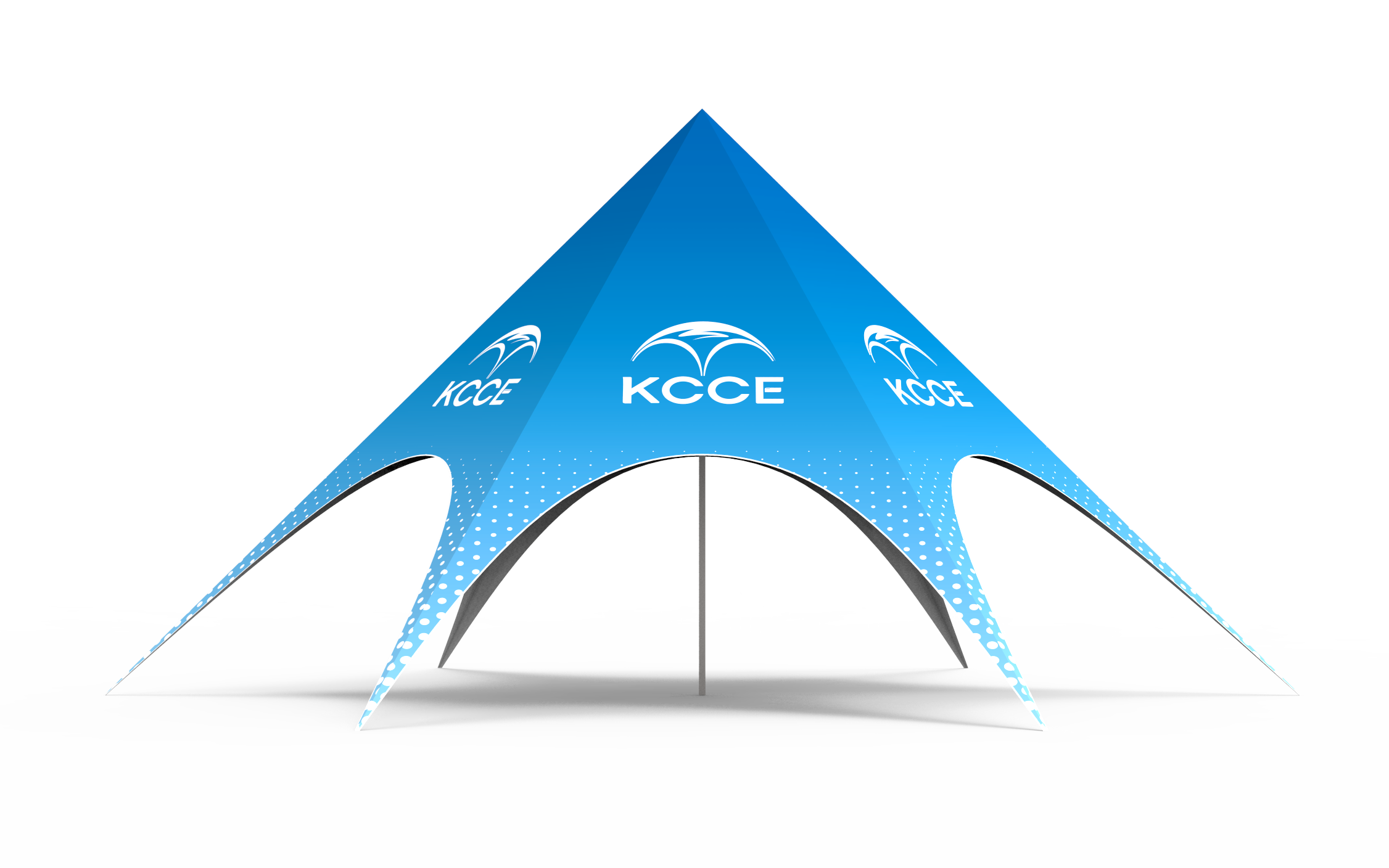
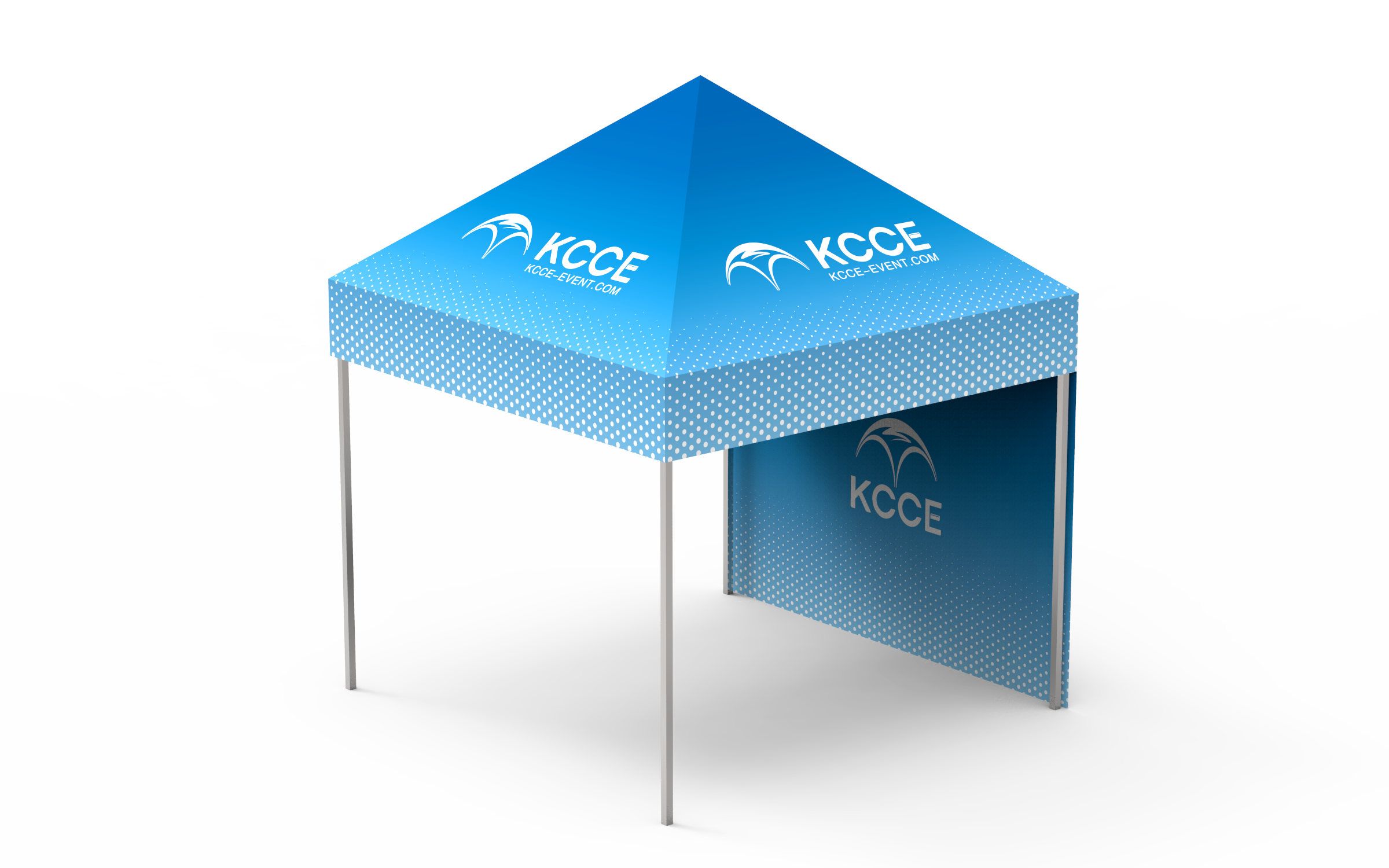
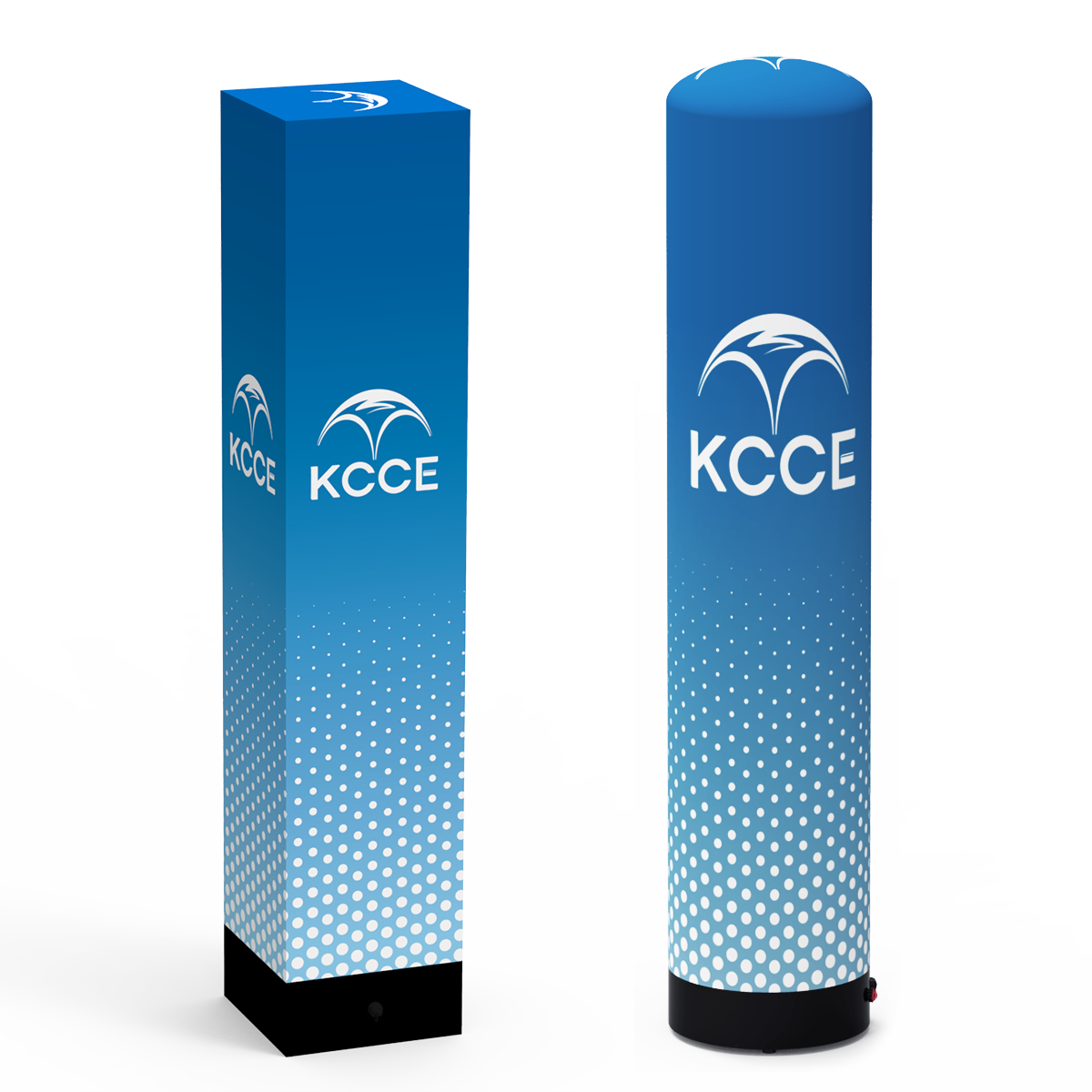
For context, KCCE (Dacheng outdoor products LTD.), a manufacturer that’s been building inflatable advertising products since 2006, ships internationally and states CE and RoHS compliance. Their trade show tent line includes 10×10 blow up marquee tents and modular gazebo designs — the kind of catalog you’d browse if you’re sourcing commercial inflatable tents for sale at volume.
Step-by-Step: Setting Up a 10×10 Inflatable Tent
This is the walkthrough I give clients. It’s the same process whether you’re indoors at a convention center or outdoors at a festival.
- Clear and measure your space. You need the footprint plus about 3 feet of working room on all sides. For a 10×10, plan for roughly 16×16 feet of usable floor.
- Unroll the tent on a clean surface. Don’t drag it across gravel — you’ll regret it.
- Position it where you want the final placement. Once inflated, it’s heavy and awkward to shift.
- Stake or ballast it. Indoors, use sandbags or water weights. Outdoors, stake every anchor point. This is non-negotiable — see the wind section below.
- Connect the blower to the inflation port and power it on. Watch the tubes fill evenly. Most 10×10 units reach full pressure in about 5 minutes.
- Secure the blower so it can’t be kicked or unplugged. Zip-tie the cord if you have to.
- Deflate and fold at teardown — reverse the process, let it collapse, fold along the seams, and bag it. Takes about 10 minutes.
That’s the whole thing. No poles, no swearing, no pinched fingers.
Wind Ratings and Outdoor Reality Check
This is where I get blunt with people, because it’s where booths get destroyed.
Inflatable tents don’t have a single universal wind rating the way a car has a top speed. It depends on anchoring, ballast weight, and the specific structure. What I can tell you from experience:
- Under 15 mph: fine with proper staking. This is normal outdoor show weather.
- 15–25 mph: doable with heavy ballast and constant monitoring. You should be nervous.
- Above 25 mph: pack it up. I don’t care what the spec sheet says. An inflatable is a sail, and a sail with a blower attached becomes a very expensive kite.
Failure modes are predictable: anchor points pull out first, then seams stress, then the whole thing folds sideways. The blower keeps pumping the entire time, which actually makes it worse.
Indoor shows have their own issues. Blower noise is real — think small vacuum cleaner running all day. Some venues restrict it. And ceiling height matters: a 10×10 inflatable might need additional clearance once inflated, so check before you commit.
Power access is the other killer. You need a dedicated outlet within cord reach. Extension cords across a show floor are a tripping hazard and often banned.
When Inflatable Beats Pop-Up (And When It Doesn’t)
I’ll give you my honest take, because this is where most buyers waste money.
Inflatable wins when:
- Branding surface is your priority. Full-wall, full-roof print is a different league than a canopy valance.
- You’re outdoors and want something that reads from 100 feet away.
- You exhibit repeatedly and want a structure that survives multiple seasons.
- You want trade show tents that attract attention and win crowds — the photo-op factor is real.
Pop-up wins when:
- Budget is tight. A $400 canopy and a $4,000 inflatable are not the same purchase.
- You swap booth configurations constantly indoors and need something a single person can throw up in 5 minutes.
- The venue has strict rules about power, noise, or structure type.
Here’s a hard truth from the social side of this industry: lots of event organizers mandate a plain white 10×10 canopy. If that’s your show, an inflatable might not even be allowed. Check the exhibitor rules before you spend a dollar.
Best Commercial Inflatable Tent Options
Since I can’t put fake model names in a table, here’s how I’d actually shop the category — and what’s out there.
The real product landscape includes 10×10 blow up marquee tents built for outdoor events, modular gazebo tents with customizable graphics, and 3×3 and 4×4 modular air-filled advertising tents with custom logo options. KCCE’s catalog covers exactly this spread — marquee tents, modular canopy gazebos, and event-specific advertising tents for marathons and sports exhibitions. That’s a good benchmark for what a serious commercial range looks like.
When you’re comparing options, ask for:
- Tube diameter and material (thicker is more stable)
- Blower CFM and noise rating
- Whether the print is dye-sublimation or UV
- Anchor point count
- Warranty on seams and blower
If a vendor can’t answer those five questions, walk.
Customization and Branding Tips for Maximum Impact
The single biggest advantage of an inflatable trade show tent is that almost every square inch is printable. I’ve seen exhibitors waste it by treating the walls like a billboard and cramming in a logo, a slogan, three product photos, and a QR code. Don’t.
What actually converts: one dominant brand color on the roof (visible from across the hall), a single high-contrast logo on the front wall, and a clean tagline at eye level — roughly 48 to 60 inches off the ground. Dye-sublimation printing holds color better than screen printing on PVC, and it won’t crack when the tent flexes during inflation.
A few practical moves I’ve watched work:
- Full-bleed roof graphics so the tent reads as a landmark from 100+ feet away.
- Removable velcro banner panels on the walls, so you can swap messaging per show without reprinting the whole tent.
- Zippered window cutouts with clear PVC — lets light in, keeps the “tent” feel from becoming a cave.
- Interior ceiling print in a light color; dark interiors kill the perceived size of a 10×10.
Match your RGB brand colors to the printer’s CMYK profile before you sign off on the proof. I’ve seen a “corporate red” come back orange because nobody checked.
Materials, Durability, and Weather Resistance Compared
Two materials dominate: 210D oxford polyester with PU coating en 0.4mm–0.6mm PVC-coated tarpaulin. Oxford is lighter (a 10×10 packs around 40–55 lbs), cheaper, and fine for indoor halls. PVC is heavier for the same size, abrasion-resistant, and the one you want outdoors.
UV resistance is measured by the coating, not the fabric. Look for UV-treated PVC of continuous sun exposure. Cheap oxford tents fade visibly within one outdoor season; good PVC holds color for 3–5 years with rotation.
Weather-wise, most commercial inflatables are rated for sustained winds with proper anchoring, and should be deflated above that. Water resistance: a 0.4mm PVC wall handles a steady rain fine; seams are the weak point, so specify heat-welded seams over stitched-and-taped for anything outdoor.
Cost Analysis: Rental vs Purchase for Trade Shows
Rough math I use with clients. A custom-printed 10×10 inflatable runs $3,000–$5,000 purchased. Rental for the same unit is typically $600–$1,200 per show, including delivery and setup in some markets.
That means the break-even is usually 3 to 5 shows. If you exhibit fewer than three times a year, rent. More than that, buy — you’ll also get to keep your exact artwork on file instead of re-approving proofs every time.
Hidden costs on the rental side: damage deposits, cleaning fees, and the fact that you’re often getting a generic stock design unless you pay a customization premium. On the purchase side: storage, blower maintenance, and shipping between shows.
One more angle — if you buy, you can sub-rent it to other exhibitors in non-competing industries during your off weeks. I know two small agencies that cover nearly half their tent cost this way.
Common Setup Mistakes and How to Avoid Them
I’ve watched the same five mistakes kill setups for years.
- No dedicated 110V circuit for the blower. A blower pulls a moderate amount of current. Plug it into a shared strip with a coffee machine and you’ll trip the breaker mid-show. Ask the venue for a dedicated circuit.
- Skipping ballast indoors. Venues often forbid staking into the floor. Use water ballast bags — a minimum weight per leg — or weighted bases.
- Inflating before positioning. Inflate the tent flat where you want it, not in the aisle and then drag it. You’ll scuff the print.
- Forgetting the backup blower. Blowers fail. A $200 spare has saved more shows than any insurance policy.
- Zipping every wall closed. A fully sealed tent becomes a wind sail and a heat trap. Leave one wall open or use mesh panels.
Maintenance, Storage, and Longevity Tips
A well-cared-for inflatable lasts 5–8 years; a neglected one dies in two.
After every show: inflate fully, wipe down with mild soap and water, let it dry completely — moisture is what grows mildew in storage. Never fold a damp tent. Repair small punctures immediately with the PVC patch kit; a 1-inch tear becomes a 6-inch tear after one inflation cycle.
Store it loosely folded in a breathable duffel, not vacuum-compressed. Keep it off concrete floors (moisture wicks up) and away from rodents — I’ve seen a $4,000 tent turned into nesting material in one winter. A sealed plastic bin with desiccant packs is cheap insurance.
Blowers need their intake filters cleaned regularly during use. That alone extends blower life by years.
Creative Inflatable Ideas to Attract Crowds
The tents that get photographed are rarely just tents. A few formats I’ve seen pull real crowds:
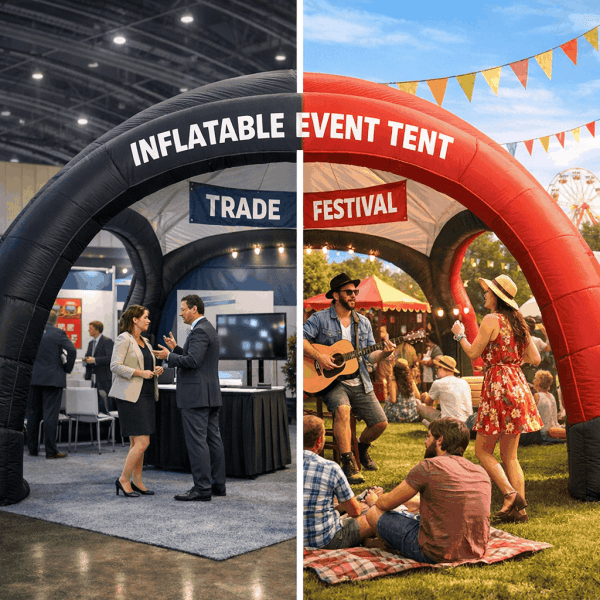
- Inflatable arches over the booth entrance — cheap, dramatic, and doubles as wayfinding.
- Giant product replicas — a 12-foot inflatable version of your product next to the real one. The scale contrast stops people.
- Inflatable mascots on a tether — moving objects draw eyes in a static hall.
- Inflatable seating pods — a lounge area inside your footprint keeps attendees in your space longer, which is what actually matters for lead capture.
- Curved inflatable backwalls — softer, more premium look than a flat printed wall, and they photograph better.
The rule I follow: one hero inflatable, one functional structure, and no more. Crowds come for the spectacle, but they convert because the booth is easy to walk into.
Conclusie
“Effortless setup” doesn’t mean magic. It means a blower, two people, and a power outlet — and about 15 minutes of actual work. Measure your booth space and confirm your power access before you buy anything. And ask yourself the real question: is 10 minutes saved worth $3K more than a pop-up? Sometimes yes. Sometimes you’re just buying a prettier sail.
Veelgestelde Vragen
Q: How long does it take to set up an inflatable trade show tent?
A: Plan for 5–15 minutes with two people for a 10×10 unit. Inflation itself takes about 5 minutes; the rest is positioning, staking, and securing the blower. Larger 10×20 tents typically run 20–30 minutes. If you’re setting up alone, add 50% to those estimates.
Q: Are inflatable tents good for trade shows?
A: Yes, if branding surface and visual impact matter more to you than pack size. They offer full-wall and full-roof printing that pop-ups can’t match. The catch is you need continuous power for the blower and enough ceiling clearance indoors — usually 11–13 feet for a 10×10.
Q: What size inflatable tent do I need for a trade show?
A: A 10×10 fits a standard booth footprint and works for most single-exhibitor setups. Go 10×20 if you need meeting space or a product display area. Remember to budget working room around the footprint — roughly 3 feet per side for setup.
Q: What do inflatable trade show tents cost?
A: Expect $3,000–$5,000 for a custom-printed commercial unit in the 10×10 range. Then add shipping, a spare blower, repair patches, and storage. Total cost of ownership over three years is the number that actually matters, not the sticker price.
Q: What wind rating do inflatable tents have?
A: There’s no single universal rating — it depends on anchoring and ballast. Under 15 mph is fine with proper staking. Between 15–25 mph requires heavy ballast and monitoring. Above 25 mph, pack it up. An inflatable is a sail, and the blower keeps feeding it.
Q: Can one person set up an inflatable tent alone?
A: Yes for a 10×10, but it’s slower and clumsier. You’ll spend more time repositioning and less time on the easy parts. Two people is the sweet spot for a 15-minute setup. For anything bigger, bring help.
Q: Do inflatable tents meet event organizer requirements?
A: Not always. Many organizers mandate a plain white 10×10 canopy, and some venues restrict blower noise or power access. Check the exhibitor rules before buying. A custom-printed inflatable may be a compliance problem at shows with strict structure rules.
Q: How do I store an inflatable tent between shows?
A: Deflate fully, fold along the seams, and bag it. Store it dry — moisture causes mildew, and rodents love the fabric. Keep the blower in a separate, sealed container. Done right, a quality tent lasts multiple seasons.
Referenties
1. Inflatable Trade Show Tents: Costs, Setup & Wind Ratings – kcce-event.com
2. Inflatable Tents Promotional Best Designs: A Complete Guide – kcce-event.com
3. 5 Tips for Optimizing Your Custom Tents Design & Visibility – instent.com
4. 5 Tips to Make Your Tent Stand Out at Events – medium.com