Snel antwoord
Online customization means you upload your logo and specs to a supplier’s design tool or quote form, they send back a digital proof and mockup, you approve it, and production starts. No email ping-pong required. You control size, shape, colors, print method, and accessories — all before you pay a cent.
So you’ve seen those giant inflatable tents at trade shows — the ones with a company logo wrapped across the entire canopy, looking like a building that somehow folded into a duffel bag. And you’ve probably wondered: can I actually design one of those myself, online, without a dozen phone calls and a sales rep breathing down my neck?
Short answer: yes. Longer answer: it depends on the supplier, and most buyers don’t even know the online customization process exists. That’s the gap I want to close here.
I’ve been sourcing and spec’ing inflatable advertising structures for years. I’ve watched buyers get burned by vague Alibaba listings, I’ve seen gorgeous dye-sublimation jobs come back looking like a photocopier exploded, and I’ve also seen a 13×13 tent package turn a no-name startup into the most photographed booth at a regional expo. The difference almost always comes down to how well the customization process was handled upfront.
This piece walks through the full workflow — from choosing sizes and uploading artwork to understanding real pricing and approving a digital proof. By the end, you’ll know exactly how to customize your inflatable advertising tent online and what to watch out for.
What Does “Customize Your Inflatable Advertising Tent Online” Actually Mean?
Let’s clear this up first, because the phrase gets thrown around loosely.
Traditional custom tent buying goes like this: you email a supplier, they email back asking for dimensions, you send a rough sketch, they quote you something vague, you negotiate for two weeks, and eventually — maybe — you get a rendering. It’s slow, and the back-and-forth kills momentum.
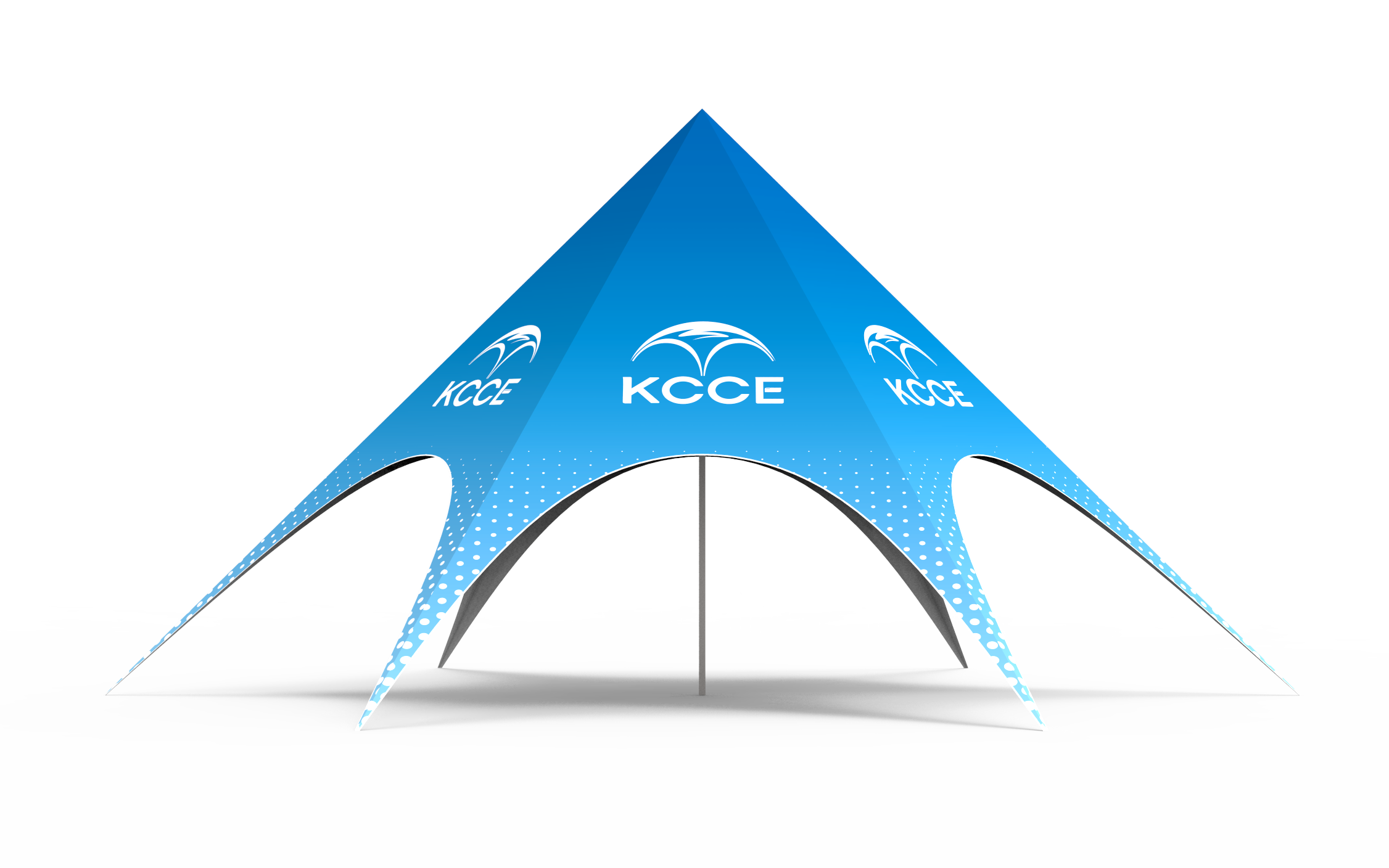
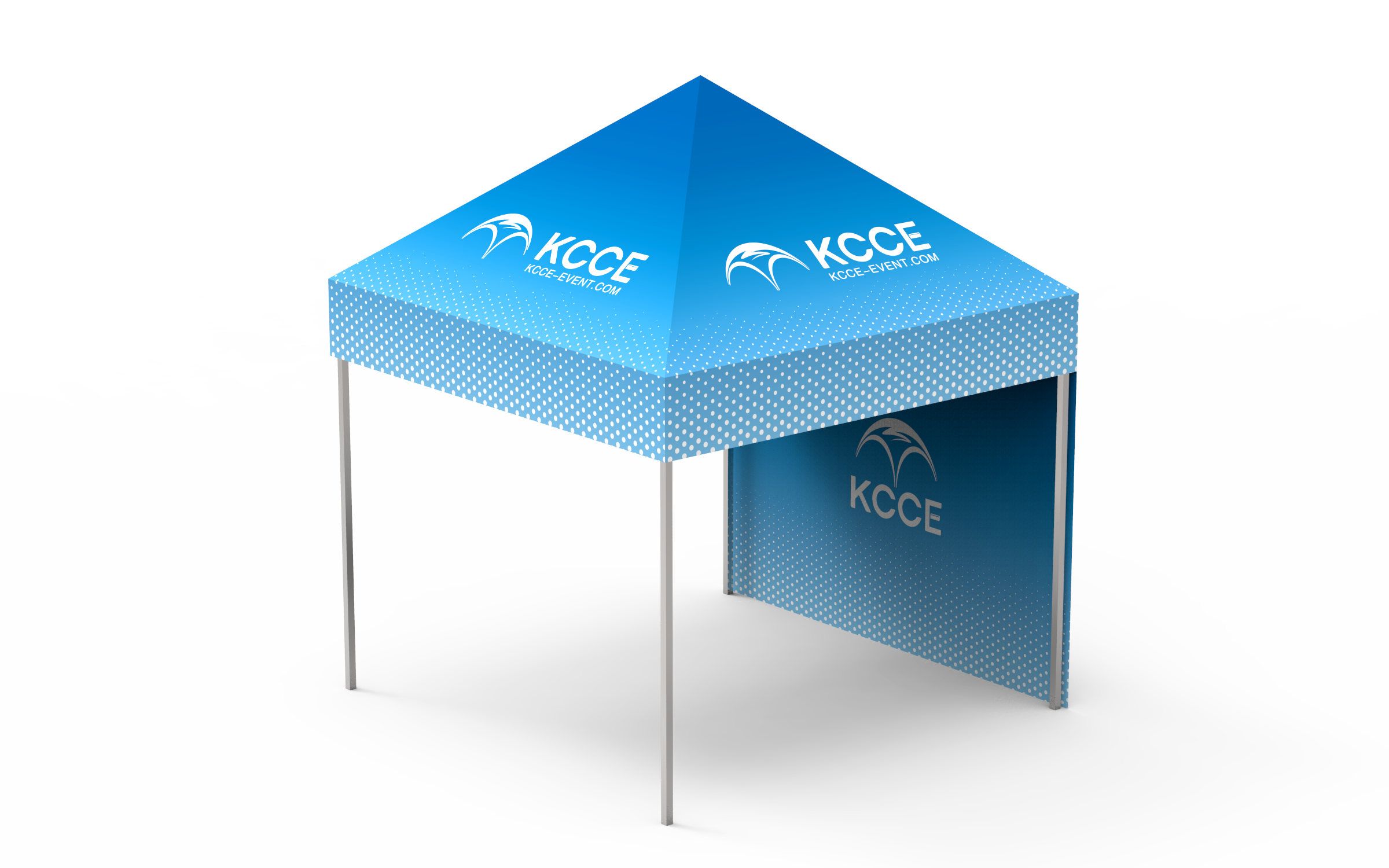
Online customization flips that. You go to a supplier’s site, pick a base model (say, a 13×13 inflatable tent package), specify your size, upload your logo or full artwork file, choose colors and print method, and submit. Within a day or two, you get a digital proof — a mockup showing exactly how your branding will sit on the tent. You request tweaks if needed. Once you approve, it goes to production.
What’s actually customizable? More than most people realize:
- Grootte — standard footprints like 10×10, 10×20, 20×20, or fully custom dimensions
- Vorm — square, rectangular, dome, gazebo-style, modular configurations
- Print — full-dye sublimation (edge-to-edge color) or vinyl transfer (logo-only)
- Colors — Pantone matching is common; you’re not stuck with stock hues
- Accessoires — walls, doors, windows, anchoring systems, carrying bags, blower specs
- Air beam design — the inflatable ribs themselves can be configured for different wind loads and setup preferences
Here’s the thing people miss: this isn’t just about slapping a logo on fabric. You’re specifying a promotional inflatable structure — a piece of event infrastructure that has to stand up to wind, rain, and hundreds of people brushing past it. The online process lets you control those engineering choices too, not just the pretty stuff.
Step-by-Step: How to Customize Your Inflatable Advertising Tent Online
Alright, here’s the actual workflow. I’ll use the typical process you’d see with a manufacturer that offers online design and proofing — KCCE, for example, runs this kind of setup through their Made-in-China storefront and direct catalog.
Step 1: Pick your base size and shape.
Start with footprint. A 10×10 works for a single vendor booth. A 10×20 gives you a proper storefront feel. If you’re doing a 17×17 inflatable tent package, you’re in “anchor the whole event” territory. Measure your booth space first — seriously, measure it. I’ve seen people order a 20×20 for a 10×20 slot and then panic.
Step 2: Choose your customization level.
Are you doing a full branded canopy (every panel printed) or just a logo on the valance? Full-wrap costs more but turns the tent into a billboard. Logo-only is cheaper and still effective if your brand mark is strong.
Step 3: Upload your artwork.
This is where most orders stall. Accepted file formats are typically vector files — AI, EPS, PDF, or high-resolution SVG. If you only have a JPG or PNG, most suppliers can work with it, but the print quality depends on resolution. A high-resolution file at full size is ideal. A low-resolution screenshot from your website? Not so much.
If you’re ordering custom inflatable work tents for a job site or field operation, same rule applies — clean vector logos print sharper and last longer.
Step 4: Review the digital proof and mockup.
The supplier sends back a rendering. Look at scale, placement, color accuracy, and whether the logo distorts across curved air beams. This is your one chance to catch problems before production. Ask for revisions — good suppliers expect it.
Step 5: Approve and go to production.
Once you sign off on the mockup, production starts. Typical turnaround is often a few weeks depending on complexity and order volume.
Step 6: Receive, inflate, verify.
When it lands, set it up before your event. Check seams, zippers, valve function, and print alignment. Better to find an issue in your warehouse than at 7 AM on show day.
Custom Inflatable Tent Pricing: What You’ll Actually Pay
Let’s talk money, because this is where the internet lies to you.
You’ll see Alibaba listings showing “$50–$200” for inflatable tents. Those are either tiny sample units, accessories, or outright bait listings. Real custom-printed tents cost more — and the price scales with size, print coverage, and material grade.
Here’s a rough framework based on what I’ve seen in the market:
| Size / Package | Aanpassingsniveau | Prijsklasse (USD) |
|---|---|---|
| 10×10 basic | Logo only, vinyl print | $600 – $1,200 |
| 10×10 premium | Full dye-sublimation, walls included | $1,200 – $2,500 |
| 13×13 package | Full print, modular design | $1,500 – $3,000 |
| 10×20 | Full branding, accessories | $2,500 – $5,000 |
| 17×17 package | Full wrap, premium Oxford fabric | $4,000 – $8,000 |
| 20×20 custom | Full customization, engineered air beams | $6,000 – $12,000+ |
Note: These ranges reflect general market observations and should be confirmed with a direct quote.
Why do Alibaba prices mislead? Because they often quote the base tent with zero printing, exclude shipping, and assume you’ll figure out the rest later. By the time you add full dye-sublimation, walls, a blower, and freight, the number has tripled. Always ask for an all-in quote.
De custom inflatable tent cost also depends on print method. Dye sublimation — where the ink bonds into the fabric — costs more upfront but won’t crack or peel. Vinyl transfer is cheaper but has a shorter lifespan, especially outdoors.
Sizes, Shapes, and Print Options Explained
Let’s get specific about what’s available, because inflatable advertising tent sizes aren’t one-size-fits-all.
Common footprints:
- 10×10 — the workhorse. Solo vendor booths, activation stations, registration tents.
- 10×20 — double-wide. Retail-style setups, product demo areas.
- 13×13 — a sweet spot for aangepaste evenementententen that need to feel substantial without dominating a space.
- 17×17 — large-format branding. You’re making a statement.
- 20×20 and custom — full event anchors. Concerts, festivals, major trade show presences.
Vormen: Square and rectangular are standard. Gazebo-style with peaked roofs adds visual height. Modular designs let you connect multiple units into a compound — great for trade shows and events where you need separate zones under one brand umbrella.
Print methods:
- Full-dye sublimation — the entire fabric panel is printed. Colors are vibrant, permanent, and cover every square inch. This is what you want for maximum brand impact.
- Vinyl print — logos and graphics are cut and heat-applied. Cheaper, faster, but limited to spot graphics.
Voor custom inflatable gazebo tents used in advertising events, dye sublimation is almost always the right call. The tent becomes a 360-degree branded environment.
Inflatable Tent vs. Pop-Up Canopy vs. Truss Tent
This comparison matters because buyers often default to pop-up canopies without realizing what they’re giving up.
| Kenmerk | Opblaasbare tent | Pop-Up Canopy | Truss Tent |
|---|---|---|---|
| Insteltijd | 10–20 min (inflate) | 5–10 min | 30–60 min |
| Windweerstand | High (engineered air beams) | Low to moderate | Hoog |
| Branding area | Full canopy + walls | Valance + top only | Frame + panels |
| Kosten | $$$ | $ | $$$$ |
| Draagbaarheid | Folds into bag | Folds into bag | Heavy, requires transport |
| Visual impact | Very high | Gemiddeld | High but industrial |
De inflatable tent vs canopy debate usually comes down to branding ambition. A pop-up canopy with a printed valance is fine for a farmers market. But if you’re trying to stop foot traffic at a promotional event or stand out across a crowded expo hall, the inflatable wins every time. It’s bigger, bolder, and reads as premium.
Truss tents are sturdy and professional, but they’re heavy and assembly is a project. Inflatables hit the sweet spot: substantial presence, reasonable setup, and full-surface branding.
Lead Time, Shipping, and Proofing: What to Expect
Custom tent lead time typically runs 2–4 weeks for production after proof approval. That’s standard across most manufacturers. Rush orders are sometimes possible but expect to pay for it.
Shipping depends on where you are and where the manufacturer is. Many inflatable tent manufacturers are based in China — KCCE, for instance, operates out of Dongguan and, according to the company, ships to many countries. Sea freight is cheapest but slow (3–6 weeks). Air freight is faster (5–10 days) but costs more. For urgent events, air is often worth it.
Proofing usually involves one or two rounds. You’ll get a digital mockup, request changes, and get a revised version. Don’t skip this step. I’ve seen buyers approve a proof on their phone screen, only to realize the logo was stretched when the physical tent arrived. Zoom in. Check proportions. Ask for a second look if anything feels off.
5. Materials & Workmanship: How Durability and Safety Are Ensured
The fabric spec is where cheap tents quietly fail. Ask for these numbers before you approve a proof.
Fabric: Most reputable suppliers use 210D or 420D Oxford polyester with a PU coating. For anything used more than a handful of times a year, insist on 420D with a high hydrostatic head rating. — that’s the point at which water stops wicking through the weave. Cheaper 210D without a coating will wet out in a single afternoon of rain.
Air beams: Look for 0.6–0.9mm PVC or TPU bladders inside the Oxford sleeve. TPU is often the better call in cold climates — it is generally reported to stay flexible in very cold conditions, while cheap PVC is commonly said to go stiff and crack in cold weather.
Stitching: Double-stitched, bar-tacked seams at every stress point (anchor D-rings, beam junctions, zipper ends). Single stitching on a 20×20 canopy is a warranty claim waiting to happen.
Safety and compliance: For the US market, ask for a flammability certificate to NFPA 701 (or CPA I-84 if it’s a camping-adjacent structure). For the EU, EN 13501-1 Class B-s1,d0 is the benchmark for eve nt textiles. For electrical components — blowers, LED kits — a CE mark and UL listing on the blower are non-negotiable if you’re plugging in at a public venue. Ask for the test report PDF, not just a claim on a spec sheet.
8. Installation, Dismantling, and Storage Guide
Inflatable tents are forgiving, but they’re not idiot-proof. Here’s the sequence that works.
Setup (2 people, roughly 15–25 minutes for a 13×13):
- Lay the deflated tent flat on a clean tarp — never on gravel or asphalt.
- Stake the four corners voor inflating. If you inflate first, the tent will walk in any breeze.
- Connect the blower to the inflation valve, zip it shut, and power on. Most 13×13 units inflate in a few minutes at typical low-pressure settings.
- Once upright, attach guy lines at 45° and tension them. Add sandbags at every leg if you’re on a hard surface.
- Do not exceed the rated pressure — over-inflation is the #1 cause of seam failure.
Dismantling: Power off the blower, open the valve, and let it deflate naturally. Don’t force the air out. Fold in thirds, then roll — never stuff it into the bag.
Opslag: This is where tents die. Store fully dry (residual moisture can encourage mildew growth quickly), in a breathable cotton or mesh bag — not a sealed plastic one. Keep it off concrete floors, away from UV light, at 5–25°C. A properly stored Oxford tent will often hold up for several years; one stored damp in a garage bin can become moldy in a single season.
9. Budget Considerations and Buying Advice
Real numbers, because vague quotes waste everyone’s time.
Typical 2024 pricing (custom-printed, FOB China):
- 10×10 single-wall, logo print: $380–$650
- 13×13 full package with walls and dye-sub canopy: $900–$1,600
- 20×20 modular with full branding: $2,800–$5,500
Add $150–$400 for ocean freight on a single tent, or $600–$1,200 for air freight if you need it in two weeks. Landed cost is usually 30–50% above FOB.
Where the money goes: Dye-sublimation printing is often a notable portion of the unit cost. If a supplier quotes you a fully printed 20×20 at a very low price, they may be using 210D fabric, single stitching, or both.
Buying advice:
- Always order a pre-production sample for orders over 10 units. It costs you one unit and saves you a container of wrong Pantones.
- Ask for the blower’s spare parts availability — a $40 blower with no replacement stock in your country is a $1,500 tent you can’t use.
- Negotiate payment terms (30% deposit / 70% on B/L copy is standard) before you negotiate price. A 5% discount means nothing if you’re wiring 100% upfront to a supplier you’ve never tested.
- For first orders, cap at 2–3 units. Prove the supplier’s proofing accuracy, print quality, and shipping reliability before you scale.
Using Online Design Tools and Configurators: A Practical Walkthrough
Most suppliers (KCCE, and the bigger Made-in-China storefronts) run one of two systems: a configurator or a quote-form-plus-proof workflow. Here’s how to drive both.
Configurator path:
- Select base model from a dropdown — this locks the footprint and beam layout.
- Choose print type. If you pick dye-sublimation, the tool will ask for a bleed of 20–30mm on every artwork edge.
- Upload artwork. Accepted formats are almost always AI, EPS, PDF, or high-res PNG at 150–300 DPI at 1:1 scale. A 72 DPI JPEG will get rejected or print blurry.
- Assign Pantone references — don’t trust on-screen RGB. Type in the Pantone C numbers manually.
- Position the logo on the mockup. The tool usually shows all four walls; drag-and-drop per panel.
- Submit. You’ll get an automated PDF proof within minutes and a human-refined proof within 24–48 hours.
Quote-form path: Same information, but you attach a spec sheet instead. Expect a proof in 1–3 business days.
Non-negotiable rule: Never approve a proof on a phone screen. Open it on a calibrated monitor or print it. Colors can shift between devices, and that’s the difference between your brand blue and someone else’s teal.
Long-Term Maintenance and Storage for Inflatable Tents
A tent that’s cleaned and stored correctly will outlast one that’s babied but stored wet. Here’s the routine.
After every event:
- Wipe down with lukewarm water and mild soap. No detergents, no solvents — they strip the PU coating.
- For bird droppings or tree sap, use a diluted vinegar solution (1:10) and rinse thoroughly.
- Dry completely — either air-dry fully inflated for 30 minutes in sun, or hang the fabric. Any dampness trapped in a fold becomes mildew in 2–3 days.
Every 6 months:
- Inspect all seams under bright light for pulled stitches or delamination.
- Check the blower’s filter and impeller. A clogged blower overheats and cuts out mid-event.
- Test-inflate for 10 minutes to confirm no slow leaks at the valves.
Storage conditions:
- Fold along original crease lines, then roll loosely. Sharp folds crack the PU coating over time.
- Store in the supplied breathable bag, in a dry room at 5–25°C and under 60% humidity.
- Keep away from: direct sunlight (UV can degrade Oxford fabric over time), concrete floors (moisture wicks), and rodents (they eat PU coating).
- For long-term storage over 6 months, add a silica gel pack inside the bag and re-check every quarter.
Repair kit to keep on hand: PU repair patches, a tube of seam sealer, spare D-rings, and a valve replacement kit. A small repair kit can save an expensive tent.
Performance Comparison Across Different Climate Conditions
Here’s how the same tent spec behaves in different environments — based on field reports and manufacturer test data.
| Condition | Wind rating (unstaked / staked) | Key risk | Mitigation |
|---|---|---|---|
| Calm indoor | N/A | Geen | Standard setup |
| Light breeze (0–15 km/h) | 30 km/h / 60 km/h | Minor sway | Corner stakes only |
| Moderate wind (15–40 km/h) | Not recommended / 60 km/h | Beam flex, panel flutter | All guy lines + 4x 25kg sandbags |
| High wind (40–60 km/h) | Do not deploy / 80 km/h rated | Seam stress, anchor pull-out | 8-point anchoring, evacuate if gusting |
| Heavy rain (>10mm/hr) | N/A | Water pooling on roof, seam wicking | 420D+ with 2,000mm HH; never use 210D |
| Snow load (>5cm accumulation) | N/A | Beam collapse | Deflate and store; inflatables are not snow-rated |
| Desert / high UV | N/A | Fabric fading, PU embrittlement | UV-treated Oxford, rotate panels, expect 2-year fabric life |
| Cold (-10°C to -30°C) | Reduced by ~20% | PVC bladder cracking | Switch to TPU bladders; never inflate frozen fabric |
The takeaway: A tent rated to a certain wind speed in temperate conditions may hold up to less in sustained cold, because PVC can stiffen and seams can lose elasticity. If you’re deploying in the Nordics, Canada, or high-altitude venues, spec TPU bladders and 420D from the start — it’s a cost premium that can help prevent a mid-event failure.
Veelgestelde Vragen
Q: How much does a custom inflatable advertising tent cost?
A: Pricing depends on size, print coverage, and material. A basic 10×10 with logo-only printing typically costs in the hundreds to low thousands of dollars, while a fully branded 20×20 with dye-sublimation can exceed several thousand dollars. Always request an all-in quote that includes printing, accessories, and shipping. Q: What’s the typical lead time for a custom tent order?
A: Production usually takes a few weeks after you approve the digital proof. Add shipping time on top — often several days by air, or several weeks by sea. If your event is less than six weeks out, confirm rush availability before ordering.
Q: What artwork file formats do suppliers accept?
A: Vector files are best — AI, EPS, PDF, or SVG. These scale cleanly to any tent size without pixelation. If you only have a JPG or PNG, make sure it’s at least 300 DPI at full print size. Low-resolution files will look blurry when blown up across a 20-foot canopy.
Q: Can I customize colors and branding on an inflatable tent?
A: Absolutely. Most manufacturers offer Pantone color matching, full dye-sublimation printing, and custom logo placement on every panel. You can also specify wall configurations, door positions, and even the color of the air beams themselves.
Q: Where can I use custom inflatable tents for maximum brand exposure?
A: Trade shows, outdoor festivals, product launches, sporting events, and pop-up retail activations. Anywhere you need a large, photogenic branded structure that draws a crowd. They’re especially effective as custom inflatable booth tents for trade shows & events where foot traffic competition is fierce.
Q: How do inflatable tents hold up in wind and bad weather?
A: Quality inflatable tents with engineered air beams handle wind well when properly anchored. The key is correct ballasting — use sandbags or ground stakes rated for your expected wind load. Cheap tents with thin air beams will flex and sag; premium models with reinforced ribs hold their shape. Always check the manufacturer’s wind rating.
Q: What’s the difference between an inflatable tent and a standard pop-up canopy?
A: Inflatable tents offer full-surface branding, higher wind resistance, and a more premium visual presence. Pop-up canopies are cheaper and faster to set up but limit your branding to a valance strip. For serious brand promotion, the inflatable is the stronger investment.
Q: Do I need to order a minimum quantity?
A: Most manufacturers, including KCCE, accept orders as low as one piece. Custom printing is available even for single units. That said, per-unit pricing drops significantly at higher volumes, so if you’re planning multiple events or a multi-location rollout, ordering together saves money.
Conclusie
Customizing your inflatable advertising tent online isn’t complicated — it’s just unfamiliar to most buyers. Pick your size, upload clean artwork, review the proof carefully, approve, and wait for production. The whole thing can happen in a week if you’re organized.
The real leverage is in the proofing step. That digital mockup is your safety net. Use it.
Ready to see your logo on a 20ft tent? Gather your vector artwork and request a quote today — most suppliers will send a free digital proof so you can see exactly what you’re getting before you commit a dollar.
Referenties
1. kcceinflatable.en.made-in-china.com – kcceinflatable.en.made-in-china.com
2. kcce-event.com – kcce-event.com