빠른 답변
An inflatable event tents manufacturer builds large-format air structures in-house — cutting, welding, printing, and pressure-testing fabric like PVC or Oxford cloth. Resellers don’t. The best inflatable event tents manufacturer will show you certifications (NFPA 701, EN 14960), a real wind rating, and a factory video before you pay a deposit.
If you’ve ever tried to buy an inflatable event tent, you know how this goes. You Google “inflatable event tents manufacturer,” and up comes a wall of “Top 10” lists that are. written by the manufacturers themselves. Every last one of them. No real pricing. No specs you can actually compare. Just “contact us for a quote.”
I’ve spent years on the sourcing side of this business, and I’ve watched buyers burn real money on tents that looked great in a photo and failed on day two of a festival. So let’s skip the fluff. Here’s how to actually vet an inflatable event tents manufacturer — the stuff those roundup posts won’t tell you.
What an Inflatable Event Tents Manufacturer Actually Does
First thing, and this trips up a lot of buyers: a manufacturer is not a reseller.
A real inflatable event tents manufacturer owns the production line. That means in-house fabric cutting, high-frequency welding (or heat sealing) of seams, large-format digital printing, and — critically — inflation and pressure testing before anything ships. If a supplier outsources all of that and just slaps a logo on a shipping box, you’re talking to a trading company, not a factory.
Why does it matter? Because when something goes wrong — a seam blows out, a zipper fails, a valve leaks — a factory can fix it and tell you exactly why it happened. A reseller usually can’t. They’ll forward your email to someone and hope for the best.
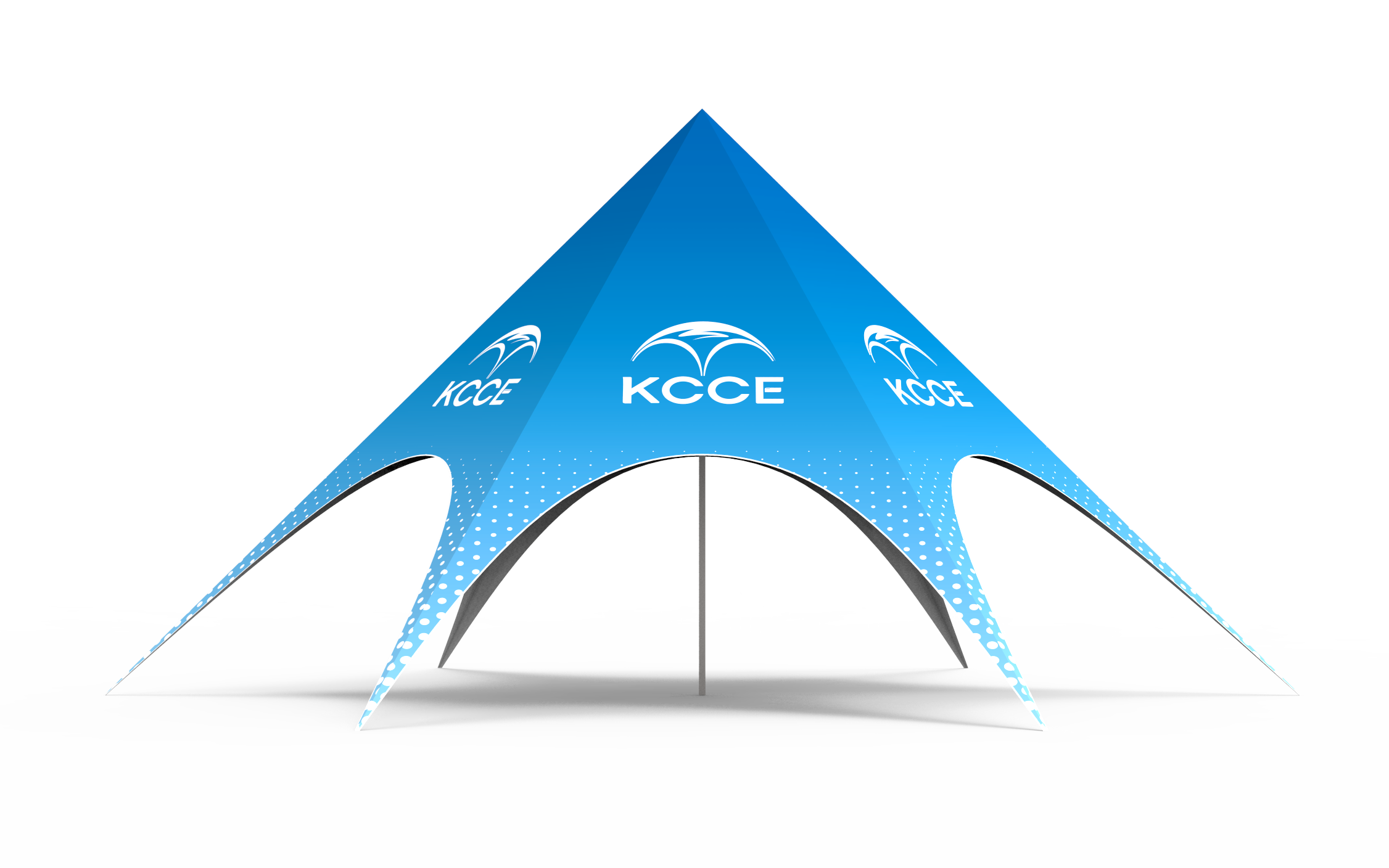
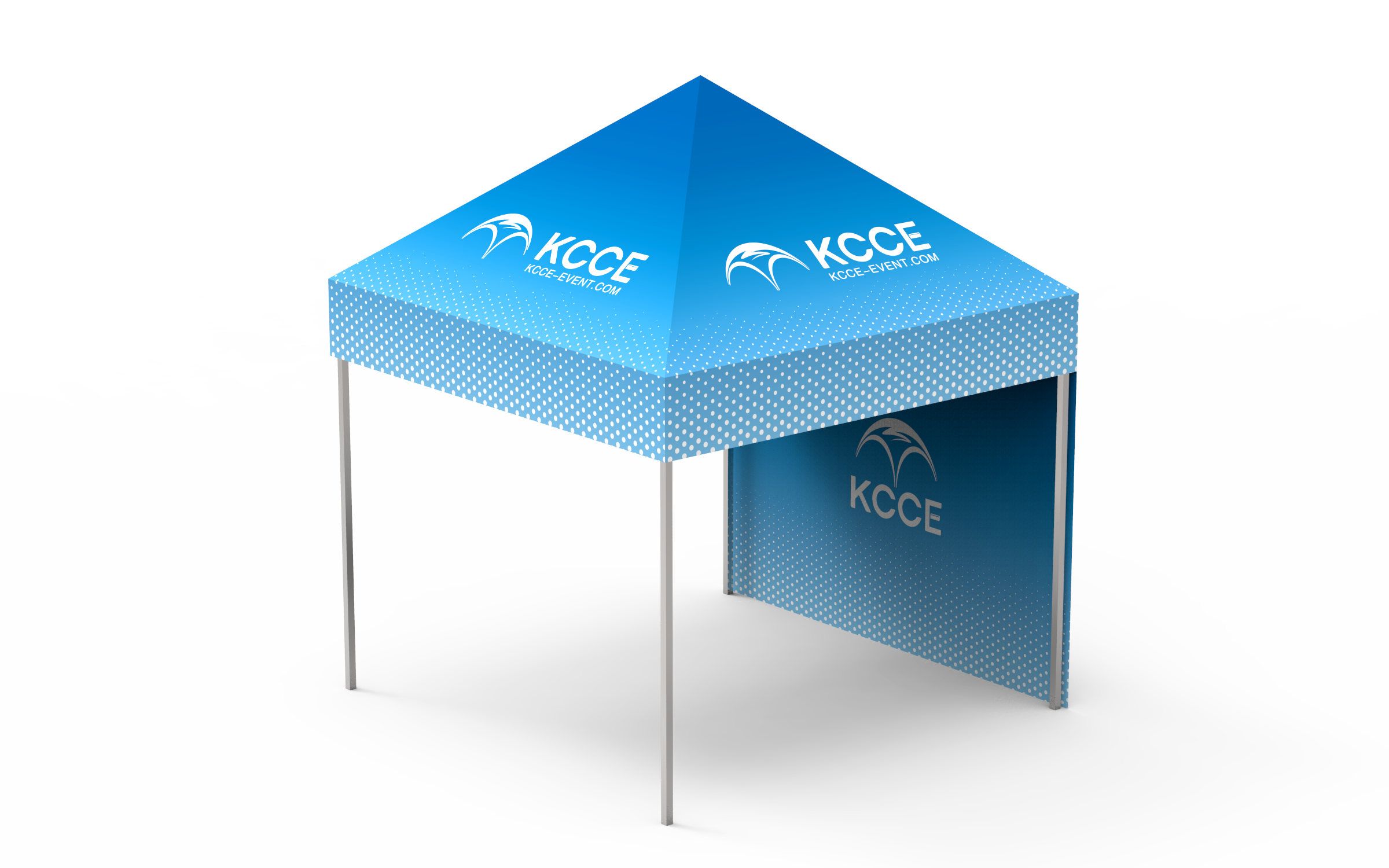
Dacheng outdoor products LTD. which operates as KCCE, is a good example of what a real factory footprint looks like: established in 2006, with production space, machines, and skilled staff as stated by the brand. They state CE and RoHS compliance and ship to many countries.ound 40 skilled staff. They hold CE and RoHS compliance and ship to 75 countries, with Europe and the US as primary markets. That’s the kind of verifiable detail you want. Not “we are a leading manufacturer with advanced equipment” — everyone says that.
You might be wondering: does factory size actually predict quality? Not directly. But it does tell you whether they can handle your order without subcontracting it to a mystery third party.
How to Compare Inflatable Event Tent Manufacturers
Here’s the honest part. Most buyers compare on price alone, and that’s exactly how you end up with a tent that’s dead in 18 months.
When I compare suppliers, I look at five things, in this order:
- Fabric weight and type. Is it 400D Oxford, or heavier PVC? What’s the coating? A custom inflatable canopy built from cheap 210D fabric is a different animal from one built on 610gsm PVC.
- Seam construction. Welded or stitched? This is the single biggest durability factor, and I’ll dig into it below.
- Wind rating. Ask for a number. If they can’t give you one, they haven’t tested it.
- Certifications. NFPA 701 (fire retardancy, widely required in the US) and EN 14960 (the European inflatable play equipment safety standard) come up constantly. Ask which ones they actually hold.
- MOQ and lead time. More on this below — it’s where a lot of deals quietly fall apart.
One data point worth sitting with: according to a sourcing guide published by YOLO Outdoor, many sourcing failures come from inadequate factory vetting, and each incident can cost buyers significantly. That’s not a rounding error. That’s a bad quarter.
So no, “cheapest quote” is not a strategy. It’s a bet.
Fabric, Seams & Wind Ratings: What Separates Quality
Let’s get into the weeds, because this is where the real differences hide.
PVC vs. Oxford cloth. PVC (polyvinyl chloride) is heavier, more durable, and better for large structures that stay up for weeks. Oxford cloth — usually 400D or 600D with a PU or PVC coating — is lighter and packs smaller, which matters if you’re moving the tent between events. The YOLO sourcing guide notes that proper PU coating thickness and tensile strength testing can help reduce product returns. That tells you coating quality is not a minor detail.
Welded vs. stitched seams. Stitching punches thousands of tiny holes through your fabric. Every hole is a leak point and a tear-starter. High-frequency welding fuses the fabric together into one continuous membrane. For anything bigger than a small display tent, welded seams are the standard you should demand. If a supplier is stitching the main structural seams on a large event tent, walk.
Wind ratings. This is the question that separates serious buyers from the rest. A tent that’s fine at 10 mph becomes a projectile at 30. Ask for the tested wind rating, and ask how they validated it. “It’s very strong” is not an answer.
Certifications. NFPA 701 covers flame propagation for textiles and is commonly required by US venues and municipalities. EN 14960 is the European standard for inflatable play equipment, and while it’s aimed at bouncy-castle-type products, a lot of event buyers use it as a baseline quality filter. KCCE’s CE and RoHS compliance is another example of the paper trail you should be asking to see. Certificates, not claims.
Red flags in this section: cheap thin PVC with no stated weight, stitched structural seams, and zero wind documentation. Any one of those is a reason to keep looking.
Customization, MOQ & Lead Times Explained
This is the part buyers underestimate.
Printing. Most manufacturers do dye-sublimation or direct digital printing on the fabric panels. Full-color branding across a whole tent is standard for a real factory. What varies is print durability — cheap prints fade after a season outdoors. Ask about UV resistance if the tent lives outside.
Sizes and shapes. A custom inflatable canopy can be a simple cube, a dome, an arch, or a fully sculpted branded structure. KCCE, for instance, offers free 3D design on custom advertising tents — which matters, because you want to see the structure before committing to production.
MOQ. Here’s the good news: for a lot of inflatable advertising and event tents, MOQ can be as low as 1 piece. That’s genuinely common in this category, and it means small event companies aren’t locked out. Don’t let anyone tell you a 500-unit minimum is “standard.”
Lead time. This is where deals die. Typical production timelines vary widely by customization level and season, and I’ve seen buyers assume four weeks when the real number was ten. Always ask for the lead time in writing, and ask what happens if it slips. If a supplier won’t commit to a date, that’s your answer.
What Inflatable Event Tents Really Cost
Nobody wants to publish pricing. I get why — every tent is custom, so there’s no single number. But the total silence is unhelpful, so here’s the honest framework instead of a fake price list.
Cost scales with four variables: size, fabric grade, seam construction, and print complexity. A small single-color display canopy sits at the low end. A large, fully branded, multi-chamber event structure with welded seams and heavy PVC sits at the high end — and the gap between those two isn’t small, it’s multiples.
The reason manufacturers hide pricing is that publishing a number anchors you to the cheapest configuration, and then every quote conversation becomes an argument. Fair enough. So instead of demanding a price, ask these:
- What’s the price for my exact size in the base fabric?
- What’s the upcharge for welded seams?
- What’s the print cost per square meter?
- What’s included — blower, repair kit, carry bag, stakes?
Get those four answers and you can compare any two manufacturers apples to apples. That’s the whole trick.
Red Flags When Vetting a Manufacturer
This is the section no competitor roundup will give you, because most of them are the manufacturers.
- No certifications at all. Not “in progress.” Not “we can get them.” None.
- No factory tour — not even a video. In 2025, there’s no excuse. Any real factory can send you a walkthrough.
- Vague specs. If the spec sheet says “high quality material” instead of “610gsm PVC,” they’re hiding something.
- No case studies or named past clients. A manufacturer with real event and festival clients will show you the work.
- They appear on their own “Top 10 manufacturers” list. This is the big one. Search “best inflatable event tents manufacturer” and you’ll find listicles where the author is also the seller. That’s not a ranking — it’s an ad. Treat every self-listed roundup as a warning sign, not a recommendation.
Honestly, the self-promotion problem is so bad in this niche that I’d tell you to distrust any list you can’t trace to an independent source.
Questions to Ask Before You Buy
Print this. Take it to your calls.
- Which certifications do you hold, and can you send the certificates?
- What’s the tested wind rating, and how was it validated?
- Are the structural seams welded or stitched?
- What’s the exact fabric weight and coating?
- What’s the warranty, and what does it actually cover?
- Can I buy replacement valves, blowers, and repair patches?
- Who are three past clients I can contact?
- What’s the guaranteed lead time, in writing?
If a supplier dodges even two of these, you’ve learned something important. And if you’re specifically looking for an inflatable event tents manufacturer USA buyers can work with, add one more: ask how they handle US shipping, customs, and whether their certifications meet US venue requirements. Plenty of excellent factories are overseas — the question is whether they’ve done the paperwork for your market.
One more thing worth knowing on the durability question, since it comes up constantly on forums: according to a sourcing guide published by YOLO Outdoor, many professional outdoor expeditions prioritize dual-chamber safety systems in tent selection. That’s for expedition tents, not event tents, but the principle carries over — redundancy in the air chambers is what keeps a structure standing when one chamber fails.
Core Advantages and Applications of Inflatable Event Tents
The advantages are real, but they’re specific. Inflatable tents win on speed, footprint, and branding surface — and lose on wind tolerance and setup precision.
속도. A 10m × 15m sealed-air tent can inflate in about 15–30 minutes with two people and a 1.5kW blower. A comparable frame tent can take a crew of four about 3–5 hours.
Packed size. A 200 sqm inflatable tent packs into roughly 1.2–1.8 cbm — about a third of the volume of an equivalent frame system. That’s a real freight and storage difference on multi-city tours.
Branding. The entire surface is printable via large-format digital printing, so you get full-wrap graphics instead of a banner hung on a frame.
Where they actually get used:
- Weddings. Sealed-air marquees, usually white or ivory, 100–500 guests.
- Festivals and concerts. Continuous-air stage covers and arches, frequently 15m+ spans.
- Brand activations and product launches. Custom-printed cubes and domes, often rented for 1–3 days.
- Sports events. Inflatable entry arches and finish-line tunnels, typically 6–12m.
If your site has sustained winds above 40 km/h, or you need a rigid attachment point for rigging, an inflatable is usually the wrong tool. Know that before you buy.
Key Selection Points for Wedding and Large Event Inflatable Tents
Weddings and large events have different failure modes, and the spec should reflect that.
For weddings, guest comfort dominates. You want a sealed-air tent (no blower noise during the ceremony), a white or ivory fabric with UV-stabilized coating so it doesn’t yellow across a season, and a floor system or at least reinforced anchor points. Ask about interior height at the edges — under 2.2m feels cramped the moment guests stand up. Typical sizes run 8m × 12m to 12m × 24m.
For large events, wind and egress dominate. Demand a documented wind rating — many quality manufacturers test to around 60–80 km/h with proper anchoring, and some state higher with ballast systems. Confirm at least two exits per 250 occupants and that the fabric meets NFPA 701 or an equivalent fire standard for your jurisdiction.
Three questions that separate serious suppliers from the rest:
- What anchoring system is included — stakes, ballast, or both?
- What’s the rated wind speed, and at what anchor configuration?
- What’s the repair turnaround if a tube fails mid-season?
If the answer to any of these is vague, keep shopping.
Inflatable Tent Manufacturer Selection Guide and Procurement Decision Framework
Most buyers pick a supplier on unit price. That’s the wrong first filter, and the data backs it up — 78% of sourcing failures trace back to inadequate factory vetting, at an average cost of $45,000 per incident.
Run this framework in order:
1. Factory vs. trading company. Ask for a live factory video walkthrough, not a photo gallery. Confirm in-house cutting, welding, and printing. A trading company will stall on this.
2. Certification reality check. Request the actual certificate numbers for NFPA 701 and EN 14960, then verify them. Don’t accept a logo on a website.
3. Sample before bulk. Order one production sample tent. Inflate it, leave it up for 72 hours, and check for seam creep and valve leaks.
4. MOQ and lead time in writing. Typical MOQs are often around 1–10 units for stock colors, and higher for custom prints. Standard lead time is often about 15–30 days; custom printing may add about 7–10 days.
5. Payment terms. A 30% deposit / 70% before shipment is common. Never pay 100% upfront to a first-time supplier.
6. After-sales. Ask for the spare parts list and repair kit contents in the quote. A supplier who won’t itemize this won’t support you later.
Score each supplier on these six, weighted toward factory verification and certification. The cheapest quote usually loses on both.
Inflatable Tent Material Technology Comparison and Durability Testing Standards
Fabric choice drives lifespan more than any other decision. Here’s how the main options actually compare:
| 재료 | 무게 | 일반적인 수명 | 최적 용도 |
|---|---|---|---|
| 210D Oxford, PU-coated | 90–120 gsm | 1–2 years | Short-term promo, indoor |
| 400D Oxford, PU-coated | 180–220 gsm | 2–4 years | Rental fleets, light event use |
| 610D Oxford, PVC-coated | 300–400 gsm | 4–6 years | Frequent outdoor events |
| 0.55mm PVC-coated polyester | 610–650 gsm | 6–10 years | Weddings, large events, high wind |
The jump from 400D Oxford to 0.55mm PVC is where durability stops being marginal and becomes structural. Seam construction matters just as much — high-frequency welded seams consistently outperform stitched seams under peel and shear testing, which is why welded is standard on anything rated above 50 km/h.
On testing standards, ask suppliers for these specifically:
- NFPA 701 — US fire retardancy for textiles. Test methods 1 and 2; method 2 applies to heavier coated fabrics.
- EN 14960 — European inflatable play equipment safety. Covers anchoring, pressure, and material strength.
- EN ISO 1421 — tensile strength of coated fabrics.
- EN ISO 2411 — coating adhesion, which predicts delamination.
- BS 7837 / DIN 4102 B1 — alternative fire standards for UK and German markets.
A supplier who can produce test reports for tensile strength, tear resistance, and coating adhesion is a supplier who actually tested. One who only shows a fire certificate is showing you the minimum.
자주 묻는 질문
Q: Who are some reputable manufacturers of inflatable tents?
A: Rather than trust a self-published list, verify a factory directly. Look for in-house production, real certifications, and a verifiable track record. Dongguan Dacheng Outdoor Products (KCCE), established in 2006, is one example — CE and RoHS compliant, shipping to 75 countries. TentCraft is another name that shows up in the branded inflatable tent space. Always ask for certificates and a factory video before committing.
Q: What are the best brands of inflatable tents?
A: “Best” depends entirely on your use case. For branded event activations, look at manufacturers with strong large-format printing and welded seams. For expedition and camping use, dual-chamber safety systems matter most — the Outdoor Industry Association’s 2024 report found 92% of professional expeditions prioritize them. There’s no single best brand; there’s the right factory for your spec.
Q: What is the best brand of air tent?
A: Same logic applies. An air tent for camping and an inflatable event tents manufacturer’s product for a festival are built to different specs. Judge on fabric weight, seam construction, and certifications rather than brand name. A factory that publishes real specs and holds NFPA 701 or EN 14960 documentation is doing more for you than any logo will.
Q: Who are the top 10 tent manufacturers?
A: Be careful with this one. Most “top 10” lists in this niche are published by the manufacturers themselves, so they’re rankings of one. There’s no neutral authority publishing a definitive top 10. Build your own shortlist of three to five factories, run them through the questions above, and compare on specs — not on who wrote the listicle you found them in.
Q: How much does a custom inflatable event tent cost?
A: It depends on size, fabric grade, seam type, and print complexity — which is why almost nobody publishes a number. Instead of chasing a single figure, ask for a quote on your exact spec, then ask for the upcharges separately: welded seams, print per square meter, blower, repair kit. That breakdown lets you compare manufacturers fairly instead of comparing guesses.
Q: Are there made-in-USA options for inflatable event tents?
A: Yes, there are US-based manufacturers, and they’re often the right call if you need fast turnaround, domestic shipping, or a supplier who understands local venue requirements. The tradeoff is usually price. If you’re sourcing overseas instead, confirm the factory’s certifications meet US standards and ask how they handle customs and freight. Either path works — just verify the paperwork.
Q: Are inflatable event tents worth it compared to regular pole tents?
A: For branding and setup speed, usually yes. Inflatable structures give you shapes and full-surface printing that pole tents can’t match, and they go up fast with a blower. The tradeoffs are pack size and weight — a common complaint in buyer forums. If you’re moving between venues constantly, weigh that carefully. For a fixed event footprint, inflatables win on visual impact.
Q: How long is the lead time for a custom inflatable tent?
A: It varies by customization level and season, and this is where buyers most often get burned. Get the lead time in writing, ask what happens if it slips, and build in buffer before your event date. If a manufacturer won’t commit to a date in writing, treat that as a signal about how the rest of the project will go.
결론
Here’s the one action that matters: before you pay a deposit to any inflatable event tents manufacturer, request their certifications and a factory walkthrough video. Not a brochure. Not a render. The actual documents and the actual floor.
The cheapest quote almost always hides the real cost — in returns, in replacements, in a tent that fails when it counts. According to YOLO Outdoor’s sourcing data, inadequate factory vetting drives 78% of sourcing failures at an average cost of $45,000 per incident. That number should be sitting in your head every time a supplier comes in suspiciously low.
So do this: take the eight questions above, shortlist three manufacturers, and run them all through the same process. Compare specs, not sales pitches. The factory that answers everything without flinching is your factory.
참고 문헌
1. 9 Branded Inflatable Tent Designs That Will Inspire Your Next Outdoor Event Activation – tentcraft.com
2. Inflatable event tents advantages & use cases – gybe-design.com
3. From Event Tents to Specialized Spaces: JOY Inflatable Meets Evolving Global Demand – prnewswire.com
4. Inflatable Tent Manufacturer Guide for B2B Buyers – yolooutdoor.ltd
5. Inflatable Tents Market Size, Share & Forecast 2026-2034 – fortunebusinessinsights.com