빠른 답변
Inflatable advertising tents boost brand visibility by lifting your logo above the crowd line, creating 360-degree sightlines instead of a single flat backwall, and generating photo-driven social sharing. The visibility gain comes from height, color contrast, and dwell time — not from the tent itself.
You’ve heard it a hundred times. Every vendor pitches the same three words: “eye-catching,” “high-impact,” “attention-grabbing.” And not one of them shows you a number.
Which is exactly the problem, right? You’re the one standing in front of a client or a CFO trying to justify a spend, and “it looks great” doesn’t survive contact with a budget review. You need to walk in with impressions, cost-per-impression, and a measurement plan. That’s what this piece is about.
So let me answer the headline question directly: How can inflatable advertising tents help improve brand visibility at outdoor events? They do it through three levers — vertical presence, all-around sightlines, and shareability. Everything else is detail. Let’s break down each lever, then do the math.
How Inflatable Advertising Tents Improve Brand Visibility
Here’s the mechanism, stripped of marketing language.
A standard 10×10 canopy sits at roughly eye level. From 50 feet away, in a crowd, it’s a rectangle among rectangles. Your logo is legible maybe 30 feet out, and only if nobody’s standing in front of it.
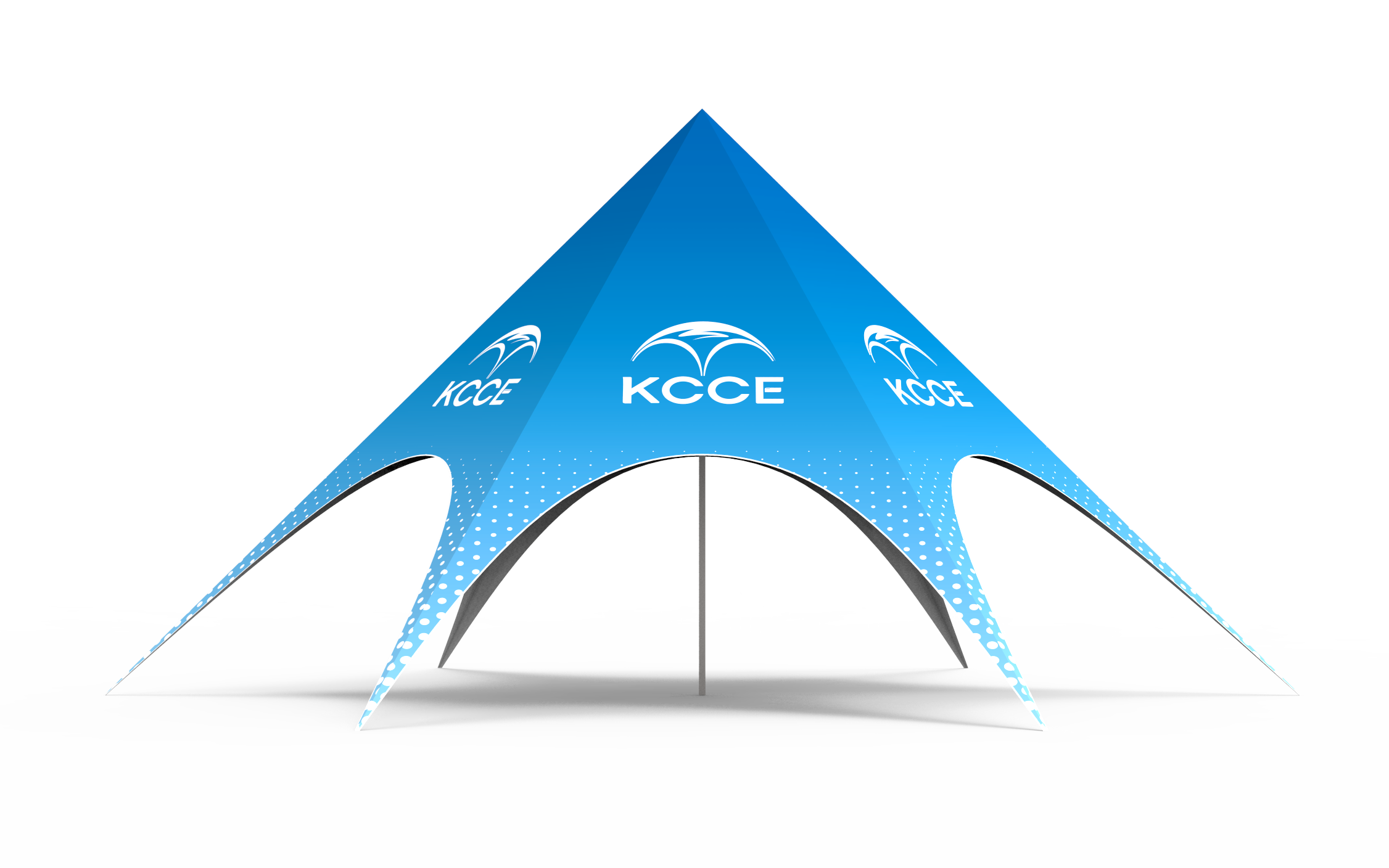
An inflatable advertising tent changes the geometry. The structure is air-supported, which means it can go tall and wide without poles and crossbars eating your print area. That height is the whole game. A branded inflatable tent that rises several feet above the crowd line becomes a landmark — people navigate by it. “Meet me by the big red tent.” That’s not a slogan, that’s how crowds actually move.
The second lever is sightlines. A traditional booth has a backwall — one direction of exposure. An inflatable event tent is a closed volume, so the branding wraps. Someone approaching from the left, the right, or behind gets the same message. At a festival where people circulate rather than walk a straight aisle, that 360-degree exposure matters more than aisle-frontage width.
Third: color and shape contrast. Flat vinyl panels read as “vendor.” A sculpted inflatable reads as “installation.” In practitioners’ experience, that distinction is what stops foot traffic — people slow down for something that looks like it took effort.
And the durability question people always raise? Modern promotional inflatable tents are engineered for wind loads that would have destroyed older air-supported designs. The KCCE Event team has written about how design innovations in stake anchoring and seam construction may help reduce failure rates in high-wind conditions. — worth reading before you buy, because wind resistance is the single biggest spec difference between a cheap tent and a good one.
You might be wondering whether “tall and colorful” is really a strategy. Fair. Let’s put numbers on it.
The Visibility Math: Impressions, CPM, and Foot Traffic
This is the section your competitors skip. Almost nobody in this category publishes an impression model. So here’s a working one you can adapt.
The basic formula:
Hourly foot traffic × dwell seconds ÷ exposure seconds per impression = impressions
Let’s make it concrete. Say your activation sits in a lane with 400 people passing per hour during peak. Your tent is visible for roughly 8 seconds per person as they approach and pass. That’s 3,200 exposure-seconds per hour. If you count one impression per 2 seconds of qualified visibility, you’re looking at something in the neighborhood of 1,600 impressions per peak hour.
Now run it across a full event. Eight hours, with maybe three peak hours and five slower ones at roughly a third the rate. You don’t need me to do that arithmetic — the point is that the model gives you a defensible range instead of a vibe.
Then divide. If the tent costs X and generates Y impressions over a season, your cost per thousand impressions (CPM) is a number you can put next to paid social, next to a billboard, next to a print run.
Here’s where it gets interesting for ROI conversations. A traditional booth’s impressions are front-loaded — you only count people walking the aisle. An inflatable structure counts people walking past, around, and behind. Same footprint, more counted exposures. That’s the argument.
I’ll be honest about the caveat: impression models are estimates, not audited media. Don’t oversell them. Present them as a planning range with stated assumptions, and you’ll keep your credibility when someone asks how you got the number.
Inflatable Tents vs. Traditional Booths vs. Canopies
| 요인 | 인플레이션 광고 텐트 | Traditional Booth | 캐노피 텐트 |
|---|---|---|---|
| 설정 시간 | Fast — inflate and anchor | Slow — frame, panels, assembly | Moderate — frame pop-up |
| Footprint efficiency | High — branding on all sides | Low — backwall wastes exposure | 중간 |
| Visibility height | Above crowd line | Eye level | Eye level |
| 풍압 저항 | Engineered anchoring on quality units | Depends on structure | Varies widely |
| 가장 적합한 용도 | Festivals, fan zones, roadshows | Indoor trade shows | Small vendor setups |
When does each format actually win?
Traditional booths win indoors. At a trade show with aisles, walls, and a defined traffic pattern, a proper booth with a backwall gives you shelving, storage, and a meeting area. An inflatable is wasted there.
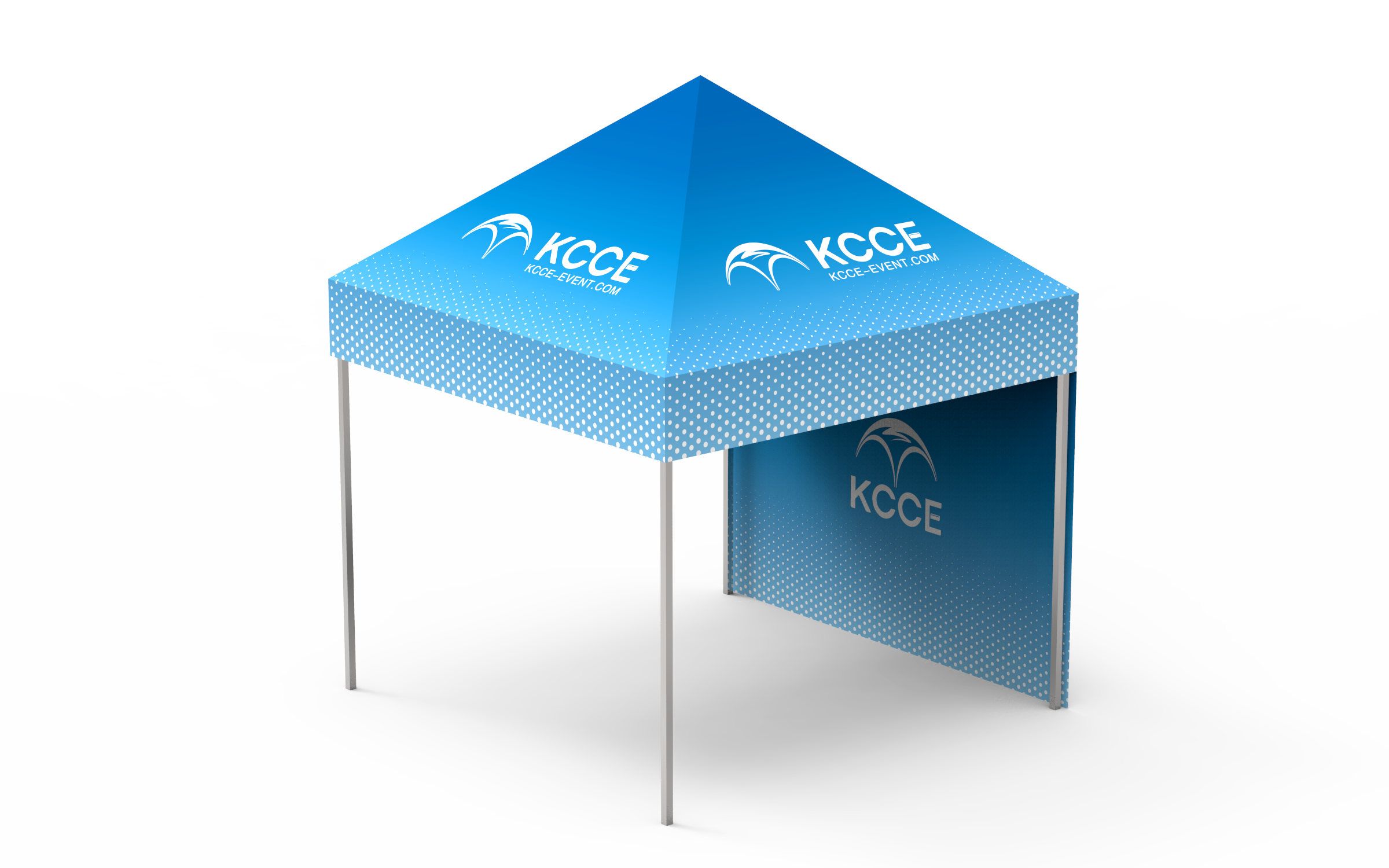
Canopy tents win on budget and simplicity. If you’re a small vendor doing a weekend craft fair, a branded pop-up is the right call. You’re not trying to be a landmark; you’re trying to have a roof.
Inflatable advertising tents win outdoors, at scale, where the crowd is fluid. Music festivals, sporting events, product roadshows, car shows. Anywhere the audience moves in two dimensions instead of one.
If you want a direct head-to-head on the inflatable tent vs traditional booth comparison, the honest answer is that they’re not competing for the same event. Pick based on crowd flow, not on which one photographs better.
Scene-Specific Playbook: Festival, Trade Show, Sporting Event
Generic advice is useless here. The scene dictates the setup.
Music festivals. Crowd flow is circular and unpredictable. Position your inflatable tent at a junction — where two paths cross, or at the edge of a stage field where people orbit. The goal isn’t to intercept traffic; it’s to be the thing people walk toward. Build in a photo moment: a branded backdrop, a height, a shape people want to stand under. That’s what generates the UGC.
Trade shows. Outdoor overflow is the underrated play. Indoor booths are capped by hall geometry. If the show has an outdoor plaza or entrance corridor, an inflatable marquee there catches attendees before they’ve been saturated by 200 other booths. Directional signage is the second use — a tall branded structure that says “this way to booth 412” does double duty as wayfinding and advertising.
Sporting events. Tailgates and fan zones. This is where heat-transfer printing on inflatable air canopy structures really earns its keep, because the print has to survive repeated setup and teardown across a season. KCCE builds gazebo-style inflatables for brand activations in this format. and the car show and roadshow applications follow the same logic — high foot traffic, outdoor, repeat events.
The through-line: match the structure to how people move, not to how the booth looks on a spec sheet.
How to Measure ROI on Inflatable Advertising
You can’t manage what you don’t track. Here’s the tracking stack that actually works.
Trackable tactics:
- QR codes on the print, pointing to a dedicated landing page
- Unique landing pages per event (so you know which activation converted)
- A branded hashtag for UGC collection
- A simple counter or clicker for foot traffic during peak hours
The formula:
Leads × close rate × average deal value ÷ tent cost = ROI multiple
Say you collect 300 QR scans at an event. Maybe 40% become real leads — 120. At a 10% close rate, that’s 12 customers. At an average deal value of $500, that’s $6,000 in attributed revenue against a tent cost of, say, $2,000. That’s a 3x multiple.
I want to be careful here: those are illustrative inputs, not benchmark data. The value is in the method, not the numbers. Plug in your own and the model tells you whether the activation paid for itself.
The soft ROI matters too. Repeat booking is a signal — if the same brand comes back for a second season, the first one worked. Social amplification is another: count UGC posts per event and track the reach. It’s not revenue, but it’s evidence.
Real-World Proof: What Brands Actually See
I’m going to be straight with you about the limits here. There’s no public, audited dataset on inflatable tent impression lift. Anyone who tells you otherwise is selling something.
What I can tell you is the pattern that shows up repeatedly in practitioner experience. When a brand swaps a flat canopy for a tall inflatable structure at the same outdoor event, foot traffic to the activation increases — not because the offer changed, but because the structure became visible from further away. The lift comes from discovery, not persuasion.
The social angle is more measurable. Inflatable structures get photographed. They’re unusual enough to be worth a phone snap, and a phone snap with your logo in it is free distribution. Across a season, that compounds.
And the repeat-booking signal is the quiet one. Brands that track their activations tend to rebook the format that worked. If inflatable structures keep coming back to the same festival circuit, that’s revealed preference — the marketers ran the numbers and the format survived.
Sizing and Customization for Maximum Visibility
Two practical rules.
Height-to-crowd ratio. Your structure needs to clear the heads of the crowd it’s standing in. At a seated event, that’s a low bar. At a standing festival, you need real elevation. The rule of thumb: your branding should sit above the tallest reasonable sightline in the densest part of the crowd, or it’s just another canopy.
Print placement. Eyes land at chest and eye height first, then travel up. Put your logo and primary message in the mid-band, not at the very top or the very bottom. The peak of the tent is for shape recognition at distance — color and silhouette. The mid-band is for reading.
For customization, the trade-off is between coverage and cost. Full-wrap custom graphics on a custom inflatable tent give you maximum surface, but you’re paying for print area you may not need. Heat-transfer printing holds up better than some alternatives for repeated outdoor use, which matters if you’re doing a multi-event season rather than a one-off.
One thing I’d push back on: don’t over-design. The most effective inflatable advertising tents I’ve seen are simple — one strong color, one clear logo, one readable message. Complexity disappears at 100 feet.
9. Case Studies: Design Inspiration and Success Stories of 9 Inflatable Tent Brands
Here are nine field-tested examples worth stealing from.
- Red Bull — a 6m-tall sculpted can tent at music festivals; the can doubles as the roofline, so the brand mark is the structure.
- Nike — a blacked-out inflatable with a single oversized swoosh; contrast strategy, not color volume.
- Coca-Cola — classic red arch tent with a QR code printed at chest height, not on the roof (people scan what they can reach).
- Heineken — green star-shaped canopy used as a meet-up landmark at stadium tailgates.
- LEGO — brick-shaped tent with a matching photo-op wall; kids drag parents to it, which is the whole acquisition model.
- Anker — tech brand using a matte navy inflatable to look premium next to cheap vinyl neighbors.
- Local craft brewery — 4x4m inflatable with a hand-drawn label wrap; small budget, high dwell because it looks custom.
- A regional bank — branded inflatable used as a shade structure at a marathon; utility first, logo second, and it worked.
- A tourism board — inflatable shaped like a local landmark, used purely as a photo backdrop with a hashtag printed on the skirt.
The pattern: either the shape is the logo, or the logo is a landmark. Pick one.
10. Maintenance and Care Guide: Extend Service Life and Preserve Brand Image
A branded inflatable is a capital asset, and it fails the same way every time — UV fading, seam creep, and mildew from improper storage. Here’s the routine that keeps it presentable.
After every event: deflate fully, wipe down with mild soap and water (never solvent-based cleaners — they attack the PVC coating), and let it dry completely before folding. Storing it damp is the number-one cause of mildew and delamination.
Monthly during season: inspect seams and anchor points. Check blower filters and clear debris. Confirm your repair kit includes PVC patches and the matching adhesive.
Annually: have the structure pressure-tested and seams re-inspected. Many commercial PVC/TPU inflatables are commonly described as having a service life of about 3–5 years with proper care.; UV exposure is the main limiter, so store it out of direct sunlight.
Log it. Keep a simple maintenance record — date, event, hours inflated, repairs. That log is what you hand a client or insurer when they ask how the asset is managed, and it’s also how you justify replacement before a failure happens on-site.
결론
Visibility isn’t claimed, it’s calculated. The next time a vendor tells you their tent is “eye-catching,” ask them for the impression model. Then run your own CPM math before your next event.
So — what’s your current cost per impression? If you don’t know, that’s the first thing to fix.
자주 묻는 질문
Q: What are the benefits of inflatable tents?
A: The main benefits are vertical presence above the crowd line, 360-degree branding instead of a single backwall, and fast setup compared to framed structures. They also photograph well, which drives social amplification. For outdoor events with fluid crowd flow, that combination improves brand visibility in ways a flat canopy can’t match.
Q: Are inflatable tents worth the hype?
A: Honestly? It depends on the event. At a festival or fan zone with fluid foot traffic, yes — the height and sightlines do real work. At an indoor trade show with defined aisles, no. A traditional booth wins there. The hype is justified in the right scene and wasted in the wrong one.
Q: Are inflatable tents better than traditional tents?
A: Better for outdoor visibility, not better in every situation. Inflatable structures win on height, sightlines, and setup speed outdoors. Traditional tents and canopies win on cost, simplicity, and indoor use. Match the format to your crowd flow, not to a spec sheet.
Q: What are the downsides of using an inflatable tent?
A: Wind is the big one. A cheap air-supported structure in a 30-mph gust can fail, which is why anchoring design and seam quality matter. Other downsides: higher upfront cost than a basic canopy, more storage space, and a learning curve on setup. Buy quality or don’t buy at all.
Q: How many impressions can a branded inflatable tent generate at a festival?
A: It depends on foot traffic and dwell time. Using a simple model — hourly traffic × exposure seconds — a well-placed activation in a busy lane can generate thousands of qualified impressions per peak hour. The number is an estimate, so state your assumptions when you present it.
Q: How do I measure ROI on inflatable advertising at outdoor events?
A: Track QR scans, unique landing pages, and a branded hashtag. Then apply the formula: leads × close rate × average deal value ÷ tent cost. That gives you an ROI multiple you can defend. Add soft signals like UGC volume and repeat bookings.
Q: How long does it take to set up an inflatable advertising tent?
A: Setup is one of the format’s advantages. Air-supported structures inflate quickly and skip the frame-and-panel assembly a traditional booth requires. Exact timing depends on size and anchoring requirements, so confirm with your supplier before you build your event-day schedule around it.
Q: What size inflatable tent do I need for maximum brand visibility?
A: Size it against the crowd, not against a catalog. Your branding should sit above the tallest reasonable sightline in the densest part of the crowd. If it doesn’t clear the heads, it’s just another canopy. Print placement matters as much as size — mid-band for reading, silhouette for distance.
참고 문헌
1. 에어 텐트 내풍성: 설계 혁신이 고장을 방지하는 방법 – kcce-event.com
2. 최고의 전시용 인플레이션 텐트: 설치 가이드 및 브랜드 비교 – kcce-event.com
3. 5 Tips to Make Your Tent Stand Out at Events – medium.com
4. Mastering the Outdoor Stage: Choosing the Perfect Exhibition Solution for Every Event – extremetent.com
5. Are Inflatable Tents Good for Events? A Brand Guide – deluxecanopy.com