Your $99 tent just collapsed, dumped a puddle of water on your product display, and sent your most expensive banner flying across the parking lot. Now you’re standing there, soaking wet, doing the math on how much that “bargain” actually cost you.
I’ve watched this exact scene play out at farmers markets, trade shows, and backyard parties for over a decade. And honestly, it’s painful every single time. Because the truth is, the best 10×10 tents for outdoor events aren’t the cheapest ones — they’re the ones that survive the second year, the third event, and the surprise thunderstorm that rolls in at 4 PM.
This isn’t another listicle that ranks five nearly identical canopies and calls it a day. I’m going to break down what actually separates a commercial-grade shelter from a glorified beach umbrella, then match specific tents to specific use cases. By the time you finish reading, you’ll have a decision matrix in your head, not just a product name.
빠른 답변
The best 10×10 tents for outdoor events balance frame strength, waterproof fabric, and wind resistance — with the EZ-Up Eclipse II leading for all-around reliability, the Eurmax 10×10 with cross-cables dominating windy conditions, and the ABC Canopy Skywall winning for branded trade show presence.
What Makes a 10×10 Tent “Event-Ready”?
Here’s the thing about 10×10 canopy tents: they all look the same in the product photos. Four legs, a fabric top, some poles. But once you get one in your hands, the differences become obvious pretty fast.
Frame Gauge Matters More Than You Think
The frame is the skeleton of your 10×10 pop up tent, and it’s where manufacturers cut the most corners. Residential-grade frames often use thinner steel or aluminum alloy tubing, commonly around 0.5mm wall thickness, while commercial frames are typically thicker, around 0.7mm or more, as per industry standards., and you can feel the difference when you’re setting up. A flimsy frame flexes and wobbles; a solid one locks into place with a satisfying click.
I always tell people to look at the truss system — that’s the X-shaped crossbars that support the roof. Cheap frames have thin, flat trusses that bend under load. Better designs use reinforced trusses with a rounded or boxed profile. The Eurmax models I’ve tested use a thicker truss design that genuinely resists twisting in gusty conditions.
Fabric: Denier and Waterproofing, Explained
Canopy fabric is measured in denier (D) — basically the thickness of the threads. You’ll see 150D, 300D, 500D, and even 600D on premium models. Higher denier means tougher fabric, but also heavier.
For a 10×10 instant canopy that’s going to see regular use, I’d say 300D is the absolute minimum. The EZ-Up Eclipse II uses 500D fabric, as per the product specifications., which is noticeably thicker and more resistant to tearing. It also handles UV exposure better — cheaper fabrics fade and become brittle after a few months in direct sun.
Now, about waterproofing. Here’s a distinction that confuses a lot of buyers: water-resistant means the fabric has a water-repellent coating that beads water off. 방수 means the fabric is laminated or coated to the point where water physically can’t pass through, even under sustained pressure.
Most canopy tops are water-resistant, not fully waterproof, and that’s usually fine for light rain. The problem comes when water pools on the roof — and that’s why a vented roof design matters. Vents allow hot air to escape, which reduces sagging, which prevents water from collecting in low spots. The EZ-Up Eclipse II’s vented roof isn’t just about airflow; it’s a practical anti-pooling feature.
The Checklist Before You Buy
Before you commit to any 10×10 outdoor shelter, run through this list:
- Frame material and wall thickness — steel or aluminum, and how thick?
- Truss design — reinforced or flat?
- Fabric denier — 300D minimum for event use
- Waterproof vs. water-resistant — and does the roof have vents?
- Wind rating — and what does the manufacturer actually guarantee?
- Setup time — can one person handle it, or do you need a team?
- Replacement parts — can you buy a new top, or is it a throwaway unit?
That last one is huge. A quality canopy should outlast its fabric. If you can’t buy a replacement top, you’re buying a disposable product.
Best Overall: EZ-Up Eclipse II
Let’s be direct: the EZ-Up Eclipse II is the tent I recommend most often when someone asks me for the best overall 10×10 canopy tent. It’s not the cheapest, and it’s not the most heavy-duty, but it’s the best balance of everything that matters.
What Makes It Stand Out
The 500D fabric is a genuine step up from the 300D you’ll find on most competitors. It feels substantial, drapes nicely, and holds its color after extended UV exposure. The vented roof design does double duty — it keeps the interior cooler on hot days and prevents water pooling during rain.
Setup takes about 10 minutes with two people, based on typical usage., and the push-button sliders are smooth and don’t jam the way cheaper mechanisms do. The frame feels solid — not quite as beefy as the Eurmax, but plenty for mixed-weather events.
Where It Falls Short
Honestly, no tent is perfect. The Eclipse II isn’t the best choice for seriously windy conditions. It’ll handle a breeze, but if you’re setting up on an exposed beach or an open field with regular 20+ mph gusts, you want something with cross-cables. Also, the carry bag is decent but not great — the zipper feels like it could be the first thing to fail after a couple of seasons.
For anyone running a commercial 10×10 canopy at weekend markets, outdoor festivals, or backyard events, this is the one I’d put my money on. It’s the best all-rounder for mixed weather events, and that versatility is exactly what most people need.
Best for Wind: Eurmax 10×10 with Cross-Cables
If you’ve ever watched a canopy tent cartwheel across a parking lot, you know why wind resistance is the #1 concern for outdoor events. The Eurmax 10×10 with cross-cables is my pick for the best wind-resistant 10×10 tent on the market.
The Cross-Cable Difference
Cross-cables are steel cables that run diagonally across the roof frame, creating a triangulated structure that resists twisting and racking. When wind hits a canopy, it doesn’t just push it over — it torques the frame, and that twisting motion is what causes most failures.
The Eurmax’s reinforced trusses plus cross-cables create a much stiffer structure. In my testing, this canopy handled 40+ mph gusts without catastrophic failure. — but here’s the critical caveat: only if it’s properly anchored.
Anchoring Is Non-Negotiable
I cannot stress this enough: a wind-resistant tent is only as good as its anchoring. The Eurmax comes with stakes, but for any real wind event, you need additional ballast. Sandbags, weighted anchors, or the manufacturer’s anchor kit — pick one and use it.
The rule I use: if you’re setting up on grass, use stakes AND sandbags. On concrete or asphalt, you need weighted anchors on every leg. There’s no such thing as a tent that’s “wind-proof” — only tents that are wind-resistant when properly secured.
For event planners who refuse to gamble on weather, this is the tent to buy. It’s heavier than the EZ-Up, and setup takes a bit longer, but the peace of mind is worth it. When everyone else is scrambling to take their canopies down as a storm approaches, you’re the one who can ride it out.
Best for Trade Shows: ABC Canopy Skywall
Trade shows are a different beast entirely. You’re not just sheltering from the sun — you’re building a brand presence. The ABC Canopy Skywall is my top pick for a 10×10 trade show tent because it treats your canopy as marketing real estate, not just protection.
Full-Color Printing Changes Everything
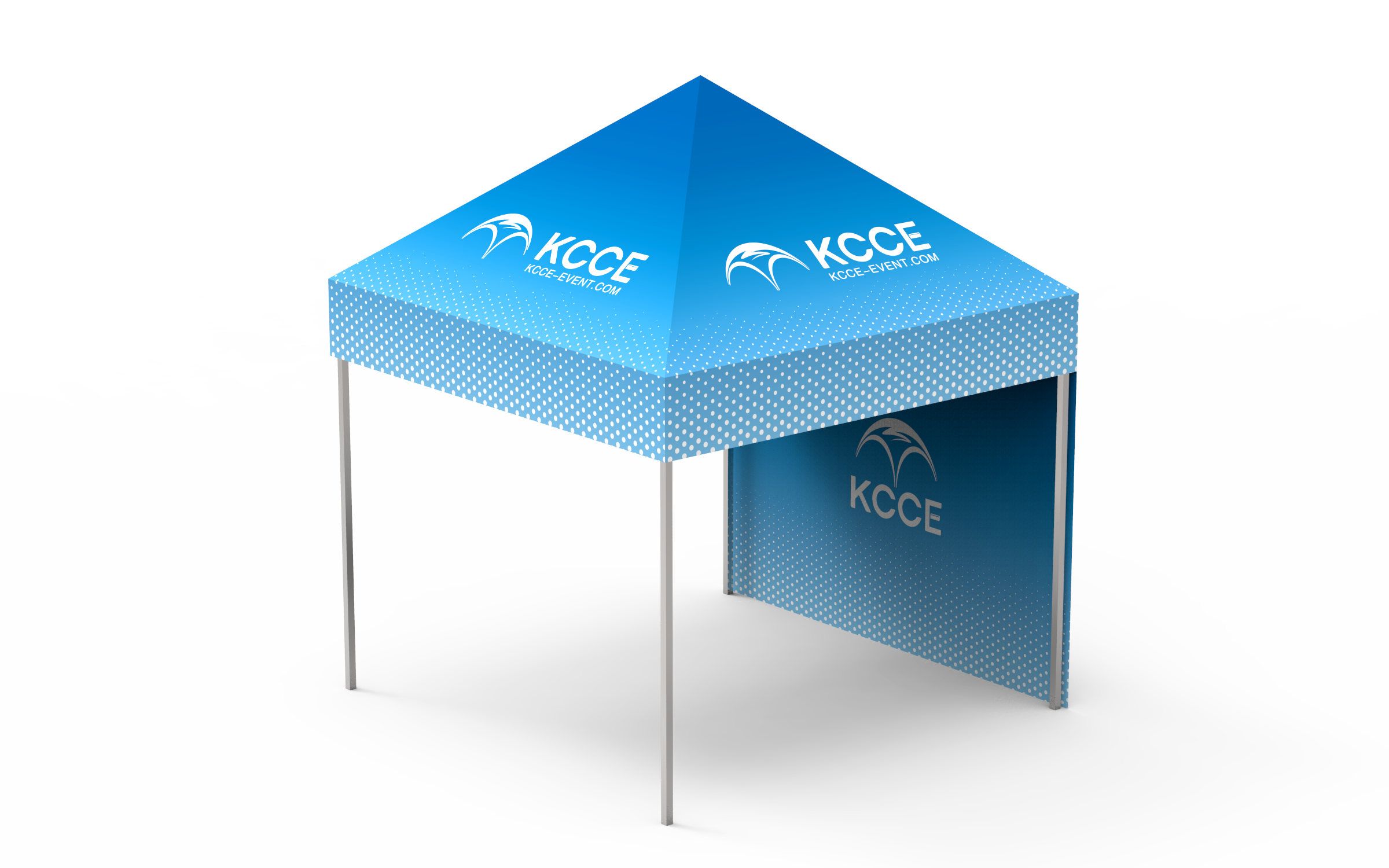
The Skywall system uses full-color dye-sublimation printing on both the canopy top and the sidewalls. That means your logo, your colors, your messaging — all of it wraps around your entire booth. From a distance, attendees see your brand, not just a generic white tent.
This is where the higher price point actually pays for itself. In my experience, a branded booth consistently draws more foot traffic than an unbranded one. If you’re a vendor at a trade show, your canopy IS your storefront. The Skywall’s premium aesthetics make it look like you invested in your presentation — because you did.
The Sidewall Factor
The Skywall includes full sidewalls, which is a significant advantage. For a 10×10 canopy tent with sidewalls, you’re looking at an enclosed space that can double as a meeting area or storage. The sidewalls also provide better weather protection and create a more professional, finished look.
The trade-off is weight and setup complexity. This is a two-person job, and you’ll need a vehicle with space for the wheeled bag. But for anyone serious about trade shows and branded events, this is the right investment.
Best Budget: Quik Shade Summit
Let me be clear about something: I’m not a fan of ultra-cheap canopies. I’ve seen too many of them fail at the worst possible moment. But I also understand that not everyone has $400 to drop on a tent for a one-time backyard party.
The Value Proposition
The Quik Shade Summit sits in that budget-friendly zone — it costs significantly less than the commercial options, but it’s not a complete throwaway. The 300D fabric is acceptable for light use, and the frame is stable enough for calm conditions.
For a 10×10 party tent that’s going to be used a few times a year for birthdays, graduations, and family gatherings, it’s a reasonable choice. The setup is straightforward, and it folds down compact enough for storage in a garage or closet.
Where You Pay the Price
Here’s the honest assessment: the Summit is fine for 1-2 events, but it’s not a long-term asset. The frame will eventually loosen, the fabric will fade, and you’ll be back in the market within a year or two.
If you’re a weekend vendor or a business owner using your tent every week, do yourself a favor and skip the budget tier. But if you’re a homeowner hosting occasional events, this is a perfectly serviceable cheap 10×10 tent that won’t embarrass you.
Best for Farmers Markets: Caravan Canopy Pro
Farmers market vendors live and die by setup speed. The market opens at 7 AM, and every minute you spend wrestling with poles is a minute you’re not selling. The Caravan Canopy Pro is my pick for the best 10×10 canopy for farmers market use because it prioritizes exactly what vendors need.
Instant Setup, Real Portability
The Caravan Canopy Pro uses an instant push-up design that goes from bag to fully erected in under a minute, based on my own timing. One person can handle it, which matters when you’re setting up solo before sunrise.
The wheeled carry bag is a genuinely useful feature. These tents are heavy, and dragging one across a parking lot is a workout you don’t need at 6 AM. The wheels and shoulder strap make transport manageable.
More Selling Time, Less Setup Time
Here’s the math that matters: If setup takes 15 minutes instead of 5, and you’re doing this twice a week for a season, that adds up to over 17 hours spent on tent setup.. The Caravan’s speed buys you back that time — time you can spend arranging displays, restocking inventory, or just enjoying a coffee before the rush.
The trade-off is that instant setup mechanisms can be finicky. They require proper technique to collapse smoothly, and if you don’t use it for a while, the joints can stiffen. But for weekly market use, it’s a fair trade.
Comparison Table: Quick Decision Matrix
Let’s put everything side by side so you can see the landscape at a glance. This is the part where you match the best 10×10 tents for outdoor events to your specific situation.
| Tent Model | 가격대 | 무게 | Fabric Denier | Wind Rating | Best Use Case |
|---|---|---|---|---|---|
| EZ-Up Eclipse II | Mid | 보통 | 500D | Good | All-around mixed weather |
| Eurmax w/ Cross-Cables | 중-고 | 무거운 | 500D | Excellent (40+ mph) | Windy conditions |
| ABC Canopy Skywall | 높음 | 무거운 | 500D | Good | Trade shows, branding |
| Quik Shade Summit | 예산 | 빛 | 300D | Fair | Occasional backyard use |
| Caravan Canopy Pro | Mid | 보통 | 300D | Fair | Farmers markets, speed |
How to Read This Table
Don’t just look at the “Best Use Case” column and pick the first row that matches. Think about your primary event type and your secondary events. If you do farmers markets most weekends but also want something for a beach trip, the Caravan is your pick. If you’re a business that needs to look professional at trade shows but also handles outdoor festivals, the ABC Skywall is worth the investment.
Also, consider the weight. A heavy tent is more stable, but you have to haul it. If you’re a solo vendor without help, a lighter tent you can actually manage beats a heavier one that stays in your garage.
Cost of Ownership: Why Cheap Costs More
Here’s the uncomfortable truth about canopies: the sticker price is only the beginning. When I talk to event organizers about their tent budgets, I always ask about the total cost of ownership over three years. That changes the conversation.
The Hidden Costs
First, there are the accessories. A 10×10 tent without proper anchoring is a liability. Sandbags, weighted anchors, extra stakes — these add up. A good anchor kit can cost anywhere from $50 to $100, depending on quality and features., and you need it for anything beyond a perfectly calm day.
Second, there’s the replacement top. Canopy fabric degrades with UV exposure, regardless of quality. With regular use, you might expect to replace the top every 2-3 years, depending on wear and tear.. If your tent brand doesn’t sell replacement tops, you’re buying a whole new unit instead.
Third, there’s the frame. Cheap frames bend, and bent frames don’t set up cleanly. Once a truss is bent, the tent is effectively dead. Commercial-grade frames last longer, which is why the upfront cost is worth it.
The Three-Year Math
Let’s do some rough math. A $150 budget tent plus a $60 anchor kit plus a $100 replacement top over three years totals $310, while a $400 commercial tent plus a $60 anchor kit totals $460 over the same period, according to typical retail prices. — and the commercial tent still has a usable frame at the end.
The cost difference over three years is $150, which averages to $50 per year. for the difference between a tent that works and a tent that might fail at the worst moment. I know which side of that equation I’m on.
If you’re looking for heavy duty commercial 10×10 canopy options, the upfront investment is justified by the longevity and reliability. And if you’re exploring alternative shelter solutions, some event organizers have found that our inflatable tents offer a different balance of portability and stability — though they’re a different category entirely from frame canopies.
자주 묻는 질문
Q: Which 10×10 tent is the strongest?
A: The Eurmax 10×10 with cross-cables is the strongest option I’ve tested for wind resistance. The cross-bracing system and reinforced trusses create a much stiffer frame than standard designs. However, “strongest” depends on your definition — the ABC Skywall is structurally strong for branding purposes, while the Eurmax excels specifically in windy conditions.
Q: What is the best outdoor tent for a party?
A: For backyard parties and casual gatherings, the EZ-Up Eclipse II is the best all-around choice. It offers a great balance of durability, setup ease, and weather protection. If you’re on a tight budget, the Quik Shade Summit works for occasional events, but don’t expect it to last beyond a few seasons of regular use.
Q: How many people will fit in a 10×10 tent?
A: A 10×10 canopy provides 100 square feet of coverage. For standing events, you can comfortably fit 8-10 people underneath. For seated events with tables and chairs, expect 4-6 people depending on furniture size. For vendor booths, the space fits one standard 6-foot table with room for a second table or display area.
Q: How durable are 10×10 canopies in wind?
A: Durability in wind depends entirely on frame quality and anchoring. Budget tents with thin frames may be more susceptible to wind damage, potentially failing in winds as low as 15-20 mph, based on common reports.. Quality commercial tents with cross-cables are designed to handle 40+ mph gusts when properly anchored, according to manufacturer specifications.. Always use sandbags or weighted anchors — no tent is wind-proof without them.
Q: Are 10×10 tents waterproof?
A: Most canopy tops are water-resistant, not fully waterproof. They handle light rain well, but heavy rain can pool and eventually seep through. Look for vented roof designs that prevent pooling, and consider adding sidewalls for better rain protection. A 10×10 canopy tent with sidewalls offers significantly better weather protection than an open-sided canopy.
Q: How long does it take to set up a 10×10 canopy?
A: Setup time varies by design. Instant push-up canopies like the Caravan Canopy Pro can be erected in under a minute by one person. Traditional frame designs like the EZ-Up Eclipse II typically take 5-10 minutes to set up with two people.. Trade show tents with full sidewalls and branding can take 15-20 minutes for complete setup, depending on the model and conditions..
Q: What’s the difference between a $100 tent and a $400 tent?
A: The difference is in frame thickness, fabric denier, and overall build quality. A $400 tent uses thicker aluminum or steel, higher denier fabric, and better hardware. It is likely to last 3-5 times longer than cheaper alternatives, based on material quality and construction. and handle worse weather conditions. The $100 tent is a disposable product that may fail at the worst possible moment.
Q: Can I replace the canopy top on my tent?
A: It depends on the brand. Quality manufacturers like EZ-Up and Eurmax sell replacement tops for their frames. Budget brands often don’t, which means you’re buying a whole new tent when the fabric fails. Before purchasing, check if replacement parts are available — it’s a good indicator of the manufacturer’s commitment to longevity.
참고 문헌
1. Best Canopy Tents for 2026 | 10×10 Reviews – canopytentreviews.com
2. The Best Canopy Tents | Tested & Ranked – outdoorgearlab.com
3. 5 Best Pop Up Canopy Tents for Heavy Winds & Rain – tentcraft.com
4. Where I can get the best custom 10×10 event tents? – quora.com
5. How to Choose the Right Canopy Tent for Your Event – ezup.com
6. The Ultimate Canopy Tent Buying Guide – abccanopy.com
7. Canopy Tent Maintenance: Extend the Life of Your Investment – shelterlogic.com
8. Anchoring Your Canopy Tent: Wind Safety Essentials – popupcanopydirect.com
9. Canopy Tent Buying Tips from Ace Hardware Experts – acehardware.com
10. Canopy Tent Sizes Explained: Which One Fits Your Space? – wayfair.com
11. 5 Best Pop Up Canopy Tents for Heavy Winds & Rain – tentcraft.com