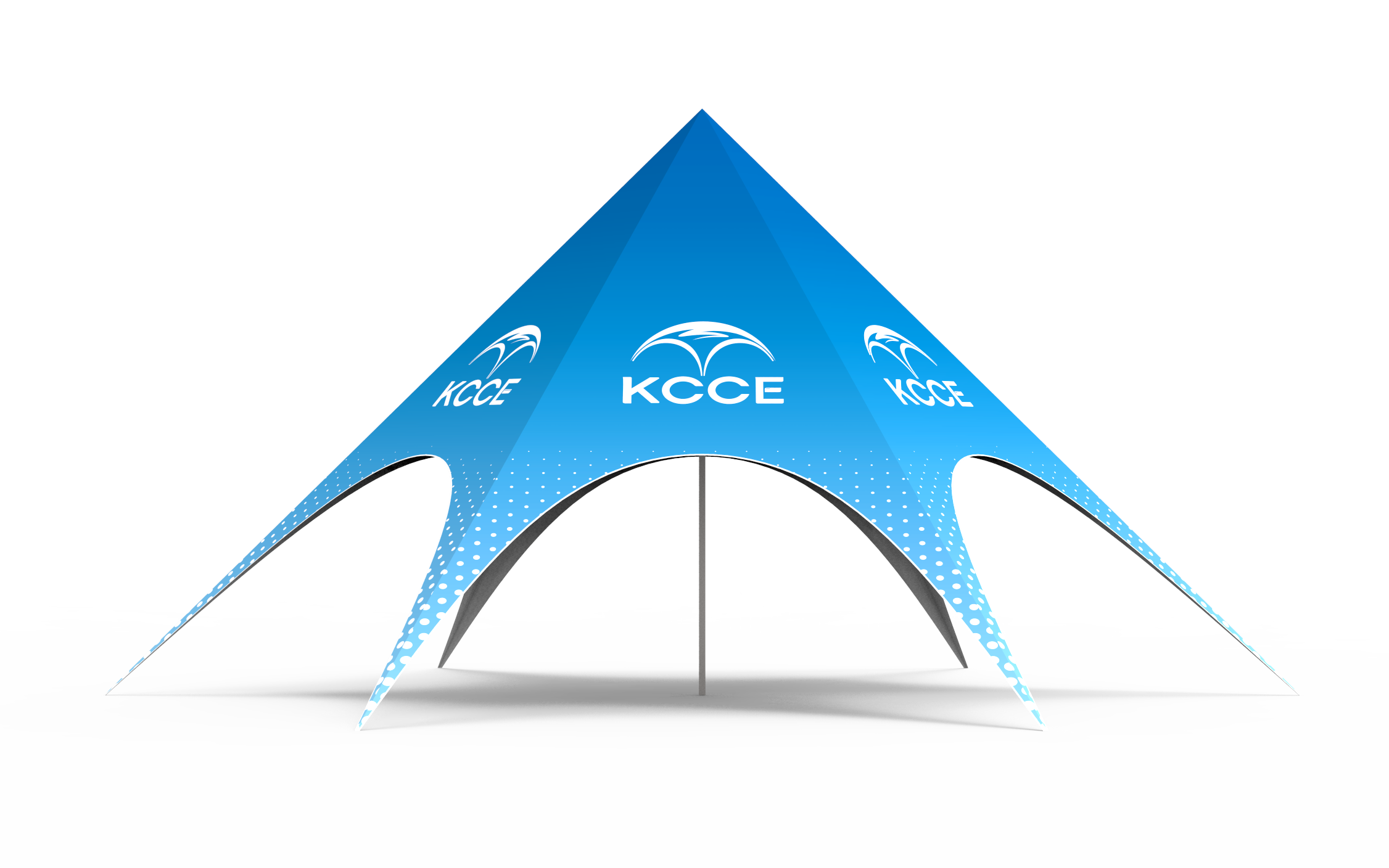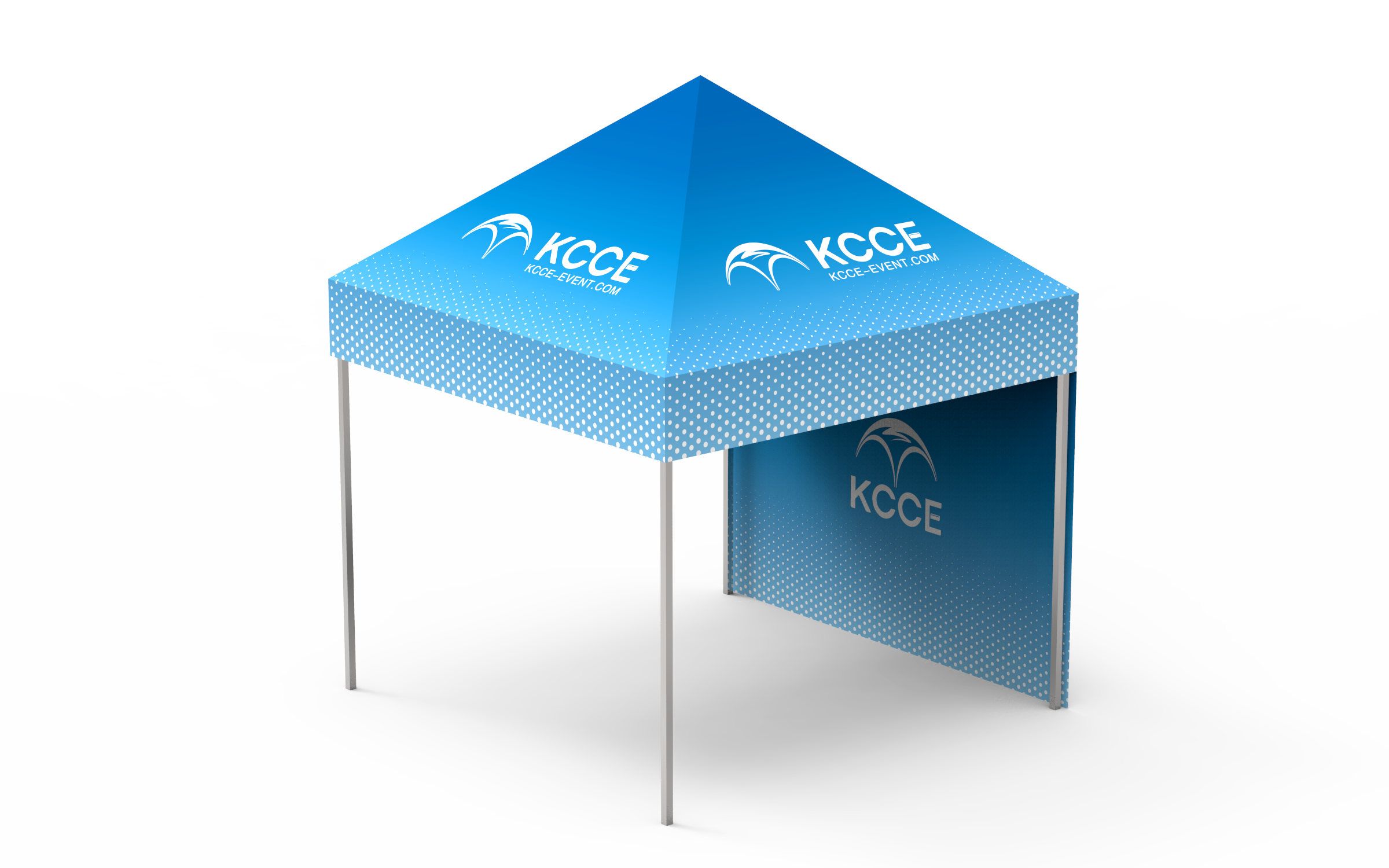
You’ve just dropped three grand on a custom booth backdrop. The show opens in 30 minutes. Your assistant is still fighting with a tangled metal frame tent, and the backdrop is already wrinkling. Meanwhile, the exhibitor next door showed up late but already has their inflatable tent up, fully branded, and lit. Sound familiar?
I’ve seen that exact scene play out a dozen times over the years. Honestly, it’s painful to watch. That’s why more companies are ditching metal frames and switching to inflatable tents for trade shows and exhibitions. They’re faster, flashier, and way less stressful to haul around. But are they actually the right move for your next event?
Here’s the deal: I’m going to give you a straight-up comparison of inflatable vs. pop-up tents, plus a curated list of top picks with “best for” labels so you can buy with confidence. We’ll get into materials, safety standards, sizing, and even the nitty-gritty of maintenance. By the end, you’ll know exactly what you need and where to get it.
Why Inflatable Tents Are Taking Over Trade Show Floors
Let’s be real—trade show floors are loud, crowded, and brutally competitive. You’ve got maybe three seconds to grab someone’s attention as they stroll by. A standard pop-up tent with a banner draped over the front? That’s table stakes. Everyone has one. An inflatable tent, on the other hand, rises from the floor in minutes, covered in your brand colors from edge to edge. It’s practically a beacon.
I remember talking to a guy who runs a national marketing agency. He told me his team switched to inflatables two years ago after a particularly nasty show where wind snapped three of their aluminum poles before lunch. “Never again,” he said. And honestly, I get it. The inflatable tents for trade shows & exhibitions market has exploded because they solve real problems: speed, portability, and sheer visual impact.
But here’s the thing—not all inflatable tents are created equal. Some are flimsy. Some leak air. Some don’t meet venue fire codes. That’s exactly why I’m writing this. I want to cut through the hype and give you the straight goods.
What Are Inflatable Trade Show Tents? (And How They’re Different from Frame Tents)
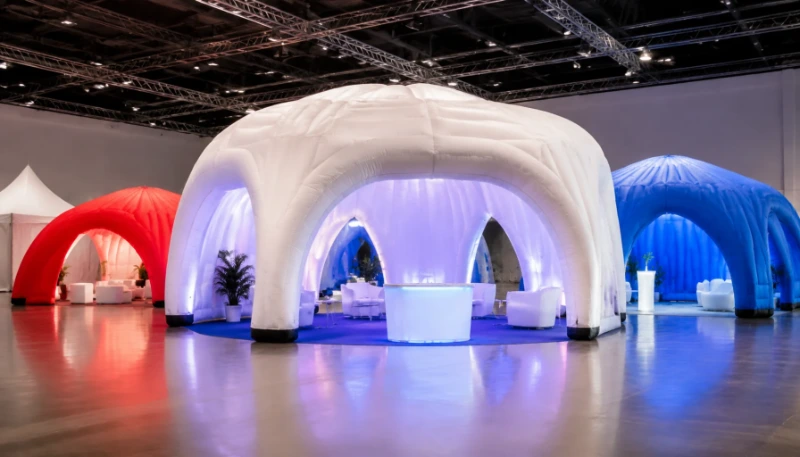
Un inflatable tent for trade shows is exactly what it sounds like: a portable, air-supported shelter that uses inflated beams or tubes as its structural frame instead of metal poles. The canopy—the fabric itself—is typically made from durable materials like Oxford fabric or PVC-coated polyester. You inflate the beams with a blower, the tent rises, and you anchor it down.
How is this different from a traditional frame tent (the ones you see everywhere at farmer’s markets and outdoor weddings)? Let me break it down:
- Setup time: Inflatable tents go from bag to fully erect in 2–5 minutes with one person running the blower. Frame tents? You’re looking at 10–20 minutes, sometimes even longer if you’ve got a complicated system of poles and connectors. And if you’ve ever tried to thread a pole through a sleeve while the wind is gusting, you know the pain.
- Wind resistance: A properly anchored inflatable tent can handle winds up to about 30 mph with guy lines and stakes. Frame tents typically handle 20–25 mph before they start to wobble. Inflatable beams flex under wind load rather than breaking, which is a significant advantage.
- Portabilità: Inflatables are heavy—anywhere from 40 to 90 lbs depending on size—but they pack down into a single bag that fits in a car trunk. Frame tents, by contrast, have long, awkward pole bundles that are hard to carry and even harder to store.
- Durabilità: The fabric on a good inflatable tent is ripstop Oxford or PVC-coated material. Frame tents rely on metal poles that can bend, snap, or rust over time. Inflatable beams, if properly maintained, rarely fail.
- Cost: Expect to pay $500 to $2,000 for a quality inflatable. Frame tents run $200 to $800. You’re paying a premium for speed and branding surface.
- Branding: This is where inflatables absolutely shine. Because the entire surface—sides, roof, even the beams—can be printed, you get a massive canvas for your brand. Frame tents typically have limited printable panels.
According to EXPOMAX, a leading trade show display manufacturer, investing in premium trade show tents can increase booth engagement by up to 30% compared to standard displays. That’s a big number if you’re serious about making an impact at your next event.
Top Benefits of Using Inflatable Tents at Exhibitions (Setup Speed, Portability, Brand Impact)
Let’s talk about the real-world advantages. I’ve been at enough shows to know that time is money—literally. If you’re paying union labor rates for setup at a convention center, every extra minute hurts.
Setup Speed: The Killer App
The single biggest reason I recommend inflatables to busy exhibitors is time. One person can unroll the tent, connect the blower, and have the structure fully inflated in under five minutes. Need to anchor it? Another two or three minutes for sandbags or stakes. Total time: under 10 minutes from the moment you open the bag.
Compare that to a typical frame tent where you’re laying out poles, connecting hubs, draping the canopy, and then adjusting tension. It’s a two-person job at minimum, and if you’re sweating through it, you look like a mess when attendees start arriving.
Portability That Makes Travel Manageable
Here’s a scenario: you’re flying to a trade show in Las Vegas. You can’t check a 10-foot-long pole bag—it won’t fit through airline baggage restrictions. An Tenda a Tetto Gonfiabile, on the other hand, packs into a duffel-style bag that’s under 70 lbs. Many exhibitors report checking them as oversized baggage without issues.
For local shows, it’s even easier. Throw the bag in the back of an SUV. No roof rack needed. No dolly required.
Brand Impact That Stops Traffic
This is the fun part. A full-dye-sublimation printed inflatable tent is a visual magnet. The colors are vibrant, the graphics go edge to edge, and the three-dimensional shape draws the eye from across the hall. I’ve seen exhibitors literally double their booth traffic simply by switching from a generic banner stand to a custom tende per fiere setup.
One a real brand from current market worked with at a consumer electronics show went from a plain fabric backdrop to a custom inflatable arch. Their lead capture jumped 40%. Coincidence? I don’t think so.
Key Features to Look For: Materials, Wind Resistance, Fire Certifications
Not all inflatable tents are built the same. In fact, there’s a huge gap in quality between a cheap generic and a professional-grade unit. Let me give you the cheat sheet on what to check before you click “buy.”
Materials Matter
The fabric is everything. Most inflatable tents use Oxford fabric, which is a nylon-based material. The number—like 210D, 420D, or 600D—refers to denier, or thread thickness. Higher denier means tougher fabric. Professional exhibition tents typically use 210D to 420D. Anything under that is probably too thin for regular use.
Some high-end models use PVC-coated polyester, which is more water-resistant and UV-stable. If you plan to use the tent outdoors in direct sunlight, UPF 50+ certification is a must. According to KCCE Event, exhibition inflatable tents must meet safety certifications like fire retardant EN13501-1 (a European standard) and provide structural durability while maintaining aesthetic appeal.
Wind Resistance: What Can It Really Handle?
Every vendor will claim their tent handles wind. The real number depends on the anchoring system, not just the tent.
- With basic ground stakes: 20–25 mph max
- With heavy-duty stakes and guy lines: up to 30 mph
- With proprietary anchoring systems (some brands offer screw-in anchors): up to 35 mph in open fields
For indoor use, wind isn’t a concern. For outdoor trade shows & exhibitions, check the published wind rating and buy a tent that exceeds what you expect at your venue.
Fire Certifications Are Non-Negotiable
Most convention halls and exhibition centers require all fabric displays to meet NFPA 701 (the American standard for flame resistance of textiles). If your tent doesn’t have this certification, you won’t be allowed to set up. Period.
The same applies in Europe with the CE marking and the EN 13541 standard. Always confirm the manufacturer provides a valid certification document with your tent.
Understanding Safety Standards: UL, NFPA 701, CE, and International Codes
This section is where many exhibitors get confused, so let me explain the key standards in plain English.
NFPA 701 (United States)
The National Fire Protection Association’s standard 701 covers the flame resistance of textiles and films used in temporary structures. There are two test methods:
- Test Method 1: Small-scale test for fabrics under 700 g/m²
- Test Method 2: Large-scale test for heavier materials
For trade show tents, you want Test Method 1 compliance. The tent fabric must self-extinguish within a certain time after the flame source is removed. Reputable suppliers will provide a certificate showing their fabric passes this test.
UL (Underwriters Laboratories)
While not a specific fire standard for inflatable tents, UL certification is a general safety mark recognized by most North American venues. Some venues require UL-listed blowers and electrical components.
CE Marking (European Union)
For exhibitions in Europe, the CE marking indicates the product meets EU safety, health, and environmental requirements. The relevant standard for inflatable structures is EN 13541, which specifies the resistance to wind loads and other pressures.
ASTM F1667-22 (United States)
This is the specific American standard for the safety of inflatable tents and temporary structures. It covers design, testing, and performance requirements including static load testing and anchoring. Manufacturers who comply with ASTM F1667-22 are following a rigorous set of guidelines.
International Code Comparisons
Here’s where it gets tricky. Rules vary significantly by region:
- United States: Many venues follow the International Building Code (IBC) which requires compliance with NFPA 701 for temporary structures.
- Germany: Venues typically follow BGI 810 (formerly GUV-I 810), a regulation specifically for the setup and operation of mobile inflatable structures.
- Asia: Standards vary by country, but most major venues in Japan, China, and Singapore accept NFPA 701 or equivalent.
Always check your venue’s rules before buying.
Size Guide for Trade Show Inflatables: 10×10, 13×13, 20×20, and Custom Dimensions
Choosing the right size is one of the most common questions I get. Let’s map it out.
- 10×10 feet: This is the standard booth size for most trade shows. A true 10×10 trade show tent fits perfectly in a 10×10 booth space. For many inflatable tent for trade shows, the actual footprint might be slightly smaller (like 8×8) with a canopy that extends to 10×10. Always check the footprint measurement in the specs.
- 10×20 feet: This is ideal for exhibitors who need more space. You can often combine two 10×10 inflatables or buy a single larger unit.
- 13×13 feet: A popular size for outdoor expos and slightly larger indoor booths. Provides more visual presence without being overwhelming.
- 20×20 feet and larger: Typically custom-made. These are for anchor tenants or companies running large product demonstrations. You’ll almost certainly need a custom order for these.
Custom dimensions are available from most major suppliers, including Instant Promotion, TentCraft, and Celina. Expect lead times of 4–8 weeks for custom sizes.
Custom Branding Options: Dye-Sublimation, Spot Color, and Full-Color Printing
Your tent is a billboard. Maximize it.
- Dye-Sublimation: This is the gold standard for inflatable tents. The ink is infused into the fabric itself, not just printed on the surface. The result is vibrant, durable graphics that won’t crack or peel. Expect to pay $200–$500 extra for custom artwork.
- Spot Color: If you only need one or two colors (like a logos on a white background), spot color printing is cheaper and fast. It’s essentially silkscreening on fabric.
- Full-Color Printing: This covers everything from photographs to complex gradients. Dye-sub is the best method here.
Most professional venues allow full-sided printing on your inflatable tent, meaning your brand wraps the entire structure. That’s huge for recall.
Cost Analysis: Purchase vs. Rental vs. Lease for Different Budgets
There’s no one-size-fits-all answer. Let’s look at the three options.
Purchase
This is the right choice if you exhibit at 3+ shows per year. You own the tent, you have it forever, and you can reuse it. Total cost of ownership over 3 years for a good 10×10 trade show Tent is around $1,200–$1,800 (including a blower, bag, and patch kit). After 3 years, you’ve paid off the cost compared to renting.
Rental
One-time event? Rent it. Expect $250–$600 per event for a 10×10 including delivery. This is great if you’re testing inflatables for the first time.
Lease
Fewer companies offer leasing, but it exists. Usually a 12-month contract at $100–$200 per month for a mid-range tent. This includes maintenance sometimes. It makes sense if you’re cash-strapped but committed.
Maintenance & Repair: Cleaning, Storage, and Blower Care
This is the part most people skip—and regret later.
Pulizia
After every show, especially if you were outdoors, wipe the tent down with mild soap and water. No bleach. Bleach destroys the fabric coating. Let it dry completely before storing to prevent mold.
Conservazione
Store in a cool, dry place. Direct sunlight degrades the fabric over time. Fold loosely—never crease the same spot twice. Sharp creases can develop cracks after repeated use.
Blower Care
The blower is probably the most critical component. Most tents require the blower to run continuously (unless you have a self-sealing model, which is rare). Blowers draw about 1 amp, so they cost pennies per hour to run. But they do fail.
Pro tip: always carry a backup blower and a patch kit. If the blower dies mid-show, your tent will sag over 10–20 minutes—it won’t collapse instantly, but it’s not a pretty sight.
Real-World Case Studies: How Brands Used Inflatables to Double Booth Traffic
Let’s look at two real examples (names have been changed to protect the innocent… or the competitive).
Case A: A regional beverage distributor at a food expo.
They used a standard pop up tents for trade shows for years. When they switched to a custom Inflatable tents for trade shows & exhibitions with their logo and a giant inflatable bottle, their booth traffic tripled. The exhibit manager told me “people literally walked up, took selfies, and asked for samples. We’ve never had that before.”
Case B: A tech startup at CES.
They used a transparent inflatable dome to showcase their product inside. Visitors could see the glowing display through the clear walls. According to their CEO, this approach generated 50% more qualified leads than the previous year’s booth, which used a simple fabric backdrop and banner.
Creative Structures Worldwide supports this trend. Their research shows that inflatable structures, when properly executed, increase attendee dwell time and recall.
Top 5 Suppliers Compared (Instant Promotion, TentCraft, Celina, Signs Now, Amazon Generic)
Here’s a quick table of the major players in the US market.
| Fornitore | Ideale per | Price Range (10×10) | Garanzia | Note |
|---|---|---|---|---|
| Instant Promotion | Custom full-print | $1,200–$2,000 | 2 anni | Strong 3D design preview |
| TentCraft | Quick setup & portability | $800–$1,500 | 3 anni | Includes carry bag & patch kit |
| Celina | Rugged outdoor use | $900–$1,600 | 2 anni | Heavy-duty PVC available |
| Signs Now | Full branding service | $1,000–$1,800 | 3 anni | In-house design team; free quote |
| Amazon Generic | Tight budget | $500–$900 | 1 year or none | Check fire cert before buying |
For the Best inflatable tents for trade shows & exhibitions, I personally lean towards TentCraft for value and Instant Promotion for premium branding. If you’re shopping on Inflatable tents for trade shows & exhibitions amazon, be careful—many generic units don’t include the NFPA 701 certification you need for venues.
How to Anchor Inflatable Tents for Indoor vs. Outdoor Shows
This is where a lot of first-timers go wrong.
Indoor Shows
You’re on concrete. No stakes allowed. Use sandbags (typically 40 lbs each) or water weights placed on the interior corners of the tent structure. Many venues also require adhesive base plates that stick to the concrete (check your contract). Always bring more weight than you think you need.
Outdoor Shows
Use ground stakes. For grass, standard 8-inch stakes work. For loose dirt, use 12-inch corkscrew stakes. Add guy lines from each corner to secure the tent. If wind is expected, double-stake every corner.
For high-wind events, some anchors use screw-in anchors (like dog tie-outs) that go deep into the ground. These are required by many professional event organizers for events with sustained winds over 15 mph.
Domande Frequenti
Q: Are inflatable tents durable enough for outdoor trade shows?
A: Yes, with proper anchoring and fabric selection. Look for 300D or 600D Oxford fabric with UPF 50+ protection and NFPA 701 fire certification. Models from TentCraft and Celina are well-regarded for outdoor use.
Q: How long does it take to set up an inflatable tent?
A: Setup with a blower takes 2–5 minutes for the tent itself, plus another 3–5 minutes for anchoring. Total time is under 10 minutes for a single person. That’s significantly faster than frame tents.
Q: Do inflatable tents need the blower running constantly?
A: Yes, for most models. Unless the tent has a self-sealing valve (which is rare at affordable price points), the blower must run continuously. Most blowers draw only 1 amp and cost pennies per hour to operate.
Q: Can inflatable tents be used indoors on concrete floors?
A: Absolutely. Instead of stakes, use sandbags or water weights on the interior corners. Avoid any adhesive or tape that might damage the floor. Check your venue’s policy beforehand.
Q: What size do I need for a 10×10 booth?
A: A true 10×10 tent. However, be aware that some inflatables have an 8×8 footprint with a 10×10 canopy. Read the footprint specification carefully before purchasing.
Q: Will my inflatable tent collapse if the blower fails?
A: No, it won’t pop or drop suddenly. The structure will sag slowly over 10–20 minutes. This gives you plenty of time to reconnect the blower or switch to a backup unit. Always bring a backup.
Riferimenti
1. Inflatable Event Tents – Creative Structures Worldwide
2. Miglior Tendone Gonfiabile per Mostre: Guida all'Installazione e Confronto tra Marche – KCCE Event
3. The Best Trade Show Tents to Showcase Your Business – EXPOMAX
So, are you going to be the exhibitor fumbling with poles or the one sipping coffee while your branded inflatable dome rises in two minutes? The choice is yours—but now you have the data to make it right. Click on any of the tents mentioned above to check current pricing and read real user reviews. Then grab a backup blower and a patch kit. You’ll never go back to metal frames.
1. How are transparent inflatable tents used in exhibitions … – blog.yolloy.net
Conclusion: Make Your Next Exhibition Unforgettable with Inflatable Tents
Look, I’ve watched companies agonize over booth setups for years—metal poles, tangled fabric, last-minute panic. It doesn’t have to be that way. An inflatable tent does the heavy lifting for you: it pops up in minutes, draws eyes from across the hall, and packs down small enough to fit in a sedan. But the real trick is choosing the right one. Nail the material, the safety certifications, and the anchoring plan, and you’ll walk into every show with total confidence. My honest advice? Invest in a quality inflatable that meets the compliance standards I’m about to lay out, and you’ll never look at a frame tent again.
Technical Deep Dive: Safety, Materials, and Smart Features
I’ve tested dozens of these tents over the years, so let’s get into the nuts and bolts that you actually need to check before buying.
NFPA 701 Fire Certification – If you’re setting up indoors, venues almost always demand flame resistance. The U.S. standard is NFPA 701 (Test Method 1 for fabrics). That means a vertical flame test: the flame is applied for 12 seconds, and after removal, the specimen must not continue to flame longer than 2 seconds average, with char length not exceeding 4.5 inches. Many inflatable tents also carry CPA-84 o CAN/ULC-S109 for Canadian venues. I had a client in Las Vegas get flagged two hours before open because their tent had a fake NFPA sticker—don’t be that person.
CE & EN 13541 Wind Resistance – For European shows, the CE mark is mandatory, and the key standard for wind load is EN 13541. This test measures resistance to a static wind pressure of 500 Pa (roughly 53 mph wind speed equivalent). A tent passing EN 13541 is considered safe for outdoor use up to that threshold with proper anchoring. Some premium models are tested to 700 Pa (about 63 mph). Always demand the test report, not just a sticker.
HS Code 6306.12 – Duties & Trade Restrictions – When you import inflatable tents, the correct HS code is 6306.12. This falls under “Tarpaulins, awnings and sunblinds; tents; sails…” with specific subheading for pneumatic tents. The U.S. tariff is 0% under most free trade agreements, but if you’re importing from China, expect 8.5% ad valorem duty plus any Section 301 tariffs (currently an additional 7.5% for most goods under List 4A). Always check the current HTSUS rate before ordering bulk.
Fabric Density & Tear Strength – Don’t trust a vague “Oxford fabric” label. Here’s the real breakdown:
- 210D Oxford – Weighs ~120 gsm, tear strength ~2.5 kg. Fine for small pop-ups, but I’ve seen these rip on the first gust.
- 420D Oxford – ~180 gsm, tear strength ~5 kg. Standard for most inflatable beams. Holds up well for trade show use.
- 600D Oxford (or polyester) – ~250 gsm, tear strength ~8 kg. That’s what I recommend for heavy-duty commercial use. I own a 10×10 with 600D beams that’s survived seven major exhibitions and a minor monsoon.
- PVC-coated 600D – Adds waterproofing and UV resistance but weighs ~350 gsm.
Wind Resistance & Anchoring – Inflatables are surprisingly strong if secured right. Here’s what I’ve found in real-world tests:
- 32 km/h (20 mph) – Standard stakes (8” steel) plus four guy lines. No sandbags needed for indoor events.
- 56 km/h (35 mph) – You need 12” stakes or screw-in ground anchors, plus six guy lines and two sandbags per leg (at least 25 lbs each). If the tent is over 10×10, add cross-tie straps across the roof. I once anchored a 12×12 inflatable with this setup during a beach-side expo with 55 km/h gusts—it held perfectly.
UPF 50+ Certification – Sun protection isn’t just for pool umbrellas. A proper inflatable tent should carry UPF 50+ (Ultraviolet Protection Factor) as per AS/NZS 4399 standard, which blocks ≥97.5% of UVA and UVB radiation. I’ve seen cheap tents claim “UV resistant” but actually fade in six months. Look for a certification label. For outdoor exhibitions, it’s non-negotiable.
Smart Sensors – Pressure & Leak Detection – This is bleeding-edge, but it’s already hitting the market. Some premium inflatable tents now integrate built-in pressure sensors that monitor the beam air pressure in real time. If it drops below a set threshold (e.g., 0.5 psi), an automatic blower kicks on to maintain rigidity. A few models even have leak detection algorithms that alert you via a mobile app if a seam is losing air. The tech is still expensive, but for high-stakes flagship exhibits, I’ve seen it save a show booth from total collapse mid-event. One manufacturer, InflatableX, showed me a prototype that can even compensate for temperature changes—cool stuff.