Custom Inflatable Dome: 2026 Buyer’s Guide
You spent $4,000 on a cupola gonfiabile personalizzata for a product launch. Day one, a gust of wind snaps the stakes. Your branded balloon cartwheels across the parking lot. The event is ruined, the CEO is furious — and you’re Googling “how to anchor an inflatable dome” at 2 a.m.
I’ve watched that exact nightmare unfold at least a dozen times over the years. Not with my clients, thank God — but I’ve taken enough late-night rescue calls to know the pattern cold.
A cupola gonfiabile personalizzata can be the star of your activation, or a costly mistake that has you explaining to leadership why the trade show budget went up in flames. In this guide, I’m cutting through all the marketing fluff to give you real numbers, honest supplier comparisons, and the setup secrets most sellers won’t tell you.
I’ll walk you through sizing, budgeting, and spec’ing a dome that can survive wind, rain, and a packed schedule. Plus which suppliers actually deliver on their promises instead of leaving you stranded.
So, What Exactly Is a Custom Inflatable Dome — and Why Should You Care?
Let’s get the basics out of the way first.
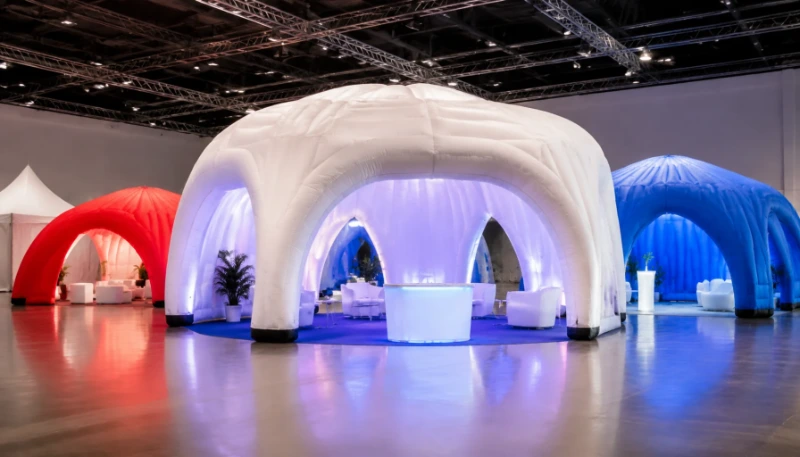
A cupola gonfiabile personalizzata is basically an air-supported structure that uses a continuous fan or blower to hold its shape. Unlike a traditional tent with metal poles and guy lines, these domes rely on internal air pressure to stay up. That makes them incredibly fast to set up compared to frame tents.
Here’s where things get tricky — and trust me, most vendor websites don’t help one bit.
There are three distinct types you need to know about:
Dome tents (membrane only): These are the simplest. A single layer of fabric, inflated via a blower, with no internal frame. Perfect for short-term use — think a one-day brand activation or a pop-up retail display. What Instent sells as their AirDome falls into this category. They claim you can set it up in about one minute with just an air pump and no tools at all. For smaller sizes, that’s not far from the truth.
Air dome buildings: These are larger, more permanent structures often used for construction site enclosures or temporary warehouses. They usually include a floor and more robust anchoring systems. Some of the bigger units from companies like Creative Inflatables fit this description.
Hybrid inflatables with frames: Some domes combine inflatable beams with a rigid frame. These are safer for multi-day events where you need the structure to stay standing even if the blower loses power temporarily.
The distinction matters more than you think. If you’re running a 3-day outdoor festival, a simple membrane dome might sag or collapse when the generator hiccups. A hybrid or framed inflatable gives you redundancy.
From where I stand, most buyers either overspend on features they don’t need or under-spec on safety features they absolutely do. The key is matching the type to your actual use case.
If you need a dome for 3+ days, a framed inflatable is safer. For a one-day activation, a simple tent dome works. Don’t let a supplier upsell you to something you don’t need.
Custom Inflatable Dome Cost: Transparent Pricing for 2026
Now let’s talk money — because this is where suppliers get creative with their pricing, and where most decision-makers end up burning budget.
Honestly, the range is wild. According to the Cognitive Market Research report (8th Edition 2026), the global inflatable dome market was valued at $1,425.5 million in 2024 and is projected to reach $2,259.25 million by 2031, with a CAGR of 6.80%. That growth is driven by increased use in events and exhibitions.
But those macro numbers don’t help you budget for your specific project.
Here’s a realistic breakdown based on real prices I’ve pulled from supplier product pages:
Price Bands (Custom Printed Domes)
| Dome Size | Intervallo di Prezzo | Caso d'Uso Tipico |
|---|---|---|
| Small (10’ diameter) | $500 – $1,000 | Booth display, small pop-up |
| Medium (20’ diameter) | $1,500 – $3,000 | Trade show, brand activation |
| Large (30’+) | $3,500 – $6,000+ | Festival, sports event, winter shelter |
Let’s call out some actual figures from the market.
ImpactCanopy lists some units starting at $599. DeluxeCanopy lists some larger models at over $2,360, according to their website. WestShade lists tiny units starting at $199.95, according to their product page., but those are barely more than a backyard party tent — not what you’d use for a serious brand activation.
You might be wondering: what’s the catch with those low starting prices?
The catch is that “starting at” rarely includes what you actually need.
Hidden costs that will wreck your budget:
- Custom printing surcharge: Full-bleed digital print adds $200 to $800 depending on size and color count. Companies like BannerBuzz and Landmark Creations advertise full-bleed printing, but the price bump isn’t always obvious until you’re deep in the quoting process.
- Reinforcement for wind: If you’re using it outdoors, you’ll want reinforced seams and additional anchor points. That’s an extra cost.
- Spedizione: These things are bulky. A 30-foot dome packed down is still a heavy, awkward box. Shipping costs are estimated at $150 to $500 depending on distance.
- Anchoring kit: Stakes for grass are cheap. Sandbags for concrete are not. Quality sandbags for a medium dome are often priced between $100 and $300, as per product listings.
- High-CFM blower: The blower that comes with the dome might not be powerful enough for your size. A commercial-grade continuous blower typically adds $200-$500.
So when a supplier quotes you $599 for a dome, your actual delivered, anchored, printed cost is probably $1,200 to $1,500 for a small unit. For a large dome with full print, that $3,500 starting price can balloon to $5,500+.
Ask any supplier for an all-in quote including printing, sandbags, and a high-CFM blower. Never assume “starting at” includes everything — because it doesn’t, and you’ll find out when the invoice arrives.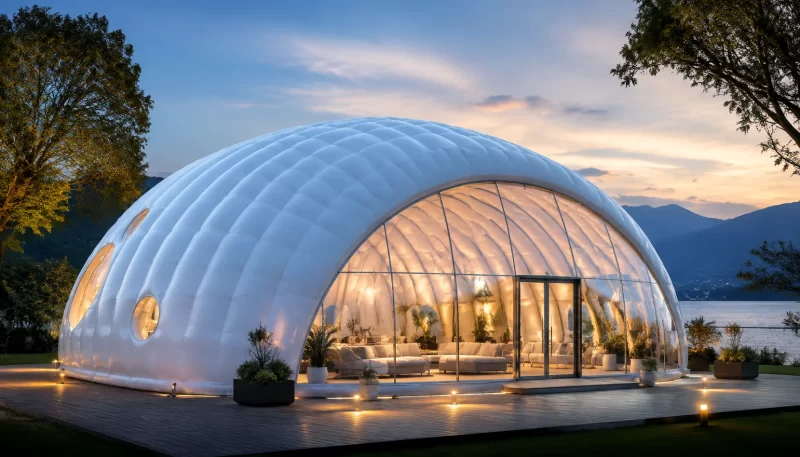
Beyond Logo Printing: What You Can Customize on an Inflatable Dome
This is where I see most buyers get lazy. They think customization means picking a color and slapping a logo on it.
That’s table stakes.
Real customization for a cupola gonfiabile personalizzata goes much deeper, and it’s the difference between “nice tent” and “brand experience.”
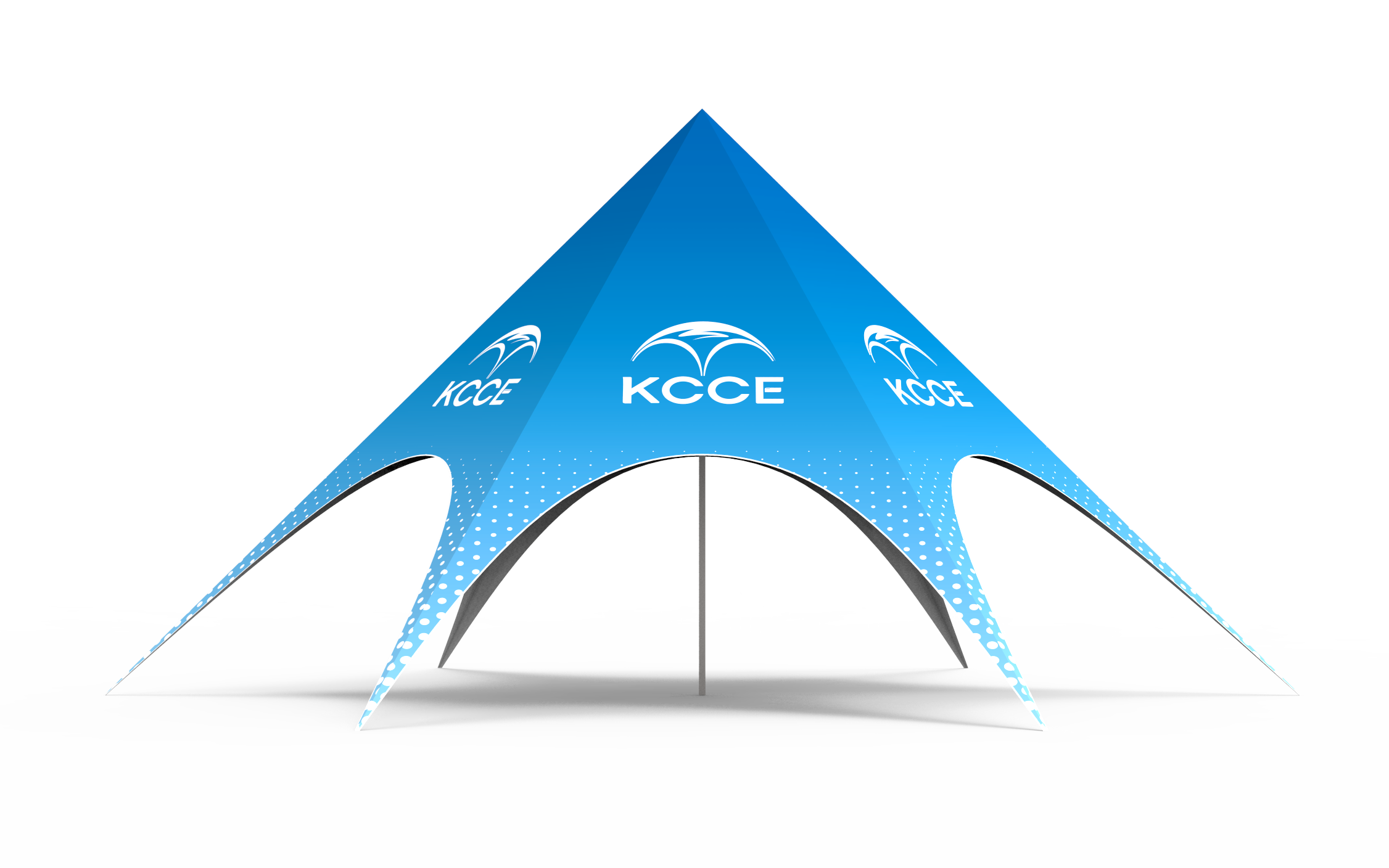
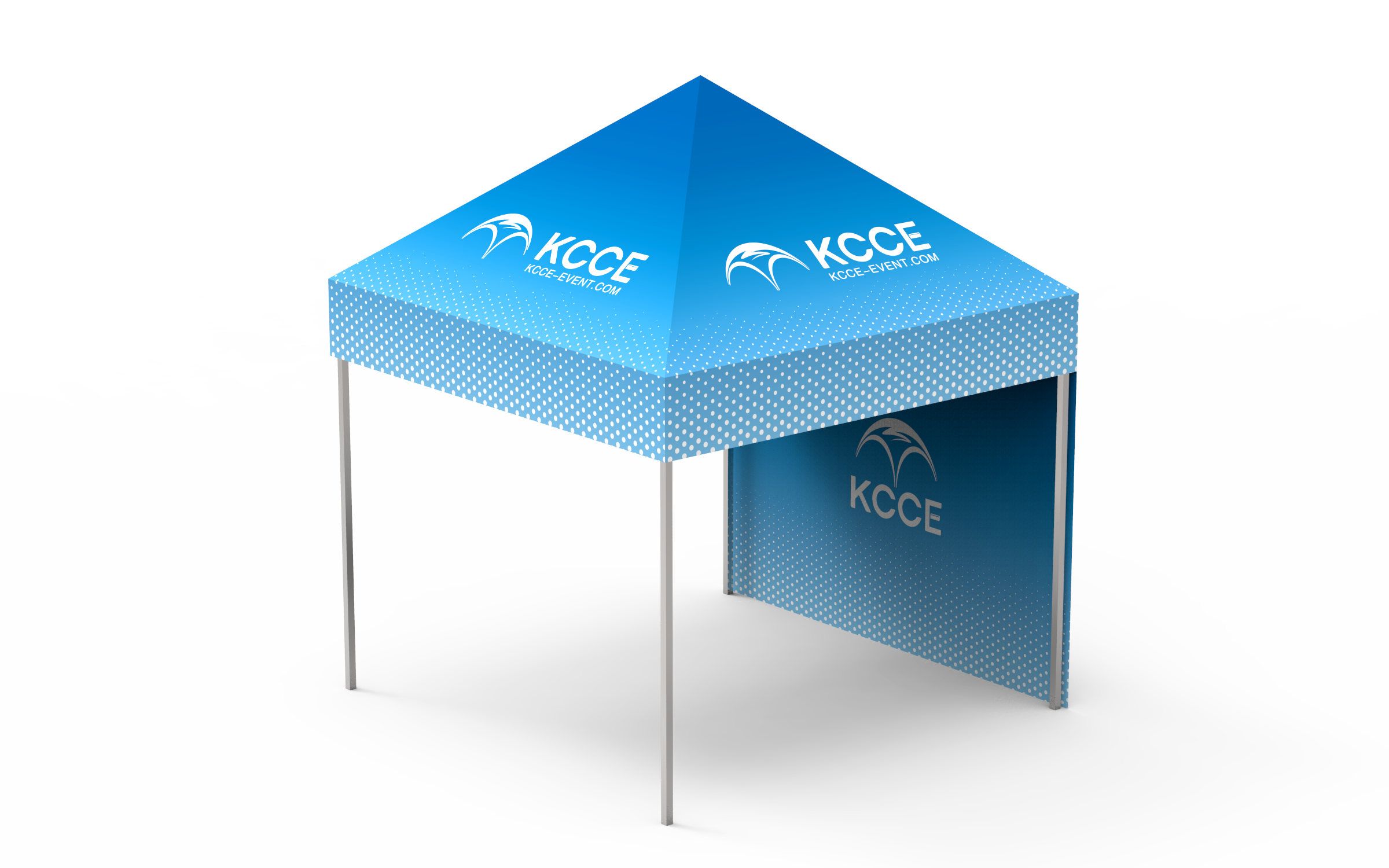
Custom inflatable dome with logo printing is available from every supplier in this space. ImpactCanopy, DeluxeCanopy, BannerBuzz, Landmark Creations, Instent, Creative Inflatables — they all offer full-bleed digital printing. Some offer screen printing for simpler designs. The print quality varies significantly. From what I’ve seen, Landmark Creations does some of the better work on complex graphics.
But printing is just the start.
Windows: Clear vinyl windows transform a dome from a closed box into an inviting space. People can see inside, and if you’re showcasing a product, that visibility is gold. The problem? Many suppliers don’t offer windows as a standard option — you have to ask for them. And when you do, make sure the vinyl is UV-resistant. Clear vinyl yellows fast in direct sun. I’ve seen domes that looked like they were dipped in tea after one weekend in full sunlight.
Doors: You have a choice between roll-up doors and zippered doors. Roll-up is better for high-traffic trade shows where you want to keep the entrance open. Zippered is better for security or weather sealing. Two entrances is a common request — users on social media frequently ask about inflatable domes with dual entrances for better traffic flow.
Ventilation panels: If your dome is enclosed and holding people for more than 30 minutes, you need ventilation. Condensation builds up fast from body heat and breath. Vents or mesh panels prevent that greenhouse effect.
Integrated lights: Some suppliers can sew in LED strips or mounting loops for interior lighting. This adds maybe $200-$400 but transforms the nighttime presence of your dome.
Custom shapes: You don’t have to settle for a perfect hemisphere. Half-domes work well for presentation stages where the back of the structure presses against a wall. Asymmetric shapes can match a brand identity. Creative Inflatables specializes in delivering custom shaped inflatable domes for specific brand activations.
Now, some of you might push back on this — “I just need a tent, not a spaceship.” Fair enough. But if you’re spending $2,000+ on a branded structure, the marginal cost of adding windows or integrated lights is small compared to the visual impact.
Decide on your visibility needs first. If attendees need to see inside, insist on clear windows — and ask for UV-resistant material to prevent yellowing. That one decision can save you from looking cheap at your next event.
How to Set Up a Custom Inflatable Dome: Time, Power, and Anchoring
Here’s something most supplier pages gloss over: the actual logistics of getting this thing up and keeping it there.
Tempo di configurazione
Instent advertises their AirDome can be set up in about one minute with just an air pump. For a small dome on flat ground, that’s accurate. For something larger — say 30 feet — you’re looking at 15 to 30 minutes for inflation, plus another 20 to 30 minutes for anchoring. Total setup: 45 minutes to an hour for a medium dome with two people.
For larger structures, expect 1 to 2 hours. If you have a team that’s never done it before, double those numbers.
Power requirements
Most domes need a continuous blower. The blower will draw between 1.5 and 3.0 amps. That’s not much — you can run a small dome on a standard 15-amp household circuit. But you need continuous power. If the generator runs out of fuel at 2 a.m., your dome deflates.
For larger domes, you might need a 1500W or higher generator. Always confirm blower requirements with the supplier before you arrive at the venue.
Anchoring — the part that ruins events
I mentioned that collapsed dome story at the start. Let me unpack what actually happened.
A trade show organizer I know bought a cupola gonfiabile personalizzata for a booth at a convention center. They’d used it on grass before with stakes, no problem. This time the floor was polished concrete. They used 8-inch stakes — which did absolutely nothing on that surface. A door opened and the pressure shift was enough to tip the whole thing. The dome didn’t break, but it collapsed hard enough to damage some display equipment inside.
That’s a $3,000 lesson in anchoring.
Here are the anchoring rules:
| Surface | Recommended Anchor | Weight Needed (20’ dome, 15 mph wind) |
|---|---|---|
| Grass or soil | 12-18 inch steel stakes | 40 lbs per corner |
| Concrete or asphalt | Sandbags or water ballasts | 60-80 lbs per corner |
| Carpet or tile (indoor) | Water ballasts or plate weights | 40-60 lbs per corner |
For a 30-foot dome in exposed outdoor conditions, you might need 100+ lbs per corner. Sandbags work, but water ballasts are easier to transport empty and fill on site.
Winter and weather considerations
If you’re using a cupola gonfiabile personalizzata in winter, you need to talk about snow load ratings. Not all domes are rated for snow — and the ones that are require specific material thickness and internal bracing.
Wind is the bigger enemy. An inflatable dome is essentially a sail. The aerodynamic shape helps — Instent specifically calls out their “aerodynamic shape technology” designed to handle wind and rain — but anchoring still determines whether you go home with a tent or a tangle of fabric.
Pre-inspect your venue surface before you order. If it’s concrete, calculate total sandbag weight before ordering — and budget for a generator if no power is available at your location.
Inflatable Dome Material Guide: Which Fabric Should You Choose?
I remember visiting a supplier’s warehouse a few years back and seeing the difference between materials up close. The cheap stuff felt like a rain jacket. The premium stuff felt like truck tarp. The difference in application was night and day.
The three primary materials you’ll encounter:
PVC (Cloruro di Polivinile)
Heavy. Durable. UV-resistant. This is the gold standard for outdoor multi-day use. Most commercial-grade domes from suppliers like Instent and Creative Inflatables use PVC. According to brand specifications, the material weight falls between 18 oz and 22 oz per square yard.
PVC holds up to sun exposure better than alternatives. It doesn’t degrade as fast under UV. It’s also more resistant to punctures and tearing — which matters when you have foot traffic, equipment moving in and out, and the occasional accidental knife cut by a setup crew.
Vinyl (Often Polyester-backed PVC)
Lighter than pure PVC. Cheaper. Often rated around 9 oz to 12 oz per square yard. I see this material on budget domes from companies like DeluxeCanopy and WestShade. It works fine for indoor use or one-day events. For outdoor multi-day use, you’re rolling the dice.
Vinyl tends to stretch more under heat, which means the dome shape can sag. And in cold weather, it gets stiff and more likely to crack if stressed.
Nylon / TPU
Lightweight. Packable. Expensive. This is the high-end option for backpacking or portable events where weight is the primary concern. Instent offers a 420D nylon option for some products. Nylon and TPU (thermoplastic polyurethane) are stronger than vinyl by weight, but they’re not as UV-resistant as PVC.
For most custom inflatable structures used in trade shows or brand activations, nylon is overkill. You’re not hiking it up a mountain.
Material Comparison Table
| Materiale | Peso | UV Resistance | Puncture Resistance | Costo | Ideale per |
|---|---|---|---|---|---|
| 18 oz PVC | Pesante | Excellent | Alta | Medio-Alto | Outdoor multi-day events |
| 9 oz Vinyl | Leggero | Fair | Basso | Basso | Indoor, one-time use |
| 420D Nylon | Molto leggero | Good | Medio | Alta | Portable / hiking events |
Flame retardancy is non-negotiable
Most event venues require materials to meet NFPA 701 fire standards. Nearly every supplier in this space produces domes that meet or exceed this standard — but verify it before ordering. If the dome goes up in a venue that requires fire certification and your dome isn’t certified, you’re looking at a fine or being shut down.
For outdoor multi-day use, choose 18 oz PVC with UV coating. For indoor or one-time, 9 oz vinyl is fine. Never buy nylon for high-traffic events unless weight is the absolute priority.
5 Best Custom Inflatable Dome Suppliers Compared (2026)
I’ve dug through supplier catalogs, pricing pages, and customer reviews to put together this comparison. No affiliate links — just what I think is worth your time.
| Fornitore | Starting Price | Max Size | Materiale | Qualità di stampa | Setup Support | Garanzia | Ideale per |
|---|---|---|---|---|---|---|---|
| Instent | ~$800-$1,200 | 30’+ | 420D Nylon, PVC | Excellent | Video guides, tool-free setup | 1-year limited | Extreme weather, branded events |
| DeluxeCanopy | $599 | 20’ | 300D Polyester/PVC | Good | Basic instructions | Limitato | Budget-conscious buyers |
| ImpactCanopy | $599-$899 | 20’-30’ | Polyester/PVC | Good | Manual included | 1-year limited | Mid-range trade show domes |
| BannerBuzz | $700-$1,000 | 20’ | PVC | Very good | Limitato | Varia | Custom printing quality |
| Landmark Creations | $1,000+ | 40’+ | Heavy PVC | Excellent | Extensive support | Comprehensive | Large-scale activations, custom shapes |
| Creative Inflatables | Custom quote | Very large | PVC, custom blends | Premium | Project management | Personalizzato | Specialty built-to-order domes |
| WestShade | $199.95 (mini) | 15’ | Lightweight vinyl | Basic | Minimal | Limitato | Backup shade, low-budget small events |
My take on each:
Instent — Their AirDome is legit. The one-minute setup claim is real for their smaller units. I like that they focus on aerodynamic design for weather resistance. If you’re doing an outdoor activation where conditions are unpredictable, they’re a strong choice. Their website does a decent job showing the feature set.
DeluxeCanopy — They show up in search results constantly. Their pricing is aggressive — starting around $599. But I’ve seen enough reviews about material quality issues to be cautious. Fine for indoor or one-day. Not for a three-day festival in August.
ImpactCanopy — Similar price point to DeluxeCanopy but with slightly better reviews on durability. Their mid-range sizing (20-30 feet) is where they shine.
BannerBuzz — Known more for banners and signage, but their dome printing quality is solid. If your activation is primarily about visual branding, they’ll do a good job with the print. Their dome hardware is middle-of-the-pack.
Landmark Creations — Premium pricing but premium product. They handle large-scale custom projects that most other suppliers won’t touch. If you need a 40-foot dome with specific entrance configurations, they’re worth the call.
Creative Inflatables — These guys do the big stuff. Custom shapes, branded environments, massive domes for public events. You’re not buying off the shelf — you’re commissioning a build. Lead times are longer and prices are higher, but the result is professional-grade.
WestShade — At $199.99 for a tiny dome, they’re the value king. But you get what you pay for. Not appropriate for serious brand work.
Don’t buy from the first Google result. Use this table to shortlist 2-3 suppliers, then request a custom quote from each — compare their response time and clarity. A supplier that answers your questions fast and clearly is a supplier you can work with under event pressure.
Choosing the Right Custom Inflatable Dome for Your Event Type
This is where everything comes together. You’ve got the price data, the material knowledge, the supplier list. Now let’s match dome specs to real event scenarios.
Trade Show Booth
You need a medium dome (10-20 feet). Print quality is critical because this is a close-up environment. People will walk past and see every detail of your logo and graphics.
Spec: 18 oz PVC, full-bleed digital print, clear windows for product visibility, roll-up door for open access. Quick setup is nice but not critical — you’ll have load-in time.
La mia raccomandazione: Instent or Landmark Creations for the print quality.
Festival all'aperto
Weather is your primary concern. Wind loads, potential rain, and temperature swings. Go larger — 20 to 30 feet — because you need enclosed space for guests to gather.
Spec: Heavy PVC (22 oz if possible), reinforced seams, multiple anchoring points, ventilation panels. Consider water ballasts because grass might not hold stakes if the ground is dry or muddy.
La mia raccomandazione: Instent for their weather-focused design, or Creative Inflatables for a fully custom solution.
Sports Activation
High foot traffic. People will bump into walls, lean on the structure, and kids will definitely test its durability. You need oversized doors for entrance flow.
Spec: Heavy-duty PVC, reinforced lower panels, double or triple zipper doors, integrated foot anchors or heavy weight system. Durability matters more than setup speed.
La mia raccomandazione: Landmark Creations for their experience with sports brand activations.
Winter Event
Snow load rating is non-negotiable. Ask the supplier for the dome’s snow load capacity. Most standard domes aren’t rated for more than a few inches of snow. Material flexibility in cold weather matters — PVC gets stiff below freezing but remains functional if properly designed.
Spec: Insulated double-skin dome if possible, heater-compatible air circulation, enhanced anchors for frozen ground.
La mia raccomandazione: Creative Inflatables or custom engineering from Landmark Creations.
Construction Site Enclosure (Dust/Noise Control)
There’s been real interest in using inflatable domes for construction site dust and noise control. A LinkedIn article from the “Inflatable Dome Tents Market Research Report” notes the increasing adoption across different sectors. The question “Did China build an inflatable dome over a construction site?” appears in People Also Ask — and yes, that technology exists and is being deployed.
For this use case, you need a dome that seals to the ground, has low leakage, and can withstand ongoing activity around it.
Spec: Heavy PVC, integrated floor system, high-CFM blower running continuously, multiple access points for equipment, gray or neutral color for industrial setting.
La mia raccomandazione: Creative Inflatables or a specialty industrial inflatable supplier.
Create a decision matrix: size + location + duration + weather = filter your options. If you’re unsure about your specific needs, rent first to test the dome at a smaller event before you commit to a $5,000 purchase.
Personal Opinions on What The Industry Gets Wrong
I’ve been in this business long enough to develop strong opinions.
First: The industry overpromises on setup ease. Yes, a small dome inflates in minutes. But the anchoring and staking process takes as long as setting up a standard pole tent for a medium-to-large dome. Read the fine print.
Second: Most buyers under-budget for anchoring. They spend $3,000 on a beautiful custom dome and then try to anchor it with $20 worth of stakes from home depot. That mismatch is why domes collapse. A dome is only as good as its anchors.
Third: Custom printing technology has gotten amazing — but some suppliers still use lower-resolution printers or cheaper inks that fade fast. Ask for print samples. If they won’t send you a physical sample, that’s a red flag.
Fourth: The market is growing fast. The Cognitive Market Research report projects a 6.80% CAGR through 2031, and the LinkedIn analysis shows a 4% CAGR specifically for dome tents through 2033. Demand is real. But that growth means more fly-by-night suppliers are entering the space. Stick with established names.
The Single Insight That Can Save You Thousands
The cheapest dome is the most expensive mistake. A $599 dome that tears or blows away will cost you more in lost brand equity than a $2,500 dome that survives the weekend.
Is your next brand activation going to be the one people remember — or the one they laugh at?
Here are your clear next steps:
- Use the supplier comparison table above to shortlist three suppliers.
- Send them the same request for quote — include your event size, surface type, and expected wind conditions. Compare their response time and clarity.
- Ask for material samples and a setup video before you sign.
- Budget for anchoring. Add 15-20% to your dome cost for sandbags, stakes, or water ballasts and a higher-CFM blower.
Domande Frequenti
Q: How much does an inflatable dome cost?
A: Expect to pay $500 to $1,000 for a small 10-foot dome, $1,500 to $3,000 for a medium 20-foot dome, and $3,500 to $6,000 or more for a large 30-foot plus dome. These prices assume custom printing. Add shipping, anchoring kits, and a quality blower — a $599 dome quickly becomes a $1,200 installed cost.
Q: How much does it cost to get a custom inflatable?
A: A fully custom inflatable with proprietary design, specific size, and branded graphics typically starts around $1,500 and goes up from there. Specialty builds from suppliers like Landmark Creations or Creative Inflatables can exceed $5,000 for large-scale or complex shapes.
Q: Did China build an inflatable dome over a construction site?
A: Yes. Inflatable domes have been used internationally as construction site enclosures for dust and noise control. This application is gaining traction because inflatable structures offer faster setup and lower cost compared to rigid construction scaffolding. Search “China inflatable dome construction site” for real project examples.
Q: Can you make custom inflatables?
A: Absolutely. Virtually every major supplier offers full customization options. You choose the size, color, material, printed graphics, windows, doors, and ventilation. Companies like Instent, Landmark Creations, and Creative Inflatables specialize in building custom inflatable structures tailored to specific brand activations, events, or industrial needs.
Riferimenti
1. AirDome Canopy Tent – Instent
2. How to Customize an Inflatable Dome Tent: A Budget-Friendly Guide – MVP Visuals
3. Custom Inflatable Domes for Events & Activations – Creative Inflatables
4. Navigating Inflatable Dome Tents Market Growth: 4% CAGR and Key Trends by 2033 – LinkedIn
5. Inflatable Dome Market Analysis 2026 – Cognitive Market Research