Imagine sealing the deal with a promising supplier for inflatable advertising tents from China. You’re buzzing with excitement, diving into the numbers—then suddenly hit a wall. Are there tariffs or duties to worry about when bringing those tents in? Honestly, this isn’t a minor detail. Getting tripped up on import fees can send your budget soaring or cause your shipment to sit in customs, gathering dust. From what I’ve experienced navigating these waters, truly grasping import tariffs isn’t just handy—it’s absolutely vital if you’re handling cross-border sourcing.
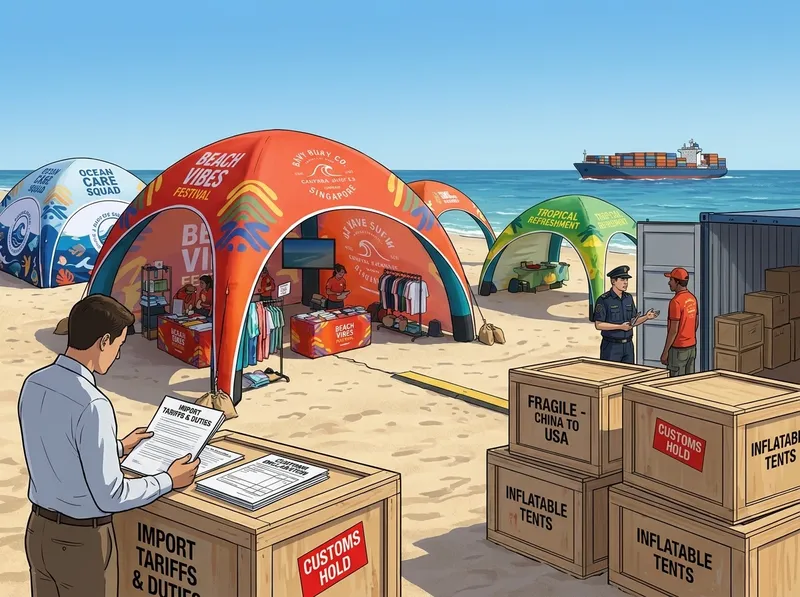
Tariffs and Duties: What They Actually Mean and Why You Should Care
Let’s break down what these tariffs and duties are, since many folks jump into importing with only a vague idea and get blindsided at customs. Tariffs are basically taxes set by governments on goods coming into their country. Imagine it as a toll booth—except instead of paying to use a road, you pay to bring your products across a border. But that’s not all: import duties often bundle other charges too, like value-added tax (VAT), excise taxes, and various customs fees.
Put simply, these taxes and fees combine to shape your product’s “landed cost”—the actual price you pay once the goods show up, including freight, insurance, and those customs charges. Overlook these, and your “affordable” inflatable tents could cost far more than you bargained for.
Here’s a rough sketch of the main components:
- Tariff: A percentage tax based on the declared value of the goods, often tied to FOB or CIF pricing.
- Import VAT: Usually calculated on the value of goods plus tariff plus shipping costs.
- Customs processing fees: These might be fixed or variable charges for clearing your shipment.
Knowing how these stack up can save you from nasty surprises later on.
The HS Code Puzzle: Where Inflatable Advertising Tents Fit In Customs
Here’s a nugget of wisdom: getting your HS Code wrong can land you in hot water, with extra costs and delays. Inflatable advertising tents usually carry the HS Code 95069900, which broadly covers inflatable items not classified elsewhere.
Why does that matter? The tariff rate you pay hinges on the HS Code customs assigns to your goods. Misclassifying them can mean either wrong duty charges or getting stuck in customs limbo—or worse, fines.
Wondering how to check your HS Code? A good start is your country’s customs website or international databases like the World Customs Organization’s Harmonized System. There are handy online tools too, like the US International Trade Commission’s HTS Search. Enter phrases like “inflatable advertising tents,” and you’ll see the codes and tariff rates.
In my experience, customs brokers help sort this out, but I always say: double-check yourself. Your money’s at stake.
What Are the Current Import Tariffs on Inflatable Advertising Tents from China?
Alright, let’s talk numbers. The tariffs on inflatable advertising tents coming from China into the US generally sit between 5% and 10%, depending on the exact classification and product specifics. For HS Code 95069900, the US Customs currently lists a base tariff of about 6.5% (as of 2026).
But here’s the twist—politics can shake things up fast. Trade tensions, renegotiations, or new deals can change those rates in the blink of an eye. Just last year, a client of mine got hit by an unexpected 10% added tariff on certain Chinese imports. That hike pushed their landed cost up nearly 12%, forcing a tough price increase.
And remember, tariffs aren’t the whole picture. Once goods land domestically, import VAT or sales taxes kick in, varying by state or country.
Let me put it simply: if you bring in $10,000 worth of tents, a 6.5% tariff adds $650. But throw in shipping, insurance, and VAT, and that number can balloon quite a bit.
Who’s On the Hook for Paying Tariffs, and How Does That Work?
You might be asking, who actually pays these tariffs? Usually, it’s the “importer of record”—the person or company named on the import documents. That’s often you, the buyer, or someone you appoint like a customs broker.
When your shipment arrives, the customs officials tally up the tariff based on your declared HS Code and invoice. You (or your broker) pay the fees before your goods get released.
Heads-up: Your trade contracts should clearly say who’s covering tariffs, typically laid out by Incoterms. For example, under FOB (Free On Board), you pay tariffs; under DDP (Delivered Duty Paid), the seller might take that on. Not clarifying this can cause serious headaches or surprise bills.
And if you’re importing via smaller packages—think cross-border e-commerce—courier companies often pay duties upfront, billing you later. Convenient? Yes. But watch out for extra handling fees sneaking in.
Does Shipping Cost Impact Tariffs? Let’s Clear This Up
I get this question a lot: are tariffs charged on shipping fees? The quick answer is yes.
Customs usually bases tariffs on the CIF value—cost, insurance, and freight combined. So your declared product cost plus shipping and insurance form the tax base. Trying to lowball your invoice while shipping costs are high won’t fool customs; you’ll end up paying tariffs on the total.
Example time: if your tents are $10,000 FOB, and shipping plus insurance runs $2,000, your 6.5% tariff applies to $12,000, meaning $780 instead of $650. It adds up, especially with bigger shipments.
Just so you know, import fees are a broader category that includes tariffs but also VAT, customs handling, and other charges—not just the tariffs themselves.
Looking back, I’ve seen many underestimate these extra costs, turning what looks like a good deal on paper into a budget nightmare once the shipment lands.
Special Notes: Cross-Border E-Commerce and Temporary Trade Policies
There’s another angle that complicates things—cross-border e-commerce. Ordering inflatable tents through platforms like Alibaba’s Tmall or Amazon Global sometimes benefits from special customs rules and tariff reductions for smaller shipments.
For example, some countries offer temporary trade policies or tariff breaks for shipments below certain thresholds. Cross-border e-commerce tariffs often differ from bulk import tariffs.
But a warning: these perks don’t often apply if you exceed certain values or quantities. Plus, such exemptions can change frequently, particularly with ongoing trade negotiations affecting Import tax from China to USA 2025.
An example: a small importer I know cleverly split a large order into smaller shipments under e-commerce limits to avoid 15% tariffs. It’s legal and smart, but this strategy comes with risks and limits—always check the current rules.
The Risks of Getting Tariffs Wrong or Trying to Avoid Them
Here’s the blunt truth: trying to dodge tariffs by mislabeling HS Codes or undervaluing shipments is a bad idea. Customs agencies worldwide are stepping up inspections and using data analysis to catch inconsistencies. The consequences? Fines, penalties, or even seized goods.
“Smuggling” isn’t just for criminals—simple mistakes can lead to shipments getting stuck for weeks, costing storage fees and legal headaches.
You might wonder, is the tariff really a tax on the consumer? Technically, importers pay it upfront, but in the end, customers usually foot the bill through higher prices.
The best protection is accurate classification, clear paperwork, and honest pricing. Teaming up with a trusted customs broker or logistics expert also helps avoid trouble—and saves you stress.
So, What Should You Do Next?
Wondering if tariffs and duties are something you should care about with inflatable advertising tents from China? The answer is a definite yes. It’s not just an accounting issue—it’s about staying in control of risk and managing your cash flow.
If you haven’t yet, take a moment to confirm your HS Codes, double-check contracts for who pays what, and see if your shipping costs are accounted for in tariff calculations. And don’t forget to watch policy updates under the Import tax from China to USA 2025 umbrella; they can really shake up your costs.
From my point of view, having a solid import plan that anticipates tariffs, duties, and compliance issues makes life a lot easier—and keeps your pricing competitive.
Pertanyaan yang Sering Diajukan
Q: Who pays import tariffs when bringing in inflatable advertising tents from China?
A: Usually, the importer of record (the buyer or their customs broker) pays before customs releases the goods.
Q: How do you pay tariffs on packages imported from China?
A: For small packages, courier companies often collect duties during delivery. For bulk shipments, you pay during customs clearance.
Q: Are import fees and tariffs the same thing?
A: Not exactly. Import fees include tariffs plus VAT, customs handling, and other charges.
Q: Does shipping cost affect tariffs on inflatable tents?
A: Yes. Tariffs are often based on the CIF value, which includes shipping and insurance.
Q: What’s the current import tax rate from China to the USA for inflatable advertising tents?
A: Around 6.5% under HS Code 95069900, though 2025 policy changes could alter that.
Q: Are tariffs a tax on consumers?
A: Importers pay tariffs upfront, but these costs usually get passed on to consumers in higher prices.