I’ve been in the inflatable tent business for over a decade, and I can tell you the number one thing that drives me crazy is how “quick setup” gets thrown around in marketing materials. Every brochure promises lightning-fast assembly. Every sales rep says “you’ll be up in minutes.” But when a rental manager or event coordinator is standing in a parking lot at 6 AM with a crew waiting, those vague promises don’t help anyone.
So let’s talk real numbers. This guide is for the decision-makers — the event managers, rental company owners, and marketing directors who need to know exactly what an inflatable advertising tent quick setup actually looks like. I’m going to give you the inflation time data nobody else publishes, walk you through blower selection so you don’t end up with an undersized unit, and help you figure out whether an inflatable tent or a pop-up canopy makes more sense for your specific operation.
Quick Answer
A 10×10 inflatable advertising tent typically inflates in 2–4 minutes with a properly sized blower, while a 20×20 unit takes 8–12 minutes. One person can handle setup on smaller sizes in calm conditions, but anything above 15×15 usually needs two people for anchoring and positioning.
How Long Does an Inflatable Advertising Tent Take to Set Up?
Here’s the thing — nobody publishes this data. I’ve checked competitor sites, manufacturer catalogs, trade publications. They all say “quick” and “easy” without giving you a single number. So I’m going to give you the real-world ranges based on what I’ve seen across hundreds of setups.
The variables that matter most: tent size, blower CFM rating, and whether you’re running constant air or sealed air. For constant air tents — the kind that stay plugged in and inflated throughout your event — here’s what you’re looking at:
| Tent Size | Inflation Time (constant air) | Deflation/Pack-Down | Blower CFM Needed |
|---|---|---|---|
| 10×10 | 2–4 minutes | 3–5 minutes | 250–350 CFM |
| 15×15 | 4–7 minutes | 5–8 minutes | 450–600 CFM |
| 20×20 | 8–12 minutes | 8–12 minutes | 750–1,100 CFM |
These times assume one person who knows what they’re doing, a blower matched to the tent size, and calm conditions. Add wind, add an inexperienced crew, add a blower that’s undersized — those numbers go up fast.
For sealed air tents — the type with airtight chambers that you inflate once and don’t need continuous airflow — inflation actually takes longer because you’re filling larger internal volumes to higher pressure. A 10×10 sealed air unit might take 5–8 minutes. But then you unplug the blower and you’re done. No cord running across the event space, no generator humming in the background.
The “quick setup” reality check: If a vendor tells you their 20×20 inflatable tent sets up in “under 5 minutes,” ask them what blower they’re using. The math doesn’t work unless they’re running something in the 1,500+ CFM range, which is not a portable unit. I’ve seen it happen exactly zero times in real conditions.


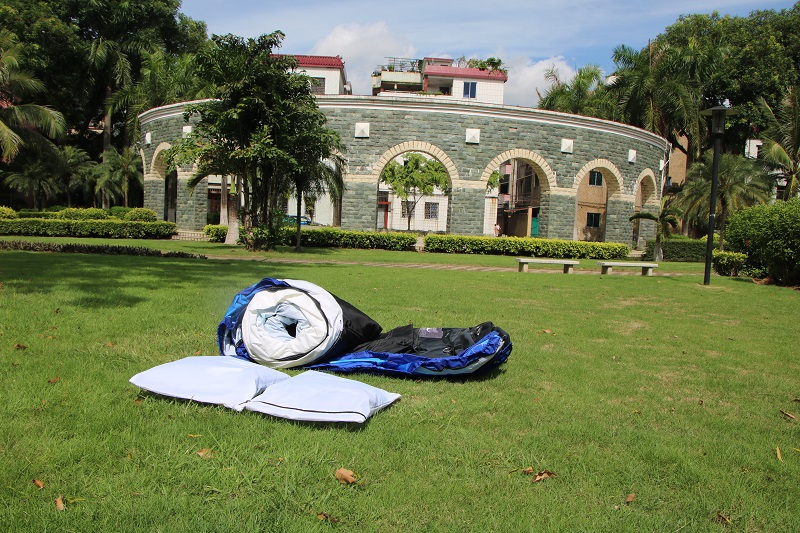

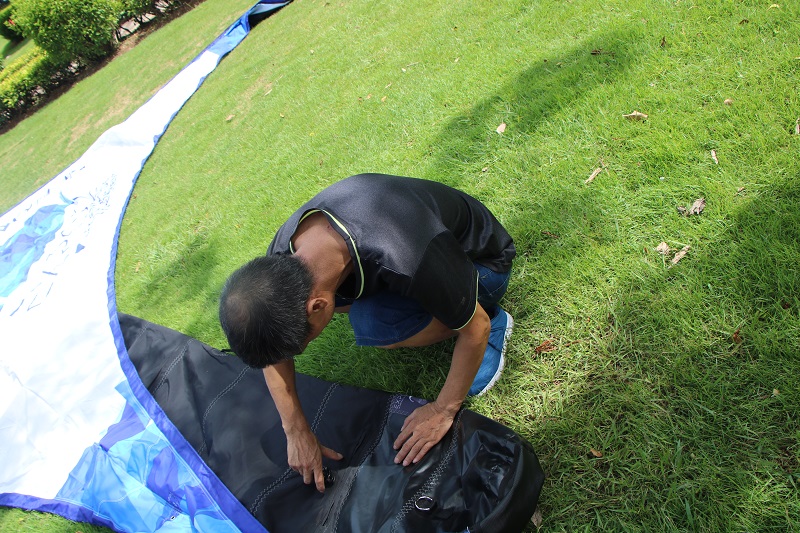
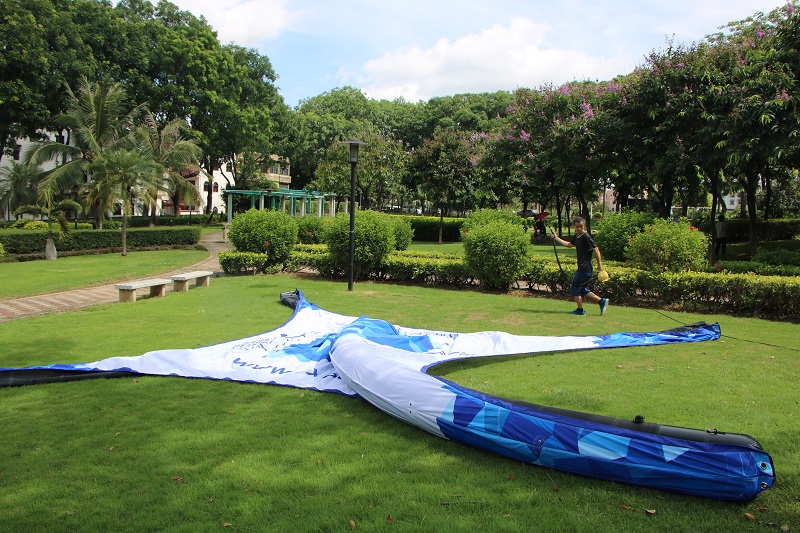
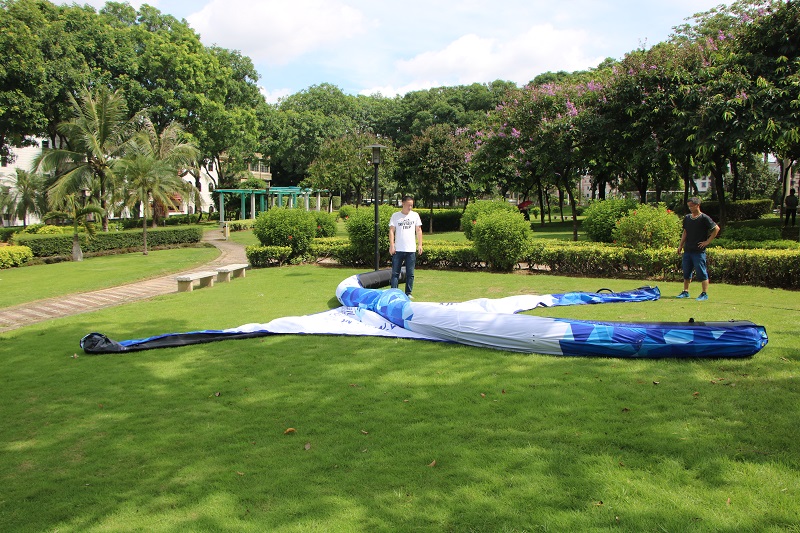

Can One Person Set Up an Inflatable Advertising Tent?
Short answer: sometimes. And I hate that answer as much as you probably do, but it’s the truth.
Here’s when one person can realistically handle an inflatable advertising tent setup:
- Tent size is 10×10 or smaller. The fabric weight and bulk are manageable for one adult.
- Wind is under 10 mph. Anything above that and the tent becomes a sail while you’re trying to position it.
- Ground is grass or soft surface. You can drive stakes by yourself. Concrete or asphalt requires weighted anchoring, which is heavier and more awkward to position solo.
- You’ve done it before. First-timers always take longer. Always.
For 15×15 and up? Bring a second person. Not because the inflation itself requires two people — the blower does that work — but because positioning, anchoring, and securing the tent before it catches wind is a two-person job. I don’t care what the marketing copy says.
The anchor-first workflow that actually works: stake or weight your corners before you fully inflate. This is the single biggest tip I can give you for a quick setup outdoor tent. Inflate to about 50% capacity, position and anchor your corners, then finish inflation. This prevents the tent from shifting or rolling while you’re trying to secure it. Sounds obvious. Almost nobody does it.
Blower Selection: CFM, Wattage, and Sizing
This is where most buyers get burned. The tent arrives, you’re excited, you plug in the blower that came with it — and the tent inflates like a deflating balloon. Slow. Saggy. Disappointing.
CFM stands for cubic feet per minute — it’s the measure of how much air the blower moves. This is the number that matters. Not wattage, not the size of the blower housing, not what the sales page says about “powerful motor.” CFM.
Here’s my sizing rule of thumb based on years of matching blowers to tents:
- 10×10 tent: 250–350 CFM minimum. A 350 CFM blower gives you comfortable margin.
- 15×15 tent: 450–600 CFM. Don’t go below 450.
- 20×20 tent: 750–1,100 CFM. I’ve seen 20×20 tents struggle with 600 CFM blowers in any kind of breeze.
Undersized blower symptoms you should watch for: the tent inflates but the walls look wrinkled or soft, the structure sways more than it should, and the blower runs hot because it’s working at maximum output continuously. If you’re seeing any of these, your blower is too small.
On wattage — this matters for generator planning. A 350 CFM blower typically draws around 300–400 watts. A 750 CFM unit can pull 600–800 watts. If you’re running a generator, add up your blower wattage plus any lighting or AV equipment you’re powering. I’ve watched event crews trip breakers because they didn’t account for the blower’s draw.
What “blower included” actually means: Sometimes it means a properly matched blower. Sometimes it means the cheapest unit the manufacturer could source that technically moves air. Ask for the CFM rating before you buy. If the seller can’t tell you, that tells you something.
For constant air tents, the blower runs continuously throughout your event. That means noise and power draw are ongoing concerns. Sealed air tents use the blower only during setup, then you disconnect. If you’re doing a multi-day activation where quiet matters, sealed air is worth the trade-off in setup time.
Anchoring and Wind Safety
I’m going to be blunt here: anchoring is the part people skip, and it’s the part that gets tents destroyed and people hurt.
By ground type:
- Grass: Ground stakes, driven at a 45-degree angle away from the tent. Use stakes long enough to go through the topsoil into firmer ground — 12-inch minimum for smaller tents, longer for bigger ones.
- Asphalt or concrete: You can’t stake. Weighted anchoring only. Sandbags or water barrels at every corner and every leg point. The weights need to be heavy — common industry practice is 40–50 pounds per anchor point for a 10×10, more for larger tents.
- Deck or platform: Weighted anchoring, and you need to consider whether the surface can handle the load. A 20×20 tent catching wind puts enormous lateral force on its anchor points.
Wind speed thresholds — this is where the Beaufort scale becomes your decision-making tool:
- 0–12 mph (Beaufort 0–3): Fine for setup and operation. Normal anchoring.
- 13–18 mph (Beaufort 4): Setup gets harder. One-person setup is off the table. Double-check every anchor point.
- 19–24 mph (Beaufort 5): This is where I start getting nervous. Tents can handle it if properly anchored, but I wouldn’t want to be setting up in it.
- 25+ mph (Beaufort 6+): Pack it down. I don’t care what the wind rating says. Pack it down.
Common failure points I’ve seen: corners pulling free because only the legs were anchored, zipper doors ripping because someone tried to force them in wind, and the whole tent lifting because the blower tube disconnected and the structure lost pressure at a critical moment.
Inflatable vs Pop-Up Canopy: Which Fits Your Event?
You might be wondering if you even need an inflatable tent. Pop-up canopies are cheaper, lighter, and faster to deploy. So why bother with inflatable at all?
Here’s the honest comparison:
Kecepatan pemasangan: Pop-up canopies win. A 10×10 pop-up goes up in under 2 minutes with two people. An inflatable takes 2–4 minutes plus anchoring. But — and this is a big but — pop-up canopies require two people who know the frame mechanism. Inflatable tents are more forgiving for solo setup on smaller sizes.
Branding surface: Inflatable tents win, and it’s not close. The entire surface — walls, roof, even the legs — can be custom printed with your graphics. A pop-up canopy gives you a valance and maybe a back wall. If brand visibility is the point, inflatable is the answer.
Wind behavior: Inflatable tents handle wind better when properly anchored because the air pressure creates a semi-rigid structure. Pop-up canopies have rigid frames that can bend or snap in gusts. I’ve seen more pop-up frames destroyed by wind than inflatable tents.
Cost: Pop-up canopies are cheaper upfront. Inflatable tents cost more but last longer in commercial use and offer far more branding real estate.
Use-case split: For a car dealership promotion where you want the tent to function as a branded structure visible from the road, inflatable wins. For a marathon finish line where you need a large covered area with sponsor logos, inflatable is the standard choice. For a trade show booth where you’re indoors or in a protected area and just need a quick shelter, a pop-up canopy might be all you need.
Constant Air vs Sealed Air: Pick Before You Buy
This is the fork in the road that most buyers don’t even know exists until after they’ve purchased.
Constant air tents require the blower to run continuously. The tent stays inflated because air is constantly being pushed in, and the seams are designed to leak slightly — that’s intentional, it’s how the structure maintains pressure without over-inflating. You need power throughout your event. If the blower stops, the tent starts to deflate.
Sealed air tents have airtight chambers — often with TPU bladders — that you inflate to a target pressure and then seal. No continuous power needed. The trade-off is longer setup time and higher cost, but you get silence, no cords, and no dependency on a power source during your event.
Which one for your operation? If you’re a rental company doing multiple events per week, constant air is usually more practical — faster setup, simpler construction, lower cost per unit. If you’re doing a one-off brand activation where the tent needs to look perfect for photos and video, sealed air gives you a cleaner result without blower noise or visible power cables.
What to Buy: Size, Blower, and Setup Checklist
Let’s pull this together into something actionable.
Size-to-blower matching recap:
- 10×10 → 250–350 CFM blower
- 15×15 → 450–600 CFM blower
- 20×20 → 750–1,100 CFM blower
Your pre-purchase checklist:
- Confirm the tent size you actually need. Measure your booth space or event footprint.
- Ask for the blower’s CFM rating in writing. If they can’t provide it, walk away.
- Confirm whether the tent is constant air or sealed air. This affects your power planning.
- Check what anchoring hardware is included. Stakes for grass, weights for hard surfaces — you may need both.
- Ask about material specs — PVC, Oxford cloth, 210D or 420D. Heavier denier means more durability but also more weight to handle.
- Verify flame retardant certification if your venue requires it.
When you’re sourcing an inflatable advertising tent quick setup solution, the blower is not an accessory — it’s half the system. Buy the tent and blower as a matched pair, or at minimum verify the CFM before you commit.
Pertanyaan yang Sering Diajukan
Q: How long does it take to inflate an advertising tent?
A: A 10×10 inflatable advertising tent takes 2–4 minutes with a properly sized blower. A 15×15 runs 4–7 minutes, and a 20×20 takes 8–12 minutes. These times assume calm conditions and a blower matched to the tent size. Add wind or an undersized blower and those numbers stretch considerably.
Q: Do inflatable tents need a blower?
A: Yes, every inflatable tent needs a blower to inflate. Constant air tents require the blower to run continuously throughout your event to maintain pressure. Sealed air tents use the blower only during setup — once the airtight chambers are filled, you disconnect and the tent holds pressure on its own.
Q: Can one person set up an inflatable event tent?
A: One person can handle a 10×10 in calm conditions on grass. For 15×15 and larger, bring a second person for positioning and anchoring. Wind above 10 mph makes solo setup risky regardless of tent size. The anchor-first workflow — securing corners before full inflation — makes solo setup more manageable.
Q: How do I anchor an inflatable tent outdoors in wind?
A: Use ground stakes at a 45-degree angle for grass, and weighted anchors of 40–50 pounds per point for asphalt or concrete. Anchor corners before fully inflating. Pack down when sustained winds hit 25 mph. Proper anchoring is the difference between a tent that survives a gust and one that becomes a projectile.
Q: What size blower do I need for my inflatable tent?
A: Match CFM to tent size: 250–350 CFM for 10×10, 450–600 CFM for 15×15, and 750–1,100 CFM for 20×20. Undersized blowers cause sagging walls, excessive sway, and overheating. Always ask for the CFM rating before purchase — “blower included” without a CFM number tells you nothing.
Q: Is an inflatable tent better than a pop-up canopy for trade shows?
A: For branding visibility, yes — inflatable tents offer full-surface custom printing while pop-up canopies limit you to a valance and back wall. For pure setup speed in protected areas, pop-up canopies are faster. For outdoor events with wind exposure and brand visibility requirements, inflatable advertising tents are the stronger choice.
Q: What’s the difference between constant air and sealed air inflatable tents?
A: Constant air tents need the blower running continuously — faster setup, lower cost, but dependent on power throughout your event. Sealed air tents use airtight chambers inflated once during setup — longer setup, higher cost, but no power dependency and no blower noise during the event. Rental operations typically prefer constant air; one-off brand activations often choose sealed air.
Q: Can I leave an inflatable tent inflated overnight outdoors?
A: Constant air tents require the blower to run all night, which means power access and noise. Sealed air tents can stay inflated overnight if wind conditions are calm and anchoring is secure. In my experience, if winds are forecast above 25 mph overnight, pack it down regardless of tent type. The risk isn’t worth it.
Kesimpulan
The speed of your inflatable advertising tent quick setup comes down to one thing: blower sizing. Not the tent’s marketing claims, not the fabric weight, not the frame design. Match your CFM to your tent size, anchor before you inflate, and know your wind limits. Do those three things and your setup window becomes predictable. Skip them and you’re the person calling the venue at 7 AM asking for a delay. Before you order, ask yourself: can your team hit the setup window in 15 mph wind? If the answer is no, you either need a bigger blower or a different plan.