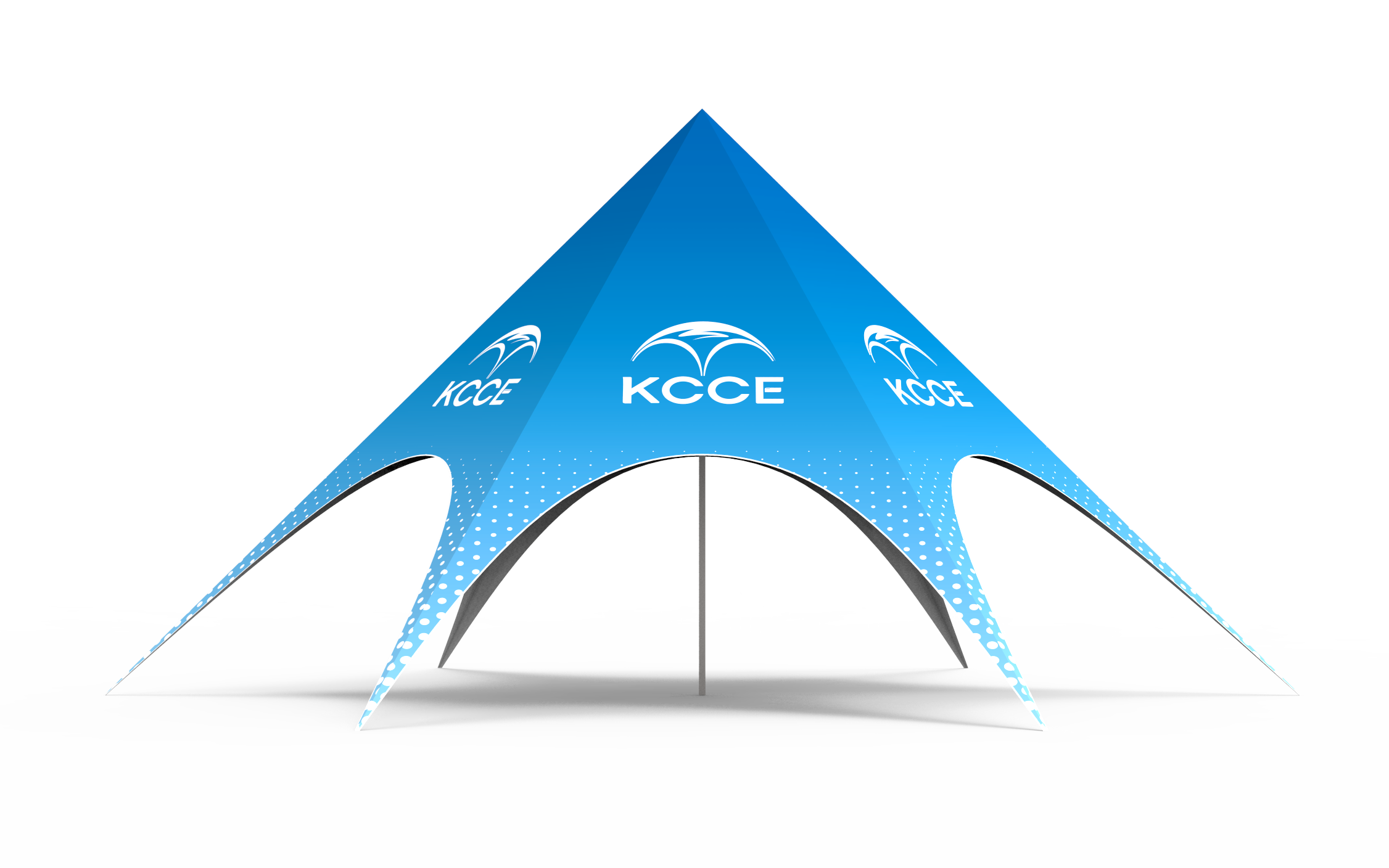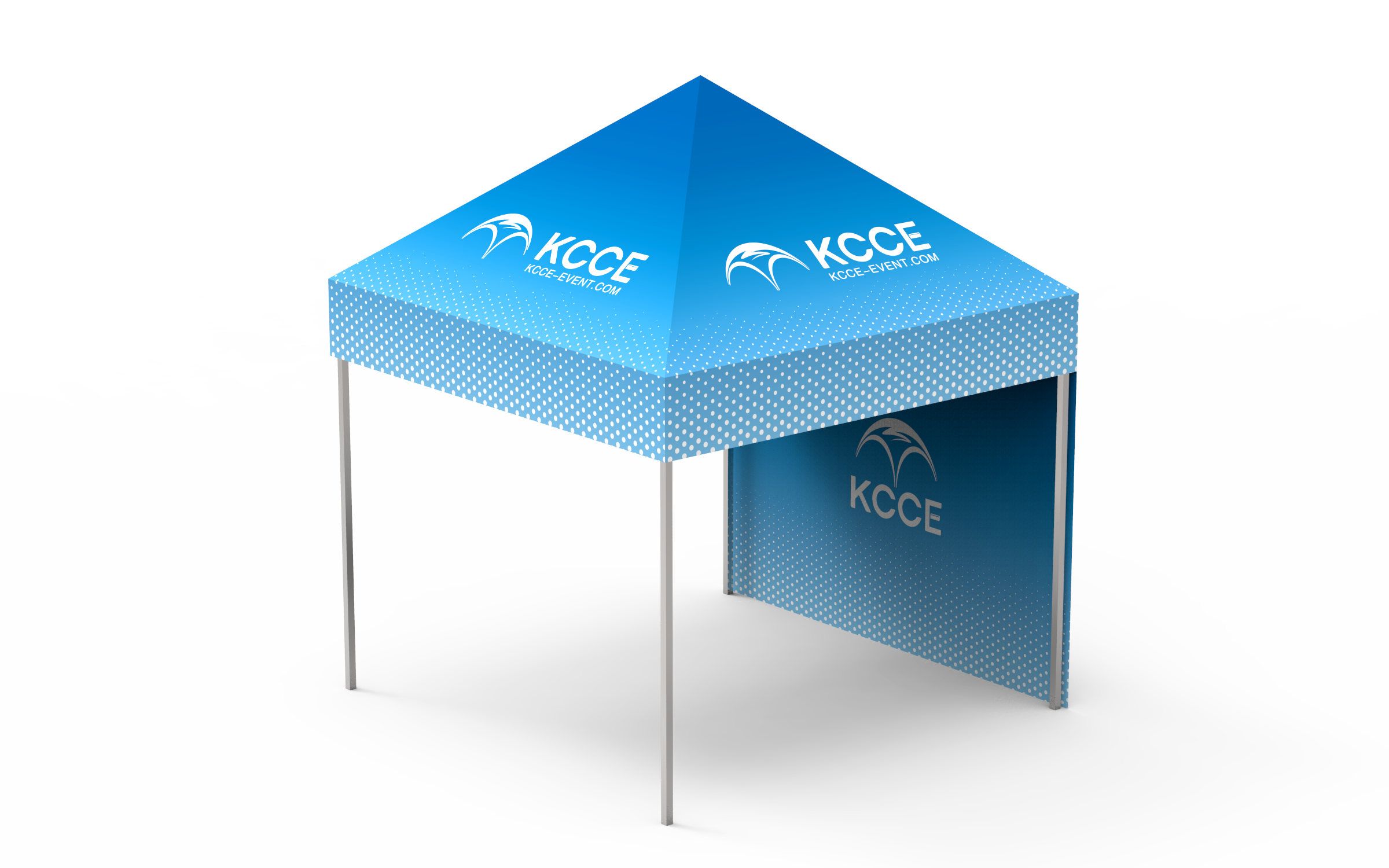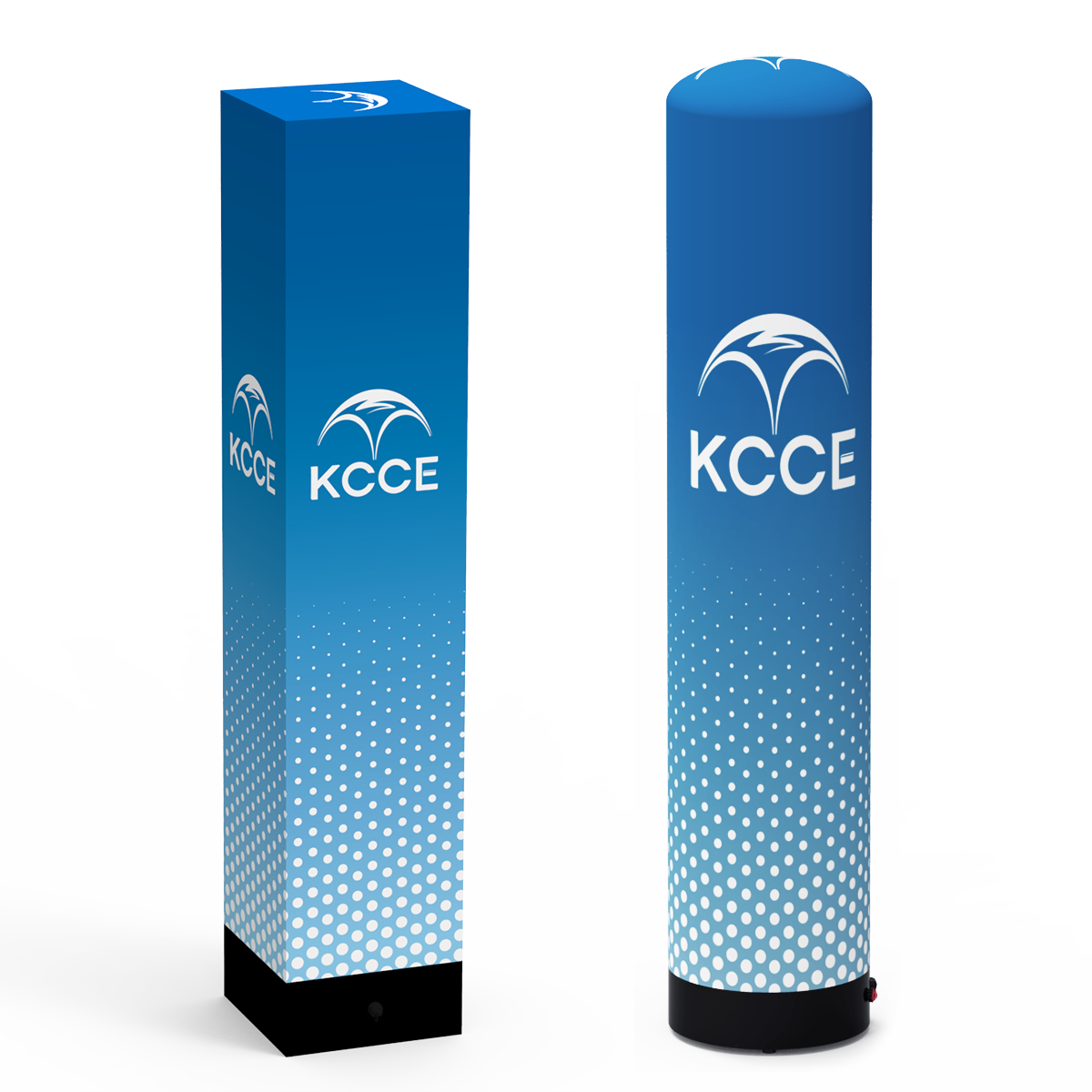
Anyone who’s organized events for a living knows the drill. You need a tent that doesn’t look like every other white box on the field, you need it to go up fast, and you need a vendor who actually answers the phone when something goes sideways. But here’s the problem: every time you search for “custom inflatable foldable tents,” you hit a wall of “contact us for pricing” forms and vague promises about “quick setup” and “durable materials.”
I’ve been in this industry long enough to remember when inflatable tents were the weird cousin of the event world—novelty items that looked cool but leaked air and flapped in the wind. Those days are over. The technology has matured, and the market data backs it up. A recent global market analysis of custom inflatables—covering advertising inflatables, inflatable tents, play structures, and furniture—shows the sector segmented by material type (PVC, nylon, Oxford cloth) and application. The growth is real, and so is the shift toward air-beam structures as a legitimate alternative to traditional frame tents.
But here’s the thing that still frustrates me: most buyers are flying blind. They’re comparing apples to oranges because nobody’s published a straight-talking comparison of what you actually get for your money. So let me fix that. This guide is vendor-neutral, spec-focused, and built from real procurement conversations I’ve had with manufacturers, suppliers, and event managers over the years.
Quick Answer
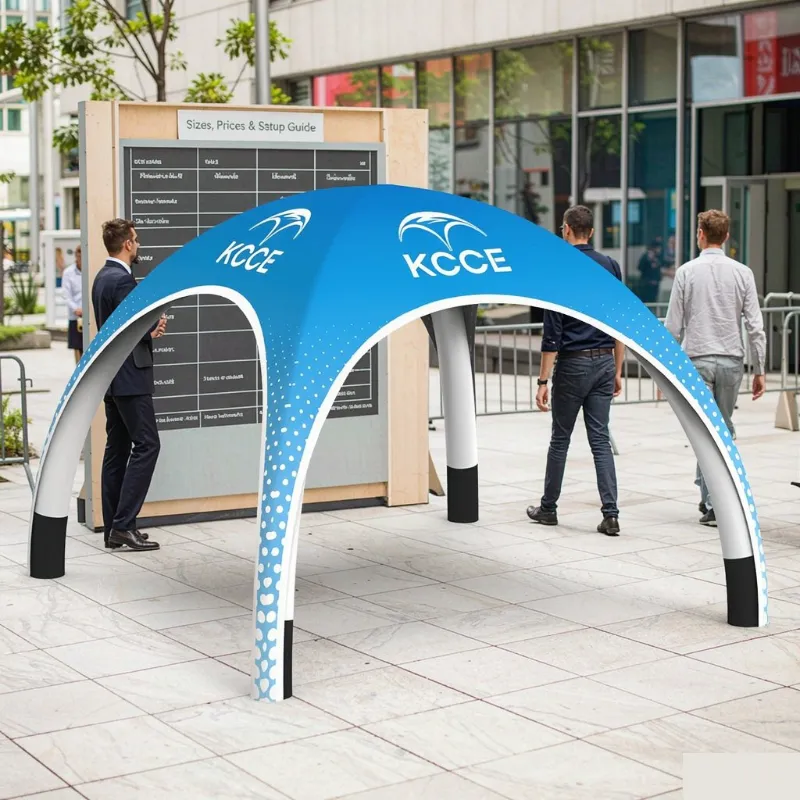
Custom inflatable foldable tents are air-beam structures that replace rigid metal poles with inflatable columns, offering setup times of 5–15 minutes, superior wind resistance when properly anchored, and full-surface custom printing—with prices typically starting around $4,499 depending on size, material, and print complexity.
Why Custom Inflatable Foldable Tents Beat Traditional Canopies
Let’s start with the obvious question: why would you ditch a perfectly good frame tent for something you have to blow up? Fair question. I’ve asked it myself more than once.
The answer comes down to three things: physics, logistics, and optics.
Physics first. A traditional frame tent relies on metal poles and tension to hold its shape. That works fine until the wind picks up and the whole structure starts acting like a sail. An inflatable tent, by contrast, uses air beams—essentially high-pressure tubes made of PVC or TPU—that flex and absorb wind energy rather than resisting it rigidly. The result is a structure that can handle conditions that would send a pop-up tent tumbling across the parking lot.
That’s not just my opinion. TentCraft, one of the more established players in this space, has noted that inflatable tents give brands a lightweight, visually distinctive way to create sampling spaces and outdoor event environments. Their customers consistently report that the style and silhouette of inflatable structures are especially good at matching the tone of high-energy athletic events, motor sport activations, and music festivals. That’s a design advantage, not just a mechanical one.
Logistics is where the gap really widens. Think about what it takes to move a 10×10 frame tent. You’ve got a bag of poles that weighs more than you want to carry, a canopy that folds into a surprisingly awkward shape, and a setup process that requires at least two people and a working knowledge of which pole goes where. Now think about an inflatable canopy tent: one bag, one blower, and a structure that goes from flat to fully erect in the time it takes to drink a coffee. Setup is genuinely that fast.
I’ve timed this. A 10×10 inflatable canopy tent, with two people who know what they’re doing, goes up in under five minutes. The same crew on a traditional pop-up? Closer to fifteen, and that’s if the poles don’t fight back. Over the course of a season with multiple events, that time savings adds up to real money.
Optics matter more than you’d think. Here’s a scenario I’ve seen play out dozens of times: two brands at the same outdoor festival. One has a standard white canopy with a banner strapped to the front. The other has a custom inflatable tent with full-surface printing, shaped like a product or branded with a logo that wraps around the entire structure. Which one draws the crowd? You already know the answer.
The visual difference isn’t subtle. A custom printed canopy tent can carry your brand on every surface—roof, walls, even the air beams themselves. That’s not possible with a traditional frame tent, where the structure gets in the way of the branding. Inflatable tents are essentially blank canvases that happen to be structurally sound.
There’s also the cost-per-event angle to consider. Let’s say you’re renting tents for a series of events. Rental fees stack up fast, and you never own anything at the end of the season. A custom inflatable foldable tent is a capital purchase—yes, it costs more upfront—but amortized over multiple events, the math starts to look very different. Buy once, use it for years, and the per-event cost drops below what you’d pay to rent.
One more point that doesn’t get enough attention: storage. A folded inflatable tent takes up a fraction of the space of a frame tent of the same footprint. If you’re operating out of a van or a small warehouse, that’s a genuine advantage. You can fit a 10×10 inflatable in the back of an SUV, which is something you can’t say about most frame structures.
Custom Inflatable Foldable Tents: Sizes, Pricing & What You Get
Now we’re getting into the numbers, and this is where most buyers get confused. Pricing for custom inflatable foldable tents varies wildly depending on size, material, print complexity, and the manufacturer’s overhead. Let me give you a framework that actually makes sense.
Standard sizes. The industry has settled on a few common footprints that work for most applications. The 10×10 is the workhorse—it fits a standard event booth space, accommodates a table and a couple of displays, and is small enough to handle with minimal crew. The 10×20 is the next step up, popular for food vendors, product demonstrations, and larger brand activations. From there you get into 15×15, 20×20, and beyond, but those are typically custom projects rather than off-the-shelf items.
Here’s a pricing reality check based on what manufacturers actually charge. TentCraft, which publishes its pricing more openly than most, lists custom inflatable tents starting at a price that is often quoted as around $4,499. That’s for a basic configuration—think 10×10 or similar footprint with standard printing. As you scale up in size, add sidewalls, or increase print coverage, the price climbs accordingly. A 10×20 custom pop up tent with full branding can be quite expensive, with prices varying widely depending on the vendor and options.
You might be wondering why there’s such a spread between vendors. It comes down to three factors: material quality, print technology, and labor costs. A manufacturer using 500-denier PVC with welded seams is going to charge more than one using 300-denier with stitched seams—and you should pay the difference, because it directly affects the tent’s lifespan.
What’s included in that price? This is where you need to read the fine print. A complete inflatable canopy tent package should include:
- The tent structure itself (air beams, canopy, and any integrated walls)
- A blower or inflation pump (electric blowers are standard; battery options exist for remote locations)
- Ground stakes and anchoring hardware
- A repair kit with patch material and adhesive
- A carrying bag or storage case
Some vendors bundle these items; others charge extra. I’ve seen quotes where the blower alone added $300–$500 to the total. Ask for a full itemized breakdown before you commit.
Print quality is where the value lives. This is the part that separates a $4,500 tent from a $2,500 tent. Full-color, edge-to-edge printing on both the canopy and sidewalls is the standard for branded inflatable tents. The print process matters—dye-sublimation and UV printing produce different results in terms of color vibrancy and fade resistance. A cheap print will look washed out after a season in the sun. A quality print will still look sharp after two or three years of regular use.
Custom dimensions. Here’s where things get interesting. Most manufacturers will build to custom specifications, but there’s a catch: custom dimensions mean custom tooling, which means a longer lead time and a higher minimum order quantity. If you need a 12×18 because it fits your space perfectly, you can get it—but you’ll pay for the privilege and you’ll wait longer. In practitioners’ experience, it’s usually smarter to stick with a standard size unless you have a compelling reason not to. The savings in both money and time are significant.
Let me also mention the material options, because this affects both price and performance. PVC-coated polyester is the industry standard for inflatable structures—it’s durable, UV-resistant, and takes printing well. But you’ll also see Oxford cloth and nylon in the market, particularly in lower-priced products. Those materials are lighter and cheaper, but they don’t hold up as well in high winds or heavy sun exposure. For a tent that’s going to see regular use, PVC is the safe choice.
Materials & Build Quality: What to Demand from a Manufacturer
I’m going to be direct with you: the biggest mistake I see buyers make is prioritizing price over build quality. A cheap inflatable tent is a false economy. It leaks air, the seams split, the print fades, and you end up buying a replacement within two seasons. Meanwhile, a well-built tent from a reputable manufacturer can last five years or more with proper care.
So what should you demand? Here’s a checklist I’ve developed over years of evaluating inflatable structures.
Material weight and type. The base fabric is your first line of defense. PVC-coated polyester is the standard for a reason—it’s waterproof, UV-resistant, and handles the flexing of repeated inflation cycles without breaking down. Look for a minimum denier of 500 for the canopy and 600 or higher for the air beams. Higher denier means thicker fabric, which means better durability. It also means more weight, so there’s a trade-off to consider if portability is a priority.
Air beam construction. This is the heart of an inflatable tent, and it’s where cheap manufacturers cut corners. Quality air beams are made from multiple layers of PVC and polyester, welded together to create an airtight, high-pressure tube. The seams should be welded, not stitched—welded seams are airtight, while stitched seams leak and fail over time. Ask about the PSI rating of the beams. A typical inflatable tent operates at a pressure that is often cited as 8–15 PSI, and the beams should be rated well above their operating pressure to handle temperature fluctuations and the occasional rough handling.
Wind rating certification. This is a big one, and it’s where the industry gets murky. There’s no single universal standard for wind rating on inflatable tents, which means manufacturers can throw around numbers without much accountability. What you should look for is a manufacturer who can show you their testing data and explain the conditions under which the tent was tested. TentCraft’s blog has discussed how inflatable tents compare to pop-up tents in terms of use cases, and the general consensus in the industry is that a properly anchored inflatable tent handles wind better than a similarly sized pop-up. But “properly anchored” is doing a lot of work in that sentence—you need quality stakes, and you need to use them.
Stitching and reinforcement. Even with welded seams on the air beams, the canopy will have stitched seams where panels come together. Look for double-stitched seams with reinforced corners and stress points. The corners are where tents fail first, so they need extra layers of material and additional stitching. Check the zippers too—they’re a common failure point on inflatable tents. Heavy-duty zippers with weather flaps are worth the upgrade.
Valve quality. This sounds minor, but it’s a common source of frustration. The inflation valves need to seal properly and release cleanly. Cheap valves stick, leak, or break off entirely. Look for valves that are integrated into the beam construction rather than glued on as an afterthought.
The repair kit. Every inflatable tent should come with a repair kit, but the quality varies. A good kit includes patch material that matches your tent’s fabric, a high-strength adhesive, and clear instructions. Some manufacturers also offer seam-sealing products for minor leaks. If the included kit looks like an afterthought, that’s a red flag about the overall build quality.
Here’s a practical tip: before you order, ask the manufacturer for material samples. A reputable supplier will send you swatches of the canopy fabric and air beam material so you can feel the quality yourself. If they hesitate or make excuses, that tells you something.
The Customization Process: From Mockup to Delivery
So you’ve decided to get a custom printed inflatable tent. What happens next? The process is more involved than ordering a standard pop-up, and knowing what to expect will save you from unpleasant surprises.
Step 1: Art submission. The first thing you’ll do is submit your artwork—logo files, brand colors, any design elements you want on the tent. Most manufacturers accept standard file formats (AI, PDF, EPS, or high-resolution PNG). The key requirement is resolution: your artwork needs to be high-res enough to print cleanly at the size of your tent. A logo that looks fine on a business card will look pixelated when blown up to cover a 10×10 canopy. If you’re not sure about your file quality, ask the manufacturer to review it before you commit.
Step 2: Proofing. Here’s where the process gets interactive. The manufacturer will create a digital mockup—a 3D rendering or flat layout showing how your artwork will appear on the tent from all angles. This is your chance to catch mistakes, adjust colors, and make sure the branding looks right. Don’t rush this step. I’ve seen more than one buyer approve a proof without looking closely, only to receive a tent with a misspelled URL or a logo that’s cut off at a seam. Take the time to review every surface.
Step 3: Production. Once you approve the proof, the tent goes into production. This is where the real timeline lives. Most manufacturers quote 15–40 days for production, depending on the complexity of the design and the current workload. A simple single-color logo on a standard-size tent might ship in the shorter end of that range. A complex full-wrap design on a custom shape will take longer. If you’re working against a hard event deadline, build in a buffer—production delays happen, and you don’t want to be the person explaining to your client why their tent didn’t arrive in time.
Step 4: Shipping. After production comes logistics, and this is where overseas buyers often get surprised. Shipping costs for inflatable tents are significant—they’re bulky, even when folded, and they weigh more than you’d expect. If you’re working with a factory in China (which is where most inflatable tents are manufactured, including my own company’s production line), factor in 2–4 weeks for ocean freight or 3–5 days for air freight. The shipping cost can add 10–20% to your total investment, so budget accordingly.
Here’s something else to consider: customs and import duties. Depending on your country, an inflatable tent might be subject to tariffs. A good manufacturer will help you navigate this, but ultimately it’s your responsibility to understand the import requirements in your region.
Turnaround times—the honest version. The 15–40 day production window that most vendors quote is accurate, but it assumes everything goes smoothly. Art approval delays, color matching issues, and production line backups can all push the timeline out. If you’re ordering custom inflatable foldable tents wholesale for a major event, start the process at least 8–10 weeks in advance. That gives you room for the inevitable hiccups.
One more thing: mockup services. Most reputable manufacturers offer free mockups or design proofs as part of the quoting process. This is standard practice in the industry—if a vendor charges extra for a basic digital proof, that’s a yellow flag. The mockup is how you evaluate whether the vendor understands your vision, and it’s also how you catch problems before they become expensive.
Setup, Maintenance & Repair: Operational Realities
Okay, so you’ve got your custom inflatable foldable tent. Now what? Let’s talk about the day-to-day realities of actually using the thing.
Inflation methods. There are two ways to inflate an inflatable tent: with an electric blower or with a manual pump. Electric blowers are the standard for event use—they’re fast, consistent, and don’t require physical effort. Most blowers plug into standard wall outlets, but for outdoor events without power, you’ll need a generator or a battery-powered option. Manual pumps work, but they’re slow—inflating a 10×10 tent by hand takes 15–20 minutes of steady pumping. That’s fine for camping, impractical for events.
Here’s a pro tip: always carry a backup blower. Blowers fail, and when they do, you’re dead in the water. A spare blower costs a few hundred dollars and can save an entire event. I’ve seen this play out too many times to skip mentioning it.
Setup time and crew. For a 10×10 inflatable canopy tent, you need two people and about 5–10 minutes. The process is simple: unroll the tent, connect the blower, inflate, stake down the corners. That’s it. No poles to figure out, no instructions to consult. For larger tents—20×20 and up—you’ll want four people and 15–20 minutes. The inflation itself doesn’t take longer; it’s the anchoring and positioning that requires more hands.
Storage footprint. This is one of the big selling points of inflatable tents. When deflated, a 10×10 inflatable tent folds down to roughly the size of a large suitcase—maybe 3 feet by 2 feet by 1.5 feet, depending on the material thickness. That’s a fraction of the space required for a frame tent of the same footprint. For event companies with limited warehouse space, this is a genuine advantage.
Pembersihan. Inflatable tents are relatively easy to maintain. After each use, wipe down the surfaces with a mild soap solution and water. Pay attention to the seams and zippers—dirt and grit in these areas will cause premature wear. For stubborn stains, a soft brush works well. Avoid harsh chemicals and pressure washers, which can damage the PVC coating.
Repair basics. Despite your best efforts, you will eventually get a leak. It’s a fact of life with inflatable structures. The good news is that most repairs are straightforward. Small punctures can be patched with the included repair kit—clean the area, apply adhesive, press on the patch, and let it cure. Larger tears or seam failures are more involved and may require professional repair. Some manufacturers offer repair services, and there are also third-party shops that specialize in inflatable repairs.
What about the “inflatable tent repair” question that comes up so often? The honest answer is that most repairs are DIY-able if you catch them early. The longer you let a leak go, the worse it gets. A small pinhole becomes a tear; a tear becomes a seam failure. Check your tent regularly, especially after events where it’s been subjected to wind or rough handling.
Cold-weather performance. Here’s a question I get all the time: do inflatable tents work in cold weather? The short answer is yes, with caveats. Cold temperatures make the PVC stiffer, which means the tent takes slightly longer to inflate fully and may require a bit more pressure. Extreme cold—below freezing—can make the material brittle, so you need to handle it more carefully. For most event applications, this isn’t a dealbreaker, but it’s worth knowing.
Lifespan expectations. With proper care, a quality inflatable tent can last for several years of regular event use. That’s a realistic expectation, not a marketing promise. The key variables are material quality, frequency of use, and how well you maintain it. A tent that’s used weekly will wear out faster than one used monthly. A tent that’s stored properly—clean and dry—will outlast one that’s stuffed away damp.
Top 5 Custom Inflatable Tent Manufacturers Compared
Now for the part you’ve probably been waiting for: who should you actually buy from? I’ll be straight with you—I can’t cover every manufacturer in the space, and I don’t want to pretend I have. What I can do is give you a framework for evaluating vendors, and highlight a few names that consistently come up in industry conversations.
TentCraft. Based in the US, TentCraft is one of the more established players in custom inflatable structures. They’re known for their design capabilities and their willingness to take on complex custom projects. Their blog openly discusses the trade-offs between inflatable and pop-up tents, which tells me they’re confident in their product. Pricing starts around $4,499 for custom inflatable tents, which puts them at the higher end of the market. Turnaround is typically 2–4 weeks for standard projects.
WestShade. WestShade offers a range of custom inflatable tents for events, advertising, and branding. They publish a helpful comparison of custom inflatable tents versus traditional tents, which is useful for buyers weighing their options. Their site is organized by use case, shape, and size, making it easy to find what you need. They also offer free shipping on orders over $299, which is a nice touch.
Custom Tent With Logo. As the name suggests, this vendor specializes in branded tents. Their blog highlights the top reasons to choose inflatable tents for events, emphasizing easy setup, portability, and reliability in inclement weather. They offer a discount for first-time orders and free shipping on orders over $2,000, which makes them worth considering for budget-conscious buyers.
KCCE (Dongguan Kaicheng Outdoor Products). Full disclosure: this is my company, so take this with a grain of salt. KCCE is a factory in Dongguan, China, specializing in inflatable products including tents, furniture, and custom shapes. We’ve been in this business for years, and we’ve seen the industry evolve from novelty to mainstream. Our advantage is that we’re the source—buying from us cuts out the middleman markup. If you’re looking for custom inflatable foldable tents wholesale, a factory-direct relationship can save you significantly on large orders.
Inflatable Design Group. This is a name that comes up in industry circles for more complex inflatable projects. They’re known for taking on challenging designs that other manufacturers won’t touch. If you need something truly custom—a shaped inflatable that looks like a product, for instance—they’re worth contacting.
Here’s the thing about manufacturer comparisons: the “best” vendor depends entirely on your priorities. Need the fastest turnaround? A US-based vendor might be your best bet. Need the lowest price for a large order? Factory-direct from Asia will win every time. Need the most complex custom design? Look for a specialist.
Let me give you a framework for evaluating vendors instead of a simple ranking:
- Price transparency: Does the vendor publish pricing or make you request a quote? Transparency is a good sign.
- Proofing process: Do they offer free mockups? How many revisions are included?
- Production timeline: What’s the quoted turnaround? Is it realistic?
- Shipping options: Do they handle logistics, or are you on your own?
- Garansi: What’s covered, and for how long?
- Customer support: Can you reach a human being when something goes wrong?
Ask those questions of every vendor you’re considering, and the right choice will become clear.
Common Objections—Answered for Event Professionals
I’ve heard every objection in the book when it comes to inflatable tents. Let me address the ones that come up most often.
“Won’t it leak air and deflate in the middle of my event?”
This is the fear that keeps more buyers away from inflatable tents than anything else. The honest answer is that a quality inflatable tent holds air remarkably well. The air beams are designed to maintain pressure for hours without a blower running continuously. That said, you should expect some minor pressure loss over time—it’s physics. The blower compensates for this by maintaining a steady pressure. Most event operators run the blower continuously during setup and then switch to a battery-powered or intermittent topping-up approach once the tent is fully inflated and anchored.
The key is buying quality. A cheap tent with poor seams will leak noticeably. A well-built tent from a reputable manufacturer will hold pressure with minimal intervention. This is where “you get what you pay for” is literally true.
“What happens when the wind picks up?”
This is the question that comes up in every conversation about inflatable tents. Are inflatable tents good for windy conditions? The answer is nuanced. A properly anchored inflatable tent handles wind better than a similarly sized pop-up tent, because the air beams flex and absorb energy rather than resisting rigidly. But “properly anchored” is doing a lot of work in that sentence. You need to use the stakes, you need to stake down every corner, and you need to add extra anchoring for high-wind conditions.
The industry consensus is that inflatable tents are safe in winds up to a moderate speed when properly anchored. Beyond that, you’re taking risks regardless of tent type. For extreme conditions, you’d want a heavy-duty frame structure or a permanent installation. Know your local weather patterns and plan accordingly.
“Are inflatable tents worth it compared to pop-ups?”
This is the “inflatable tent vs pop up tent” question that gets debated endlessly. The answer depends on your priorities. If you need the absolute lowest cost and fastest setup, a pop-up tent is hard to beat. If you need maximum branding impact, better wind resistance, and easier storage, an inflatable tent wins. The cost-per-event math becomes more favorable for inflatables the more you use them.
“How do I know the tent will look like the mockup?”
This is a legitimate concern. Digital mockups are approximations—they show you layout and design, but they can’t fully convey the texture of the material or the exact color rendering. The best way to manage expectations is to ask for material samples before you order. A reputable manufacturer will send you fabric swatches so you can see the actual colors and feel the material quality.
“What about warranty coverage?”
Warranty terms vary significantly between manufacturers, so read the fine print. Most offer some coverage for manufacturing defects—seam failures, material defects, and the like. Fewer cover damage from misuse, improper anchoring, or normal wear and tear. Ask specifically about what’s covered and for how long. A one-year warranty is common; two years is better. If a manufacturer offers no warranty at all, walk away.
“How long will it actually last?”
With proper care, a quality inflatable tent should last 3–5 years of regular event use. That’s a realistic expectation, not a marketing promise. The key variables are material quality, frequency of use, and how well you maintain it. A tent that’s used weekly will wear out faster than one used monthly. A tent that’s stored properly—clean and dry—will outlast one that’s stuffed away damp.
“What if I need support after the sale?”
This is where the manufacturer’s reputation matters. Some vendors disappear after the sale, leaving you to figure out repairs on your own. Others maintain active customer support and offer repair services. Before you buy, ask about after-sale support. Can you reach a human being? Do they offer repair services? What’s their typical response time? These questions will tell you a lot about what to expect.
Pertanyaan yang Sering Diajukan
Q: What size inflatable tent do I need for an event?
A: For a standard trade show booth, a 10×10 inflatable canopy tent is the most common choice. For food vendors or larger brand activations, a 10×20 provides more space for displays and foot traffic. If you’re hosting a lounge area or meeting space, consider a 20×20 or larger. Think about your layout needs first—how many people need to fit, what equipment goes inside—then match the footprint to the space.
Q: How to set up an inflatable canopy tent?
A: Setup takes 5–10 minutes with two people. Unroll the tent, spread it flat, connect the blower to the inflation valve, and turn it on. The tent will rise as the air beams fill. Once fully inflated, stake down all corners and anchor points. Disconnect the blower once the tent holds pressure. For larger tents, use four people and 15–20 minutes.
Q: How to repair an inflatable canopy tent?
A: Most repairs are DIY-able with the included patch kit. Clean the damaged area, apply adhesive, press on the patch, and let it cure for 24 hours. For larger tears or seam failures, contact the manufacturer or a professional repair service. Regular inspection catches small leaks before they become big problems. Always carry a spare blower as backup.
Q: Are inflatable tents good for windy conditions?
A: Yes, when properly anchored. Inflatable tents handle wind better than pop-up tents because the air beams flex and absorb energy. Expect safe operation up to about 25–30 mph with proper staking. Beyond that, add extra anchoring or consider a frame structure. Always check weather forecasts and adjust your setup accordingly.
Q: What’s the difference between an inflatable tent and a pop-up tent?
A: Inflatable tents use air beams instead of metal poles, offering faster setup, better wind resistance, and easier storage. Pop-up tents are cheaper and familiar but have more parts to handle and less branding surface. For event professionals who need maximum visual impact and efficient logistics, inflatable tents are increasingly the preferred choice.
Q: Can I custom print my logo on an inflatable tent?
A: Yes, full-surface custom printing is the standard for inflatable tents. Your logo and branding can cover the canopy, sidewalls, and even the air beams. Most manufacturers offer free mockups during the quoting process so you can see how your design will look before production. High-resolution artwork is required for clean printing.
Q: How long does it take to get a custom inflatable tent?
A: Production typically takes 15–40 days, depending on design complexity and manufacturer workload. Add 2–4 weeks for ocean shipping if ordering from overseas factories. For a major event, start the process 8–10 weeks in advance to allow for art approval, production, and shipping delays.
Q: What’s the price range for custom inflatable foldable tents?
A: Prices for basic configurations from established vendors like TentCraft are often quoted in the thousands of dollars. Standard 10×10 models with full printing typically fall in a mid-range price bracket, while larger sizes and complex designs can cost significantly more. Wholesale pricing from factories like KCCE’s inflatable tent line can be significantly lower for bulk orders.
Referensi
1. Custom Inflatable Tents with Logo for Events & Branding – westshade.com
2. 9 Branded Inflatable Tent Designs That Will Inspire Your … – tentcraft.com
3. Custom Professional Inflatable Tent: 2026 Buying Guide & Costs – kcce-event.com
4. Top 5 Reasons To Choose Inflatable Tent For Your Next Event – customtentwithlogo.com
5. Inflatable Tents vs. Traditional Frame Tents: A Detailed Comparison – eventstamps.com