I’ve been sourcing commercial tents for event and rental businesses for over a decade now. And I’ll tell you the single most expensive mistake I see buyers make: they open a commercial tent supply website, see a price, and order. No spec sheet comparison. No wind rating check. Nothing. That one shortcut is why so many rental companies end up replacing tents after two seasons instead of getting five or six out of them.
Here’s what I want to do in this piece — walk you through how to actually read a commercial tent supply website, vet the supplier behind it, and prep a quote request that gets you real numbers instead of a “contact us for pricing” wall.
Quick Answer
A commercial tent supply website is a B2B sourcing channel for event-grade tents — frame, pole, and clearspan structures built to wind, fire, and UV standards — not a consumer retail page. Buyers use it to compare specs, request custom commercial tent quotes, and order commercial tents bulk from manufacturers or wholesale suppliers.
What “Commercial Tent Supply Website” Really Means for B2B Buyers
Let’s get one thing straight first. A commercial tent supply website is not Amazon. It’s not Home Depot. Those sites sell consumer-grade canopies that look fine in photos and fall apart under real event conditions.
A true commercial tent supply website operates like a sourcing portal. You’ll typically find:
- Frame, pole, and clearspan tent systems with published engineering specs
- MOQ (minimum order quantity) tiers
- Custom printing and branding options
- Sample request workflows
- Wholesale pricing structures for repeat buyers
The distinction matters because your use case isn’t “shade for a backyard party.” It’s a party rental commercial tent supplier relationship, or a trade show canopy tent supplier you’ll lean on for years. That’s a sourcing decision, not a shopping decision.
One more thing — the moment you type “what is a commercial tent supply website” into Google, you’re already past the consumer stage. You’re a business buyer. Act like one.
Commercial Tent Types and Specs That Matter
You’ve got three main structures to choose from, and picking wrong is expensive.
Frame tents — no center poles, so you get full usable floor space. Best for outdoor markets, vendor booths, and tight footprints. Pole tents — cheaper per square foot, classic look, but center poles eat into your layout. Clearspan tents — the big-event workhorse. No interior poles at all, engineered for large spans, and what most wedding commercial tent supply operations standardize on.
Now the specs nobody puts on the homepage but every serious commercial tent manufacturer should hand over on request:
| Spec | Apa yang Perlu Diperhatikan | Why It Matters |
|---|---|---|
| Peringkat angin | Published engineering rating | Insurance and safety compliance |
| Fire certification | Recognized fire-retardant standard | Many venues require it |
| perlindungan UV | Fabric UV treatment rating | Fabric lifespan in sun-heavy regions |
| Garansi | Years + what’s covered | Tells you how much the maker trusts the product |
If a supplier can’t give you all four in writing, that’s not a supplier. That’s a reseller guessing.
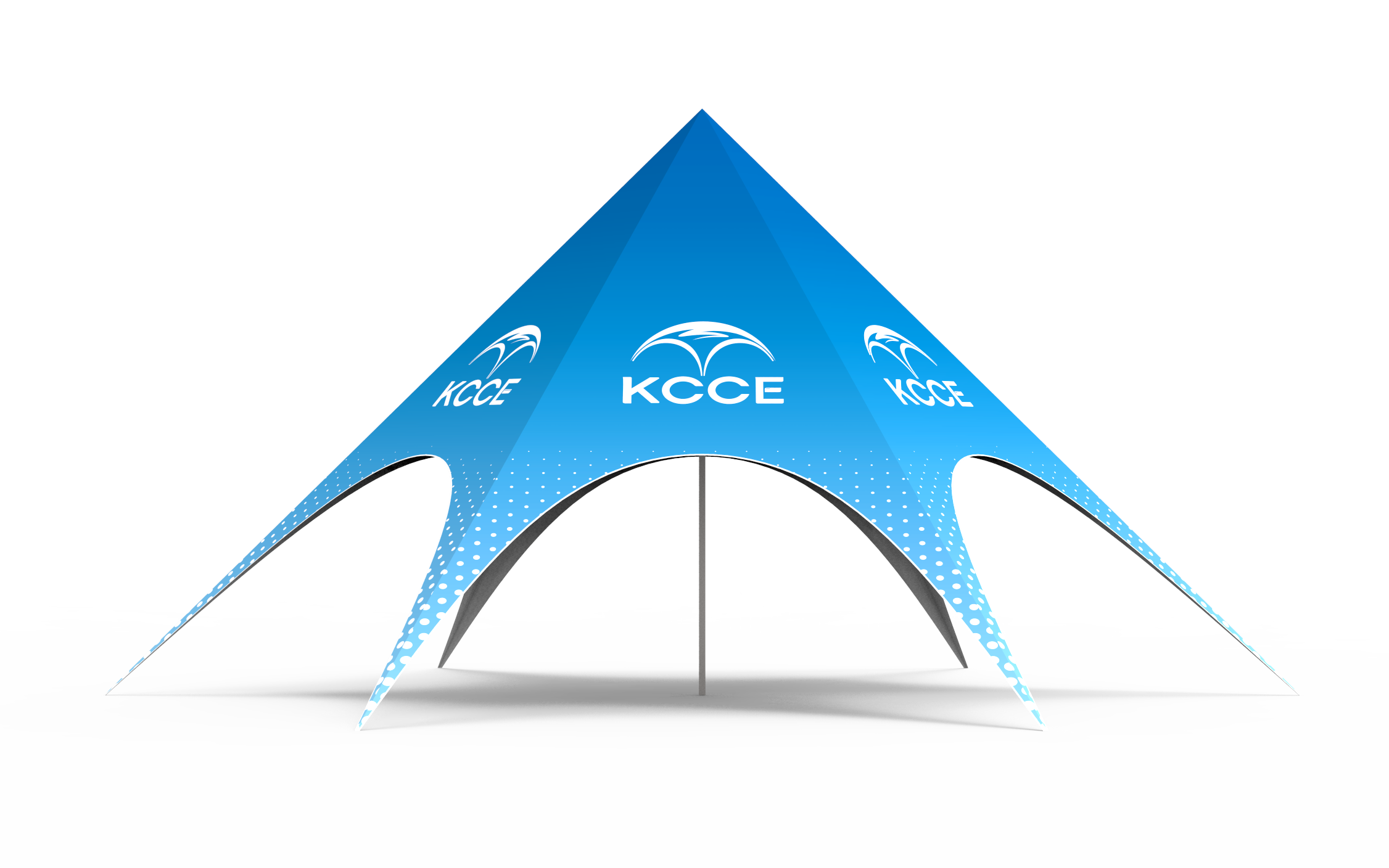
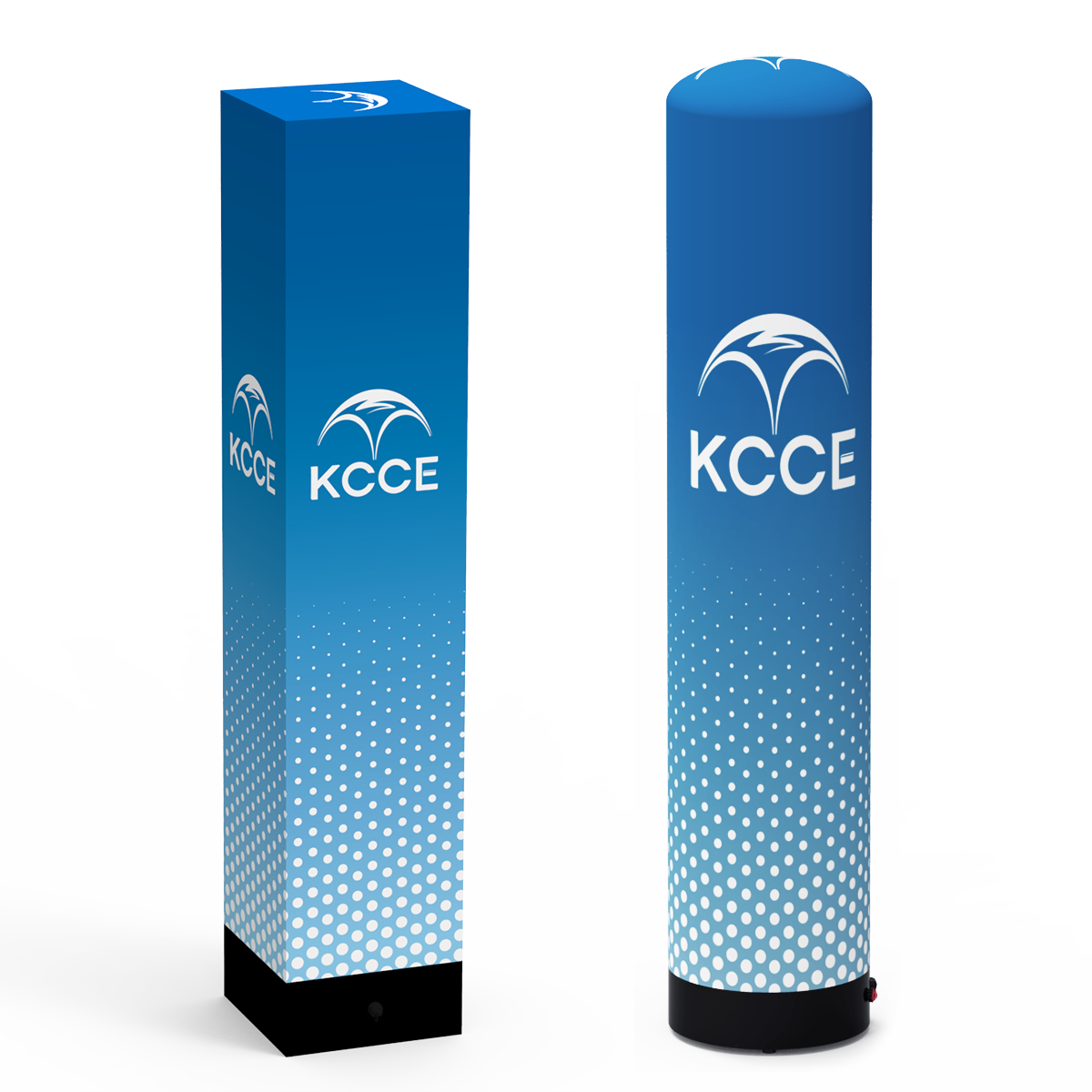
And yes — I know inflatable structures aren’t the same category as frame tents, but for brand activations and advertising, they’re often the better call. KCCE makes custom branding inflatable advertising tents in premium Oxford fabric, and for outdoor promotions where you want the structure itself to be the signage, that’s a genuinely strong option. Different tool, different job.
How to Vet a Commercial Tent Supplier
This is where most buyers get lazy. They find a commercial tent wholesale supplier with a clean website and assume the operation behind it is solid. Wrong assumption.
Here’s my vetting checklist, in order of how fast I can disqualify someone:
- MOQs — Ask directly. Some manufacturers start at 1 piece. Others won’t talk to you under 50. Know before you invest time.
- Lead times — Get a written estimate. “Usually a few weeks” is not a lead time.
- Custom printing capability — Can they do dye-sublimation, heat transfer, or screen print? Which method, and what’s the setup cost?
- Sertifikasi — CE, RoHS, fire certs. Ask for documents, not claims.
Red flags that make me close the tab immediately:
- No published specs anywhere on the site
- No certifications mentioned, or “certifications available” with no details
- Vague pricing — everything is “request quote” with zero ranges
- No physical address or factory information
- No sample program
For context on why this matters: the Federal Register published a notice on heightened import disclosures for supply chain visibility (2026), which means the paper trail on imported goods is getting stricter, not looser. A supplier who can’t document their product is a supplier who’ll cause you customs headaches later.
Custom vs Stock: Which Fits Your Event Business
Custom branding versus off-shelf. It’s the decision that trips up more new rental operators than any other.
Go stock when: you’re testing a new market, your volume is low, or your timeline is under 30 days. Stock tents ship fast and cost less.
Go custom when: you’re building brand recognition, your volume justifies the setup cost, or your clients specifically ask for branded walls and signage.
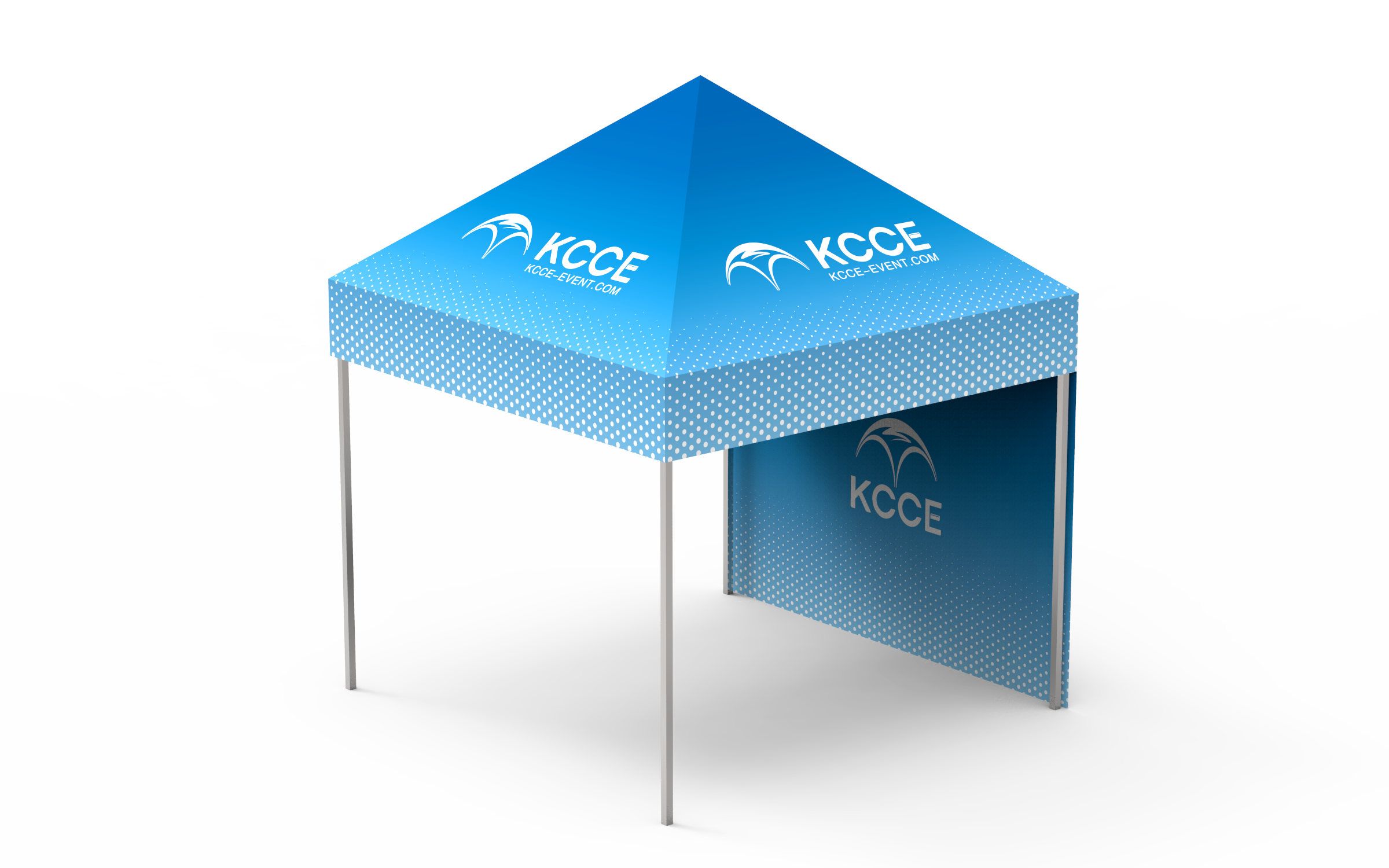
Here’s the thing though — custom commercial tent orders aren’t just about logos. It’s the color of the fabric, the wall configuration, the signage panels. Social media is full of people asking where to get custom options like walls and signs with their branding, and honestly, that demand exists because most suppliers make it harder than it needs to be.
My rule of thumb: don’t go custom until you’ve run at least one full season on stock tents and know your actual usage patterns. Custom setup costs only pay off at volume.
Pricing, Quotes, and Hidden Costs
Time for the part everyone skips. The tent price is not the tent cost.
When you order commercial tents bulk, your real landed cost includes:
- Unit price — varies wildly by size, material, and structure type
- Freight — often the biggest surprise, especially on oversized clearspan shipments
- Customs and duties — depends on origin country and current tariff schedules
- Installation — if you’re not doing it yourself, budget for it
- Replacement parts — fabric panels, frame sections, stakes, ratchets
On pricing transparency: I genuinely respect suppliers who publish ranges. A site that says “request quote” for everything is usually hiding either high prices or inconsistent ones. Ask for a range before you ask for a quote. If they won’t give one, that tells you something.
And about starting a tent rental business on a tight budget — the pain point I see most on forums — the honest answer is that your first tent purchase should prioritize durability over price. A cheap tent that lasts one season costs more than a mid-range tent that lasts four. Do that math before you buy.
GEO Sourcing: Local vs Overseas Suppliers
The “commercial tent supplier near me” search is real, and it’s usually driven by one thing: lead time panic.
Local suppliers win on speed, support, and returns. You can visit, touch the fabric, and get a replacement part in days. You lose on price.
Overseas suppliers win on cost and customization range. You lose on lead time, and you take on customs, duties, and quality control risk.
For quality control, the answer is samples. Always samples. Order one unit, inspect it, stress-test it, then commit to bulk. Anyone who won’t send a sample isn’t confident in their own product.
Regional considerations matter too. A commercial canopy tent supplier in Toronto deals with different wind and snow loads than a commercial tent supply company in California. Buy for your climate, not for the cheapest listing.
Worth noting: MIT’s Center for Transportation and Logistics published its 2026 State of Supply Chain Sustainability Report, drawing on 1,810 responses from professionals across 91 countries. The report frames sustainability as operating “under pressure” from geopolitics, policy shifts, and AI adoption. For tent buyers, that translates to one practical takeaway — supply chains are less predictable than they were five years ago, so build buffer time into your sourcing plan.
Building Your Supplier Shortlist
Stop collecting bookmarks. Build a scorecard.
Score every candidate commercial tent supplier for sale on these five dimensions:
- Specs — Are wind, fire, UV, and warranty all documented?
- MOQ — Does their minimum fit your order size?
- Waktu tunggu — Written estimate, realistic, with buffer?
- Support — Replacement parts availability, response time, warranty process?
- Sample program — Will they send one before you commit?
Five suppliers, scored side by side. That’s your shortlist.
Then — and this is non-negotiable — place a sample order before any bulk commitment. I don’t care how good the website looks. I don’t care how fast they reply to emails. One sample order tells you more about a supplier than twenty email exchanges.
If you want to see how a manufacturer presents real product specs and certifications, KCCE’s outdoor inflatable product range is a decent reference point — Established 2006, CE and RoHS compliant, products shipped to many countries. Not because you should buy inflatables instead of frame tents, but because that’s what a documented supplier profile looks like versus a vague one.
Key Applications and Industries Served
The commercial tent supply website you’re reading is built for a specific buyer profile, and it helps to know which one you are before you request a quote.
Event rental companies are the largest segment — they buy in fleets (10, 20, 50+ units) and care most about replacement-part availability and consistent fabric dye lots across reorders. Wedding and hospitality venues standardize on clearspan structures, typically 20x40m or 30x60m, and need fire certification on file for their insurers. Trade show and exhibition contractors buy frame tents and pop-up canopies in bulk, often with printed valances and custom leg skirts.
Then there’s the segment buyers forget: municipal and emergency-response buyers. FEMA-style disaster relief tents and field hospitals follow a different spec track (NFPA 701 fabric, reinforced anchoring), and they’re usually procured against a government tender, not a website cart.
Brand activation agencies sit in their own lane — they want inflatable advertising tents and custom-printed structures where the tent is the media. KCCE’s inflatable range is built for exactly that use case.
If your application isn’t on this list, say so in your RFQ. A real supplier will tell you whether they can serve it or not. A reseller will say yes to everything.
Materials, Specifications, and Customization Options
Here’s the spec sheet language you need to decode before you sign anything.
Fabric: Commercial-grade PVC-coated polyester is the baseline, measured in gsm. 500–650 gsm is entry commercial; 650–850 gsm is the rental-fleet standard; 850+ gsm is permanent-installation territory. Cheap sites quote “600D Oxford” — that’s a consumer fabric weight, not a commercial one.
Frame: Anodized aluminum 6061-T6 is the industry default for clearspan. Wall thickness matters more than diameter — 2.5mm–3.5mm wall on a 100mm profile is what you want for spans over 20m.
Customization: Look for these as standard options, not special requests — full-color digital printing (usually 1440dpi on PVC), clear or solid sidewalls, glass walls, HVAC ports, weighted bases, and custom leg heights. If a supplier treats printing as a bespoke project with a 12-week lead time, they’re outsourcing it.
MOQ reality check: Most Chinese manufacturers open at 1 unit for standard sizes and 10–20 units for custom-printed runs. European and US manufacturers typically won’t quote below 5 units.
One number I always ask for: reorder fabric match guarantee. If they can’t promise dye-lot consistency on a reorder two years later, your fleet will look mismatched.
Safety Standards, Certifications, and Compliance
This is the section most commercial tent supply websites bury, and it’s the one that decides whether your insurance claim gets paid.
Fire: NFPA 701 (US), EN 13501-1 Class B-s1,d0 (EU), and CPAI-84 (Canada) are the three you’ll be asked for. Ask for the test report, not the certificate — reports show the actual burn test data.
Wind: There’s no global wind standard, which is why suppliers quote vague “wind resistant” claims. What you want is a structural engineering letter stating the design wind speed (typically 100 km/h / 62 mph for rental tents, 120+ km/h for permanent installs) and the anchoring spec it assumes. No letter, no deal.
Structural: In the US, look for IBC 2021 compliance and, for larger clearspans, a PE-stamped drawing for your state. In the EU, EN 13782 governs temporary structures — if a supplier doesn’t know that number, they don’t sell into Europe seriously.
Other: UV resistance per ISO 4892-2 (aim for 2000+ hours), and REACH/RoHS compliance for anything shipping into the EU.
Get all of these as PDFs before you wire a deposit. A serious supplier has them ready in an hour.
Installation, Maintenance, and Warranty
Nobody talks about this on a product page, and it’s where your real cost lives.
Installation: A 10x20m clearspan takes a 4-person crew roughly 3–4 hours with proper equipment, or 90 minutes with a forklift and experienced hands. Budget approximately $0.75–$1.50 per square foot for professional install if you’re outsourcing. Pop-up canopies are a 2-person, 20-minute job — that’s the whole point of them.
Pemeliharaan: PVC fabric needs cleaning every 3–6 months with a mild detergent — never solvent-based. Frame inspection (bolt torque, joint wear) every 50 setups or annually, whichever comes first. Store dry, never folded wet; mildew is the #1 killer of tent fabric and it’s not covered by any warranty I’ve seen.
Garansi: The honest range is 3 years on frame, 1–3 years on fabric (UV degradation is usually explicitly excluded), and 1 year on hardware. Anything claiming “10-year warranty” on fabric is either lying or pricing the replacement into your quote. Ask what’s excluded — that tells you more than what’s covered.
Shipping, Logistics, and Import Considerations
The price on the website is almost never the price you pay.
Incoterms: FOB is standard for Chinese manufacturers, EXW if you’re dealing with a smaller factory. CIF quotes look attractive until you realize you own the customs clearance. For first orders, get a DDP quote — it’s more expensive but you know your landed cost before you commit.
Container math: A 20ft container holds a certain amount of clearspan tent depending on frame profile, and a 40ft HC holds more. If your supplier can’t tell you the container load for the specific SKU you’re quoting, they’ve never actually shipped one.
Duties and tariffs (2025–2026): US Section 301 tariffs on Chinese aluminum structures can apply, and PVC-coated textile tents under HTS 6306.22 may face additional tariff exposure depending on classification. EU anti-dumping duties on Chinese aluminum extrusions can apply if your frame components are classified as extrusions rather than finished goods, and the rate depends on the specific regulation and classification. Get your HS code in writing before you quote your customer.
Lead times: Production and ocean freight timelines can vary, but a realistic baseline is roughly 25–35 days production plus 30–40 days ocean freight. Air freight only makes sense for samples or emergency replacement parts under 100kg.
Insurance: Marine cargo insurance is not optional at these values. Budget approximately 0.3–0.5% of CIF value.
Kesimpulan
Build a five-supplier scorecard this week. Not next month — this week. Score them on specs, MOQ, lead time, support, and sample availability. Then ask yourself one question: can your current supplier pass a spec audit? If the answer is anything other than a confident yes, you’ve got work to do. Request samples and certifications before you request a single quote.
Pertanyaan yang Sering Diajukan
Q: What is international supply chain management?
A: International supply chain management is the coordination of sourcing, production, shipping, and delivery across country borders. For tent buyers, it covers everything from factory selection overseas to customs clearance and final delivery. When you order commercial tents bulk from an overseas commercial tent manufacturer, you’re participating in international supply chain management whether you call it that or not. The Federal Register’s 2026 notice on heightened import disclosures for supply chain visibility signals that documentation requirements in this area are tightening.
Q: What is a supply chain?
A: A supply chain is the full network of organizations, people, and processes involved in getting a product from raw materials to the end buyer. In commercial tent sourcing, that chain runs from fabric mills and aluminum extruders, through the tent factory, to freight forwarders, customs brokers, and finally your warehouse. MIT’s 2026 State of Supply Chain Sustainability Report, based on 1,810 responses across 91 countries, describes how companies are adapting these networks amid geopolitical disruption and policy shifts.
Q: How do I find commercial tent suppliers I can actually trust?
A: Start with spec documentation. A trustworthy commercial tent supply website publishes wind ratings, fire certifications, UV treatment details, and warranty terms. Then verify: request certificates, ask for their factory address, and order a sample before committing to bulk. Suppliers who dodge these requests are telling you something important.
Q: Where can I buy commercial tents online without getting burned?
A: Buy commercial tents online only from sites that show real specifications and offer sample orders. Avoid listings that show a photo and a price with no engineering data — those are usually consumer canopies mislabeled as commercial. If you can’t find a spec sheet, email and ask for one. The response quality itself is a useful test.
Q: What MOQ should I expect from a commercial tent wholesale supplier?
A: It varies enormously. Some manufacturers start at one piece, which is common for inflatable and smaller frame tent lines. Others set minimums at 20, 50, or higher for custom-printed runs. Always confirm MOQ before investing time in a custom commercial tent quote — a mismatch here wastes weeks.
Q: Is a local commercial tent supplier near me worth the higher price?
A: Often yes, especially if you need fast replacement parts or on-site support. Local suppliers reduce lead time risk and let you inspect fabric in person. The tradeoff is cost — expect to pay more per unit. For rental businesses where downtime kills revenue, that premium is frequently justified.
Q: How long should a commercial-grade tent last?
A: It depends on fabric weight, frame material, climate, and how you store it. In my experience, properly maintained event-grade tents outlast consumer canopies by a wide margin, but lifespan claims vary by manufacturer. Ask your supplier for their expected service life in writing, and check whether replacement parts are stocked — that tells you more than any marketing claim.
Q: What’s the difference between a commercial tent and a residential one?
A: Commercial tents are engineered structures with published wind ratings, fire certifications, and UV-treated fabrics, built for repeated setup and teardown. Residential canopies are consumer products with no engineering documentation. If a listing doesn’t state wind and fire specs, assume it’s residential grade regardless of what the title says.
Referensi
1. Heightened Import Disclosures for Supply Chain Visibility – federalregister.gov
2. State of Supply Chain Sustainability Report 2026 – ctl.mit.edu
3. Software Supply Chain Security Guidance – nist.gov