Most first-time commercial tent buyers either overpay for a tent that’s way too big, or they save a few hundred bucks and end up with a leaky box-store canopy that collapses in the first real storm. I’ve watched both scenarios play out more times than I can count. Buying a commercial tent isn’t like buying a camping tent — the stakes are higher, the specs actually matter, and the wrong choice can cost you an entire event season.
This guide covers tent types, real price ranges, new vs. used vs. wholesale options, where to buy, and the specific questions you need to ask before handing over your money.
快速解答
A commercial tent purchase typically costs between $500 and $5,000+ depending on type, size, and fabric grade. Frame tents and pole tents dominate the rental and events market. The critical specs are fabric weight, frame material, wind rating, and NFPA 701 fire certification — never buy without confirming all four.
What Is a Commercial Tent?
Here’s the thing — “commercial tent” gets thrown around loosely. A commercial grade tent is engineered for repeated setup and teardown, sustained weather exposure, and public occupancy. A consumer or camping tent is designed for occasional weekend use by a couple of people.
The difference shows up in three places: fabric weight, frame gauge, and certification. Commercial tents use heavier vinyl or top-grade fabric, thicker aluminum or steel frames, and carry fire certifications that consumer tents simply don’t have. As Gaxtent’s guide on commercial vs. ordinary tents points out, the gap isn’t marketing — it’s structural.
Typical buyers? Rental companies, event planners, caterers, wedding venues, farmers market vendors, and businesses running outdoor promotions. If you’re setting up more than a handful of times per year and the public is standing underneath it, you need commercial grade. Full stop.
Commercial Tent Types Compared
Not all tents are built the same, and picking the wrong type for your use case is one of the most expensive mistakes you can make. Tent and Table’s breakdown of costly purchasing mistakes puts “choosing the wrong tent type” near the top of the list.
| 类型 | Best Use Case | Typical Size Range | Setup | 抗风等级 |
|---|---|---|---|---|
| Commercial frame tent | Rentals, weddings, multi-day events | 10×10 to 40×100 ft | 2-4 crew, 1-3 hrs | 50-80 mph (varies by manufacturer) |
| Pole tent | Large parties, festivals on grass | 20×20 to 60×120 ft | 3-6 crew, 2-4 hrs | 40-70 mph (requires proper staking) |
| Marquee tent | High-end weddings, corporate events | 20×40 to 40×120 ft | 3-6 crew, 2-4 hrs | Similar to frame, premium finishes |
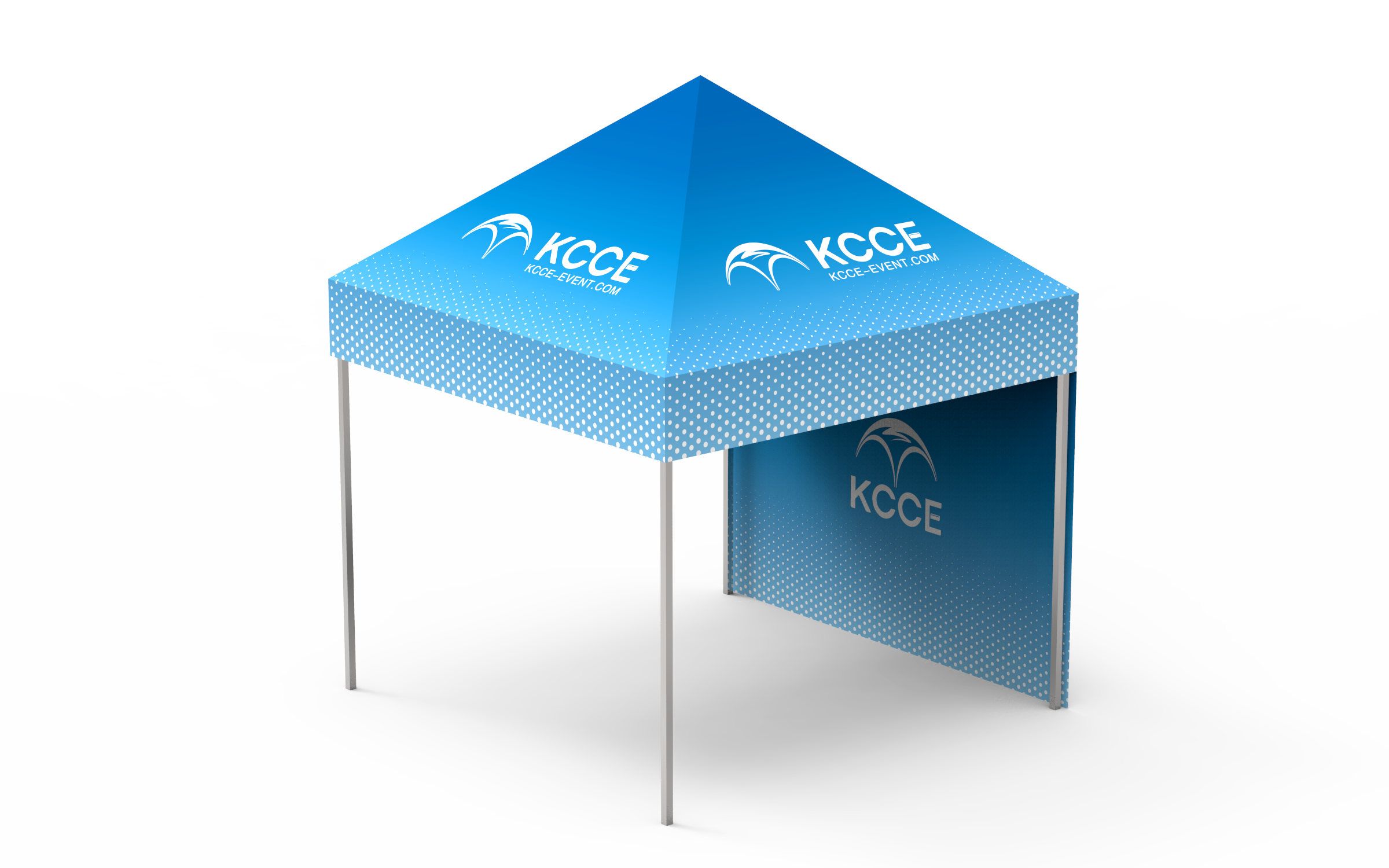
| Pop-up canopy | Vendor booths, markets, quick setups | 10×10, 10×20 ft | 1-2 people, 10-20 min | 20-40 mph (not for overnight) |
A commercial frame tent is the workhorse — it’s self-supporting, works on pavement or grass, and doesn’t require extensive staking. Pole tents need tension and open ground, but they’re cheaper per square foot for large spans. Marquee tents are essentially premium frame tents with nicer finishes — liners, clear panels, decorative legs.
Pop-up canopies are the entry point. A heavy duty commercial tent purchase in the pop-up category is still a real commercial tent — just with different limitations. Don’t expect a 10×10 pop-up to handle what a frame tent handles. It won’t.
How Much Does a Commercial Tent Cost?
This is where most guides get vague. I won’t do that.
According to Superb Outdoor’s 2026 commercial tent cost breakdown, vinyl tents run $5–$12 per square foot and last 10–15 years, while fabric tents run $2–$6 per square foot with a shorter lifespan. That per-square-foot framing is the most honest way to think about commercial tent cost.
So a 20×20 frame tent (400 sq ft) in vinyl lands somewhere between $2,000 and $4,800. A 10×10 heavy duty pop-up in the $500–$1,500 range. A 20×40 pole tent? Roughly $4,000–$9,600 depending on fabric and accessories.
You might be wondering about hidden costs. They’re real:
- Stakes and anchors: $50–$300 depending on surface (asphalt requires weights or ballasts)
- Lighting: $200–$2,000+ for commercial-grade event lighting
- Installation labor: If you’re not setting up yourself, crew costs add up fast
- Sidewalls: Often sold separately — $100–$500 per wall section
- Delivery: Especially for large tents, freight can run $300–$1,500
The commercial tent price you see advertised is rarely the price you pay. Budget above the tent itself for the full setup.
New vs. Used vs. Wholesale Purchase
Should you buy new, go used, or try to get wholesale pricing? Depends on your volume and risk tolerance.
Used commercial tent purchase makes sense when you’re testing a new market, just starting a rental side hustle, or need a backup tent. The savings can be significant off new. But inspect carefully — check fabric for UV degradation (it gets chalky and stiff), look for pinholes held up to light, and inspect every frame connection for cracks or bends. A used tent that’s been stored wet will have mildew you can’t fully remove.
Commercial tent wholesale purchase is for rental companies and businesses buying multiple units. Minimum order quantities vary by manufacturer. Lead times are typically several weeks for custom orders, longer if you’re ordering from overseas manufacturers during peak season. The per-unit savings are significant, but you’re tying up capital and warehouse space.
New retail is the default for single-unit buyers. You get the warranty, the spec sheet, and the manufacturer’s support. For a first commercial tent purchase, this is usually the right call.
Where to Buy Commercial Tents
Three main channels: online retailers, local dealers, and direct from manufacturer. Each has trade-offs.
Online retailers (like Economy Tent International, Tent and Table, Sheltent) offer the widest selection and easiest price comparison. Shipping is straightforward for standard sizes. Warranty support is handled through the retailer. The downside? You can’t touch the fabric before buying, and returns on large tents are painful.
Local dealers let you inspect the product, often provide installation services, and can handle repairs. If you search for “commercial tent purchase near me” and find a dealer within driving distance, that’s worth considering — especially for large frame or pole tents where freight shipping is expensive and damage-prone. Whether you’re looking for a commercial tent for sale in California, Texas, or anywhere else in the USA, regional suppliers often stock inventory and can deliver faster than online orders.
Direct from manufacturer is where wholesale buyers go. You get custom sizing, custom branding, and the best per-unit pricing. But you’re committing to volume, waiting longer, and handling your own quality control. For businesses that need branded commercial event tents — logos, custom colors, specific dimensions — this is often the only path.
For outdoor commercial tent purchase, pay attention to the wind rating and whether the tent is rated for temporary or semi-permanent installation. An industrial tent canopy rated for 12-month installation is a different product than a weekend event tent.
If you’re exploring inflatable options alongside traditional frame tents, KCCE offers אוהלי אירועים מתנפחים that pack down small and set up fast — a different category, but worth knowing about if portability matters more than traditional structure.
7 Questions to Ask Before You Buy
Before you sign anything, get answers to these. If a seller can’t answer them, walk away.
- What’s the fabric weight? Commercial tents typically use heavier vinyl or fabric. Lighter vinyl is generally considered consumer grade.
- What’s the frame material and gauge? Aluminum (lighter, won’t rust) vs. steel (heavier, stronger, can rust if powder coating fails). Ask for the wall thickness.
- What’s the wind rating? Get it in writing. A “wind rating” without a number is meaningless.
- Is it NFPA 701 certified? This is the fire standard for tents and membranes. Many venues require it. CPAI-84 is the older standard — still accepted in some jurisdictions. No certification, no commercial use.
- What does the warranty actually cover? Frame and fabric warranties are often different. Ask about the claims process.
- How many people does setup require? A 20×20 frame tent is a 2-person job. A 40×60 pole tent is not.
- Can I get replacement parts? Fabric panels, frame sections, connectors — if the manufacturer doesn’t stock parts, a single bent pole can total the tent.
That last one gets overlooked constantly. I’ve seen rental companies stuck with perfectly good tents they can’t use because a $40 connector broke and nobody sells it separately.
Are Commercial Tents Worth It?
For rental companies and recurring event vendors, absolutely. The math is straightforward.
A 20×20 commercial frame tent costs roughly a few thousand dollars new. Rental rates for that size vary by market. Even accounting for labor, transport, and wear, payback typically happens within a number of rentals. After that, it’s margin.
For one-time event hosts, renting usually makes more sense. A commercial tents worth it calculation flips when you’re using it 3+ times per year.
Resale value matters too. Commercial-grade tents from established brands hold value — A well-maintained 3-year-old frame tent can sell for a significant portion of new. Cheap tents have near-zero resale.
There’s also the reliability factor. A tent that fails mid-event doesn’t just cost you the rental — it costs you the client, the reputation, and potentially a liability claim. That’s the real ROI argument.
If you need branding that goes beyond fabric and frame — something that draws a crowd before people even walk under it — KCCE’s custom inflatable shapes ו display frames are worth a look for promotional setups where visual impact is the priority.
Commercial Tent Types Explained: Frame, High-Peak, Industrial, and Structure Tents
Beyond the rental-grade categories, four structural classes matter once you move past 20×40. Frame tents (self-supporting, clear-span legs, 10×10 to 40×100 ft) work on asphalt and don’t need staking — the rental workhorse. High-peak tents use a raised center gable; that extra pitch sheds snow and rain faster, which is why you see them at ski resorts and winter markets. Expect a price premium over a comparable frame tent for the same footprint. Industrial tents are the heavy end: 16–24 oz/sq yd vinyl, 2.5–3.5″ OD galvanized or powder-coated steel tube, wind ratings of 90–110 mph, and engineered stamped drawings. These are semi-permanent and often stay up year-round. Structure tents (clear-span buildings) are the top tier — 30–60 ft clear spans, modular bays, rated for 20+ psf snow load and 100+ mph wind, and legally classified as a building in many jurisdictions, which triggers permit and foundation requirements. If your client needs a 40×80 with no interior poles and a five-year service life, you’re specifying a structure tent, not a frame tent.
Application Scenarios: Events, Weddings, Industrial Storage, Construction Sites, and Emergency Response
The spec sheet changes hard by use case. Events and weddings prioritize aesthetics and floor loading — Consider the weight of seated guests, plus liners, lighting, and climate control that add suspended load. Industrial storage cares about point-load capacity and airflow; a 40×100 structure tent can hold many pallets and is frequently used as overflow warehousing. Construction sites need covered work zones and material staging — here you’re looking at 20×20 to 30×60 industrial tents with 8 ft sidewalls, and OSHA 1926.451 considerations if scaffolding is inside. Emergency response is its own animal: FEMA-style rapid-deployment tents are typically 20×40 to 40×100, deployable quickly, rated for high wind, and often include integrated lighting and HVAC knockouts. The common thread is that the load calc — people, equipment, or both — drives the frame gauge, not the label on the product page.
Target Customers and Buying Requirements: Rental Companies, Venues, Schools, Churches, and Businesses
Buyers fall into two buckets: inventory buyers ו facility buyers. Rental companies purchase multiple tents per season, care about stack height, replacement-part availability, and a consistent frame system across sizes so crews only learn one setup process. They buy on total cost per rental, not sticker price — A more expensive tent that lasts many seasons and rents frequently can beat a cheaper tent that lasts only a few seasons. Venues, schools, churches, and businesses are facility buyers: they set up once or twice a year, care about certification and insurance compliance, and often need a fixed footprint. Schools and churches typically require NFPA 701 documentation and a certificate of insurance before a vendor even sets foot on site. Businesses running seasonal retail or outdoor dining usually want a structure tent with branding options. Every one of these buyers should ask the same three questions: what’s the wind rating, what’s the fire cert, and who services the warranty.
Product Features and Spec Comparison: Heavy-Duty, Commercial-Grade, Durability, and Fast Setup
Here’s the spec table I actually use when comparing tents:
| Spec | Entry Commercial | Mid Commercial | Heavy-Duty / Industrial |
|---|---|---|---|
| Fabric weight | 14–16 oz/sq yd | 16–18 oz/sq yd | 18–24 oz/sq yd |
| מסגרת | 1.5–2″ aluminum | 2–2.5″ aluminum | 2.5–3.5″ steel OD |
| דירוג רוח | 50–60 mph | 70–80 mph | 90–110 mph |
| Fire cert | NFPA 701 | NFPA 701 | NFPA 701 + ASTM E84 Class A |
| Setup, 20×20 | crew and time vary by method |
Fast setup comes from three features: pre-attached hardware, color-coded frame sections, and tensioning systems that don’t require custom tools. A frame tent with quick-release fittings can set up faster than a bolt-together frame. Durability scales with fabric weight and frame wall thickness — Moving to heavier vinyl may add extra years of service life in UV-exposed conditions.
Safety Protocols and Compliance Standards: Ensuring Event and Industrial Safety
This is the section people skip and regret. The non-negotiables: NFPA 701 for flame propagation on fabrics and films (required by most fire marshals for any tent the public occupies), ASTM E84 Class A surface burning for industrial and structure tents, and IBC Chapter 31 / Section 3103 for temporary structures, which governs occupant load, egress, and anchoring. Most states also require a tent permit for assemblies over a set threshold — commonly a set square footage or occupant limit, though thresholds vary. Wind anchoring matters more than wind rating: A tent rated for higher wind speeds with stakes on soft ground may perform worse than a lower-rated tent with ballasted concrete blocks on pavement. You also need to confirm flame certificates on file (not just a claim on a website), egress lighting for evening events, and clearance from overhead power lines. If a fire marshal asks and you can’t produce the cert, the tent comes down.
Financing, Incentives, and Purchasing Channels: Optimizing Procurement Costs
Three levers move your real cost. Financing: equipment leasing runs at an APR over a term of months, and for rental companies the tent is a depreciable asset — Section 179 lets you deduct the full purchase price in year one up to the annual limit, which phases down over time, which often beats financing the depreciation. Volume and channel: Buying direct from a manufacturer at volume typically lands below single-unit pricing, and wholesale programs often include free replacement parts for year one. Trade shows are where manufacturers may clear demo inventory at a discount. Timing: buy in Q4 and Q1 — rental demand is low and manufacturers discount to keep lines running. A 20×40 frame tent that lists at a higher price in June can often be had for less in January. Never pay list.
שאלות נפוצות
Q: How much does a commercial tent cost?
答: Vinyl commercial tents run $5–$12 per square foot, fabric $2–$6 per square foot, according to Superb Outdoor’s 2026 pricing guide. A 20×20 frame tent in vinyl typically lands between $2,000 and $4,800. Add 20–30% for stakes, lighting, sidewalls, and installation.
Q: Where to buy commercial tent?
答: Online retailers like Economy Tent International and Tent and Table offer the widest selection. Local dealers let you inspect before buying and often install. Direct manufacturers give the best wholesale pricing but require volume commitments. Search “commercial tent purchase near me” to find regional suppliers who can deliver faster.
Q: What is the difference between a commercial and regular tent?
答: Commercial grade tents use heavier fabric, thicker frames, and carry NFPA 701 fire certification. Regular or consumer tents use lighter materials and lack these certifications. Commercial tents are built for repeated setup, public occupancy, and sustained weather exposure.
Q: Is a used commercial tent purchase a good idea?
答: It can be, if you inspect carefully. Check for UV degradation (chalky, stiff fabric), pinholes, mildew, and bent frame sections. Used tents typically sell for 40–60% off new. Avoid anything stored wet or showing structural damage — repairs often cost more than the savings.
Q: What size commercial tent do I need?
答: For seated dining, plan adequate square footage per person. A 20×20 tent can seat a group at rounds. For vendor booths, a 10×10 or 10×20 is standard. For standing cocktail events, you can fit more people per square foot.
Q: Which commercial tent is best for events?
答: Frame tents are the most versatile — they work on any surface and don’t require extensive staking. Pole tents are better for large grass setups. For weddings, marquee tents with liners and clear panels give the premium look. Match the type to your venue and surface.
Q: Do I need fire certification for my commercial tent?
答: In most jurisdictions, yes — NFPA 701 is the standard for tents and membranes used for public occupancy. Many venues and fire marshals will ask for documentation. CPAI-84 is the older standard, still accepted in some areas. Always confirm before buying.
Q: Are commercial tents worth buying?
答: For rental companies and recurring vendors, yes — payback typically happens within 8–15 rentals. For one-time events, renting is usually cheaper. The break-even point is roughly 3 uses per year. Resale value on quality commercial tents is also strong, often 50–60% after three years.
סיכום
Before you pay for any commercial tent purchase, confirm two things: fabric weight and wind rating. Get both in writing. If a seller can’t provide them, that tells you everything you need to know.
Ask yourself one question: will this tent survive your busiest season? If the answer is anything less than a confident yes, keep looking.
Request quotes from 2–3 suppliers. Compare warranty terms line by line — not just the length, but what’s actually covered. The cheapest tent is rarely the best deal.
הפניות
1. Commercial Event Tents For Sale – economytent.com
2. The Top 10 Costly Mistakes to Avoid When Purchasing Commercial Vendor Tents – tentandtable.net
3. Commercial Tent Cost Breakdown: 2026 Guide – superboutdoorco.com
4. 8 Tips on How to Choose a Commercial Party Tent – sheltent.com
5. What is a Commercial Tent? Commercial vs Ordinary Tents – gaxtent.com