20×20 Canopy Tent: What $130 vs $1,500 Actually Buys You
A 20×20 canopy tent is 400 square feet of shade, and it can cost you $130 or $1,500. Same keyword, same footprint, wildly different products. That gap is the whole story of this category, and it’s why so many buyers end up disappointed. The search results don’t help — they mash pop-up canopies, frame tents, and pole tents into one list as if they were interchangeable. They’re not. My goal here is simple: by the end of this piece you should know which type fits your situation, what it should cost, and what the listing conveniently leaves out.
快速解答
A 20×20 canopy tent runs roughly $130 for a budget pop-up to $1,500+ for a heavy-duty commercial frame, and sides are usually sold separately. It covers 400 sq ft — about 40 guests at round tables or 48 at rectangular ones. Most weigh 80–200+ lbs and need two people to set up safely.
Pop-Up vs. Frame vs. Pole: Which 20×20 Canopy Tent Fits?
Here’s the distinction nobody on page one explains, and it’s the only decision that really matters.
| 类型 | Typical Price Tier | משקל | זמן התקנה | Wind Rating Reality |
|---|---|---|---|---|
| Pop-up (instant) | $130–$400 | 80–120 lbs | 5–15 min, 2 people | Light use; must be weighted down |
| Frame (commercial) | $500–$1,500+ | 120–200+ lbs | 30–60 min, 2–3 people | Higher; engineered frames handle gusts better |
| Pole tent | $400–$1,200+ | משתנה | 1–2 hours, crew | Strong when properly staked and tensioned |
Pop-up canopies — the 20×20 instant canopy tent style — are the ones with the folding scissor frame. You pull it out of the bag, two people walk the legs apart, and you’re done. Great for a one-off party. Bad for a windy field.
Frame tents use a rigid 20×20 canopy frame with individual truss sections you bolt or pin together. Slower, heavier, far more stable. If you’re doing recurring events, this is where your money should go.
Pole tents rely on tension — stakes, ropes, and a raised center pole. They’re the classic wedding look, but they demand real anchoring and a crew.
Honestly, the pop-up vs pole tent question is really a question about frequency. One event? Pop-up. Every weekend from May to October? Frame. The National Law Review covered how U.S. festival brands keep increasing investment in branded canopy tents for experiential marketing — that’s a crowd buying for repeated activations, and they’re not buying $130 pop-ups.
How Much Does a 20×20 Canopy Tent Cost?
The 20×20 canopy tent cost range is wide because you’re not comparing like with like. Budget pop-ups land around $130–$400. Mid-tier commercial units sit roughly $400–$800. Heavy-duty frame tents climb past $1,000, sometimes $1,500.
What drives the delta? Three things: frame gauge and joint quality, fabric weight and coating, and whether the thing was engineered for wind at all.
This is where I’d push back on bargain hunting. Iconic Displays makes a point worth repeating: a unit priced below $300 can look economical right up until a truss bends, a roof panel tears, or a replacement can’t arrive before your next event. They frame pricing as a field-performance decision, not a checkout decision. That’s exactly right. The cheap tent isn’t cheap if it dies in season one.
Now the hidden costs. Sides, weights, stakes, and delivery are frequently not included in the advertised price.
- Sidewalls: often $30–$80 each depending on type
- Canopy tent weights: leg weights or sandbags, sold separately
- Canopy tent stakes: included with some, upsold with others
- Delivery: freight on a 200 lb item isn’t trivial
Add it up before you compare two listings. A $250 tent with $200 of accessories isn’t beating an $400 all-in package.
Does It Come With Sides? What You Actually Get
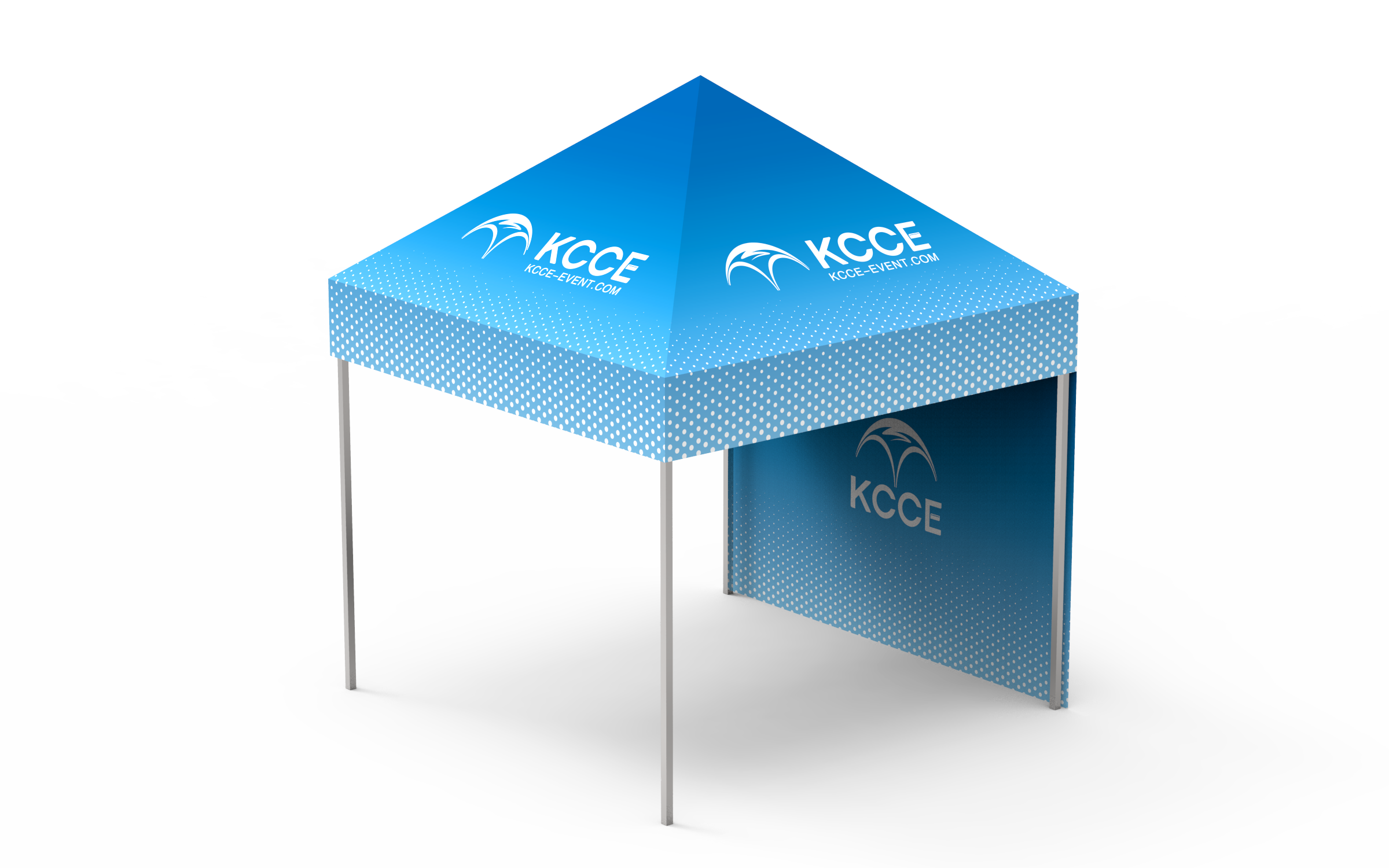
Short answer: usually not. Most 20×20 canopy tent with sides listings you see are showing the sides to sell them to you separately.
Some packages do bundle a set — typically four solid walls. But plenty of base units ship with the top and frame only. Read the “what’s included” line twice. I’ve watched buyers assume, order, and then discover they’ve got a roof and nothing else two weeks before an event.
Sidewall configurations you’ll run into:
- Solid walls — full privacy, wind block, the wedding standard
- Mesh walls — airflow and bug protection, popular for vendor booths
- Window walls — light in, weather out, good for registration or check-in areas
- Cathedral windows — the church-window look, usually a premium option
Cost per sidewall varies by type and fabric, and the delta between a bare tent and a fully walled one can easily run a few hundred dollars. Budget for it upfront. A 20×20 canopy tent with sides cheap is a phrase people search for, and the honest answer is that “cheap” and “complete” rarely live in the same listing.
How Many People Fit Under a 20×20?
400 square feet. That’s the number.
For 20×20 canopy tent seating capacity, here’s the working math:
- Round tables (60-inch, 8 per table): about 40 guests
- Rectangular tables (6-foot, 6–8 per table): about 48 guests
- Standing/cocktail: noticeably more, but comfort drops fast
Those are the numbers the industry tends to quote, and they hold up in practice — with one caveat. Every square foot you give to a dance floor, buffet line, or bar comes straight out of seating. A dance floor eats a serious chunk. A buffet table plus a bar can knock your comfortable seated count down by a table or two.
So when someone asks what size canopy tent do I need for 20×20 space — well, you already have the space. The real question is how many bodies you’re putting in it and what else needs floor. Sketch it on paper before you commit. I’ve seen a 40-guest plan turn into a 32-guest reality because nobody accounted for the cake table.
Can One Person Set Up a 20×20 Canopy Tent?
No. Not safely. Let me be blunt about 20×20 canopy tent setup, because this is where buyers get burned.
A 20×20 pop-up typically weighs 80–120 lbs in the bag. A commercial frame tent runs 120–200+ lbs, sometimes more with the fabric. One person can drag the bag. One person cannot reliably walk a 20-foot frame open without twisting it or losing control of a leg.
Two people minimum for a pop-up. Two to three for a frame tent. Pole tents want a crew.
The pop-up sequence, roughly: unbag it, stand it on its feet, two people walk opposite corners outward until the frame locks, then push up the center. Ten to fifteen minutes if nothing fights you.
Frame tents are slower — lay out the frame, connect the truss sections, lift it, then pull the top over. Thirty to sixty minutes is realistic.
And here’s the part that matters more than setup: anchoring. A canopy with no weights is a kite. Use canopy tent weights or stakes on every leg, every time, even on a calm morning. Wind doesn’t announce itself. The buyer’s guide from KCCE Event makes the point sharply — a 15mph gust is enough to snap a leg on a tent that was marketed as heavy-duty. That’s not bad luck. That’s an unanchored or underbuilt shelter meeting normal weather.
Matching the Tent to Your Use Case
Different jobs, different tents. Here’s how I’d segment it.
20×20 canopy tent for wedding. Pole tent or frame, sides included, cathedral windows if the budget allows. You want appearance and stability, not speed. And if it’s a one-time backyard reception, run the buy-vs-rent math honestly — In my experience, renters often quote a price in the vicinity of a few hundred dollars for a 20×20. which makes buying a mid-tier frame tent look reasonable if you’ll use it again.
20×20 canopy tent for vendor events. Pop-up wins on speed, mesh walls win on airflow. You’re setting up at 6am in a field, and you’ll do it again next weekend. Buy a frame if the season is long.
20×20 canopy tent for carport. This is a semi-permanent job. You need a heavy-duty frame, real stakes or anchors, and a fabric rated for sustained sun. A pop-up will not survive a winter.
20×20 canopy tent for camping. Weight and pack size rule everything. A 100 lb canopy is not a camping canopy. Look at lighter instant shelter canopy options or size down.
20×20 canopy tent for party or backyard shade. Budget pop-up, sides optional, weights mandatory. This is the sweet spot for the $130–$400 tier.
20×20 canopy tent for storage. Frame tent, solid walls, and a plan for anchoring it against weather. Tents are shelters, not buildings.
One more thing on durability. Research on field tent shelters in polar regions — published in Polar Record by Yan and colleagues — examined how shelter design holds up under genuinely punishing conditions. The takeaway for ordinary buyers is unglamorous: fabric, frame, and anchoring determine survival, not marketing language. If you want a 20×20 canopy tent heavy duty enough for repeated festival and camping use, judge it on those three things.
Key Specifications and Materials
The spec sheet is where $130 and $1,500 tents reveal themselves. Fabric is the first tell: Budget units commonly use lighter-weight oxford polyester, while commercial frames typically use heavier-denier fabric with higher fabric weight. often with a PVC or PE coating rated for 3–5 years of UV exposure. Top-tier canopies carry CPAI-84 or NFPA 701 flame certificates printed on the fabric — ask for the certificate number, because “flame retardant” in a listing means nothing without it.
Frame specs matter just as much. Budget pop-ups commonly use steel or aluminum legs with relatively thin walls, while commercial frames typically use larger-diameter aluminum with thicker walls. with reinforced foot pads and nylon or bronze bushings at every joint. Wind ratings, when honestly stated, follow the old Florida Building Code product-approval test protocols (now referenced under FBC 2023 Section 3103 for temporary structures) — Engineered frames are often marketed with a tested wind rating, according to brand specifications. when properly anchored, while a $130 pop-up has no rating at all.
Frame Construction and Durability
Frame construction is where durability lives or dies, and the failure points are predictable. On pop-up canopies, the scissor hinges and plastic sliders are the first to go — a bent truss after one gusty weekend is the classic $130 tent death. Commercial frames use bolted or pinned truss sections with cross-bracing, so a damaged segment can be swapped instead of scrapping the whole tent.
Look at the joints. Budget: riveted steel, no bushings. Mid-tier ($400–$800): aluminum with nylon bushings. Heavy-duty ($1,000+): aluminum with bronze or sealed bearings and hexagonal leg profiles that resist twist. Wall thickness is the spec most listings hide — 1.5mm minimum for recurring commercial use, 2.0mm for anything you’ll leave up for weeks.
Maintenance follows from this: inspect every pin and bushing before each season, touch up scratched powder coat to stop rust, and never store a frame wet. A $1,200 frame stored dry and inspected annually will outlast three $400 tents — that’s the real math behind the price tiers.
Sidewall Options and Configurations
Sides are the most under-specified part of any 20×20 purchase, and the configuration you need depends entirely on your event. The common options:
- Solid walls (usually 4 per set): full wind block, best for catering back-of-house or vendor booths. Often $30–$80 each.
- Cathedral windows: solid with clear PVC panels, popular for weddings — lets light in without a full clear wall.
- Clear walls: full PVC, greenhouse effect in summer, so pair with a mesh or open side for airflow.
- Mesh/screen walls: bug protection with ventilation, the right call for food service in summer.
- Half walls / rail walls: bar-height coverage, common for festival vendor rows.
Configuration matters for code too: a fully enclosed 400 sq ft tent with solid walls on all four sides triggers egress requirements under the IFC — typically two exits. Leave one long side open or use mesh and you usually sidestep that. Buy sides as a set from the same manufacturer; mismatched grommet spacing is the #1 reason aftermarket walls don’t fit.
Best Uses and Event Scenarios
Match the tent to the scenario, not the other way around. A 20×20 pop-up is the right tool for a one-off birthday, a tailgate, or a farmers-market stall — 5–15 minutes, two people, done. It’s the wrong tool for anything you’ll leave up overnight in an open field.
Frame tents are built for recurring commercial use: weekend festival vendor rows, dealership activations, recurring farmers markets. The experiential-marketing crowd buying branded canopies for repeated activations (as the National Law Review noted) is buying frames, not pop-ups — because a bent truss mid-season kills the activation.
Pole tents own the wedding and formal-event look, but they need staking and a crew — 1–2 hours for a 20×20, and they don’t go on pavement without ballast.
Weather decides the rest: anything above ~25 mph sustained gusts means weights on every leg plus stakes, and above 35 mph you take it down. Rain is fine on a frame; a pop-up’s flat-ish roof pools water and sags — always pitch with a slight peak.
How to Choose the Right 20×20 Canopy Tent
Run this checklist before you buy.
By event type and frequency: one event → pop-up ($130–$400). Recurring (5+ per season) → commercial frame ($500–$1,500+). Formal/wedding look → pole tent ($400–$1,200+).
By headcount: 400 sq ft seats ~40 at 60″ rounds or ~48 at 8′ rectangles; standing cocktail capacity runs 60–80. If you need more, size up rather than cram.
By weather: coastal or gusty sites demand an engineered frame with a published wind rating and a full ballast kit (Leg weights are commonly specified per leg, with heavier weights generally recommended for stability.). Calm inland sites can run lighter.
By regulation: over 400 sq ft used for assembly, confirm your local fire marshal’s permit and flame-cert (NFPA 701 / CPAI-84) requirements before ordering.
By total cost: add sides ($120–$320 for four), weights, stakes, and freight — a $250 tent with $200 of accessories isn’t beating a $400 all-in package.
20×20 vs. 20×40 comparison: doubling to 20×40 gives 800 sq ft — roughly 80 seated at rounds — but also doubles weight (200–400+ lbs), needs a 3–4 person crew, and crosses the 400 sq ft threshold into near-certain permitting. If your guest count sits at 45–55, the 20×20 plus an open side usually beats the 20×40 on cost, crew, and code headaches. Only size up when you’re consistently over 60 seated.
סיכום
Decide pop-up or frame before you compare a single price. That one call eliminates half the listings and most of the regret. Ask yourself: is this a one-time event or a recurring need? Then check two things before checkout — whether sides are included, and what the thing actually weighs. Those are the details that separate a good buy from a bag of poles in your garage.
שאלות נפוצות
Q: What size tent do I need for 20 people?
答: For 20 seated guests at round tables, a 20×20 canopy tent is generous — you’d have room for tables plus a small buffet or bar. A 15×15 can work for 20 people in a tighter layout, but a 20×20 gives you breathing room and better flow. If you’re planning a 20×20 canopy tent for party use with standing guests, 20 people will feel almost empty.
Q: Can you use a canopy as a tent?
答: Yes, with caveats. A 20×20 canopy tent is an outdoor canopy shelter — it provides shade and light rain protection, not full enclosure. Add canopy tent sidewalls and you get privacy and wind block. For camping, a canopy works as a covered common area, but it isn’t a sealed sleeping shelter and shouldn’t be treated as one in bad weather.
Q: How much to rent a tent per day?
答: Rental pricing varies by market, but in my experience a 20×20 rental often lands around $500 for a single event, delivery and setup frequently extra. That’s the number that pushes people toward buying. Compare a rental quote against a mid-tier frame tent purchase — if you have two or three events coming, buying usually wins.
Q: Is it cheaper to buy or rent a tent?
答: One event, rent. Two or more, buy. A budget 20×20 pop-up canopy runs $130–$400; a commercial frame tent runs $500–$1,500+. If a single rental quote is near $500, the math tilts toward purchase fast — provided you have storage space and two people available for setup. That last part is the catch nobody mentions.
Q: Does a 20×20 canopy tent come with sides?
答: Most don’t, or only bundle a partial set. Always check the “what’s included” line. A 20×20 canopy tent with sides sold as a package exists, but base units commonly ship with top and frame only. Budget separately for canopy tent sidewalls — solid, mesh, window, or cathedral — and factor that into your total.
Q: How much does a 20×20 canopy tent weigh?
答: Pop-ups typically run 80–120 lbs in the bag; commercial frame tents run 120–200+ lbs. That weight is why transport and storage matter as much as price. Measure your vehicle and your garage before ordering a 20×20 canopy tent for sale online — freight delivery of a 200 lb item to your driveway is a different experience than carrying a box inside.
Q: Can one person set up a 20×20 canopy tent?
答: Not safely. Two people minimum for a pop-up, two to three for a frame tent. A 20-foot span is too much for one person to control, especially in any breeze. And anchor it every time — canopy tent weights or stakes on all legs. An unanchored 20×20 canopy tent is a wind hazard, full stop.
Q: Where can I find a 20×20 canopy tent near me?
答: Local event rental companies and party supply stores are the fastest route for 20×20 canopy tent local pickup, and many offer 20×20 canopy tent rental near me options with delivery. For purchase, check whether a 20×20 canopy tent store nearby stocks the size — most don’t, and you’ll be ordering freight. Confirm 20×20 canopy tent in stock near me status before you plan around a pickup date.
הפניות
1. The Right Canopy Tent For Events: A Buyer’s Guide 2026 – kcce-event.com
2. Pricing for Wind-Resistant Pop Up Canopy Tents: Commercial Costs, Engineering, and Field ROI – iconicdisplays.com
3. U.S. Festival Brands Increase Investment in Branded Canopy Tents – natlawreview.com
4. A critical review of design and use of field tent shelters in polar regions – researchgate.net
5. Polar Field Tent Shelters and Well-Being of Users – digitalcommons.unl.edu