
Custom Inflatable Tent Factory: OEM Workflow & How to Vet a Direct Source
A buyer-side guide to sourcing factory-direct: what a real inflatable tent factory controls in-house, how the OEM process runs from artwork to shipment, and the checks that separate makers from resellers. KCCE has 20 years of manufacturing experience.
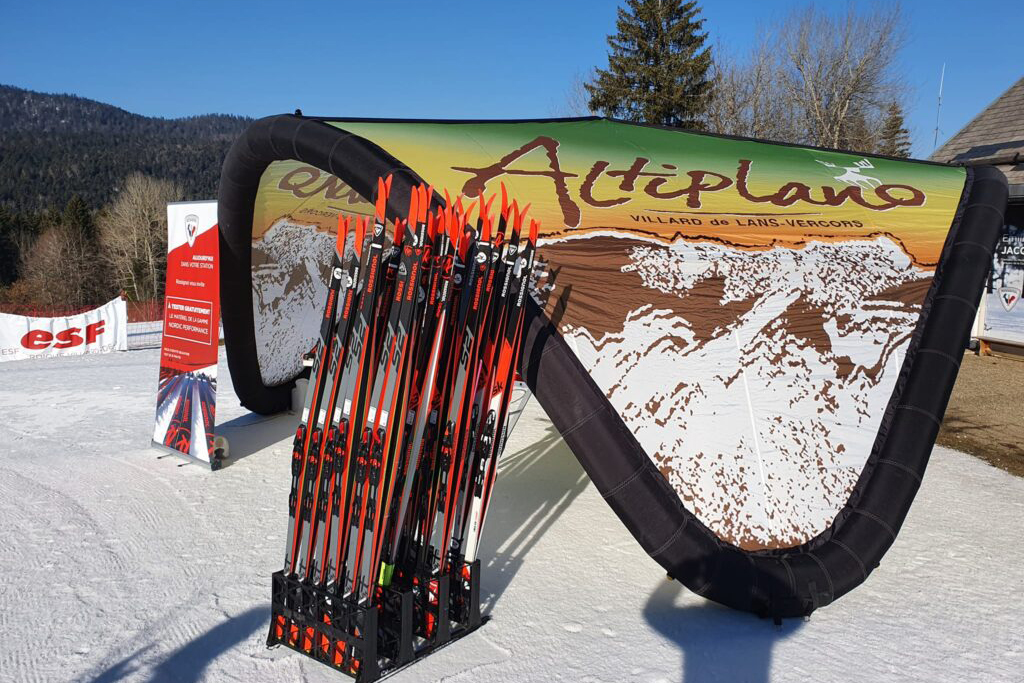
A custom inflatable tent factory builds to your specification under one roof: it patterns the canopy, runs the heat-transfer printing, welds the TPU air tubes, and inflates every unit before packing. KCCE has manufactured since 2006, quotes custom print from 1 unit, and supports OEM/ODM with private-label packing.
Straight From the Factory Floor
These are the structures that came out of our production line and were installed at the client site — the photos were taken after the crew had them standing.
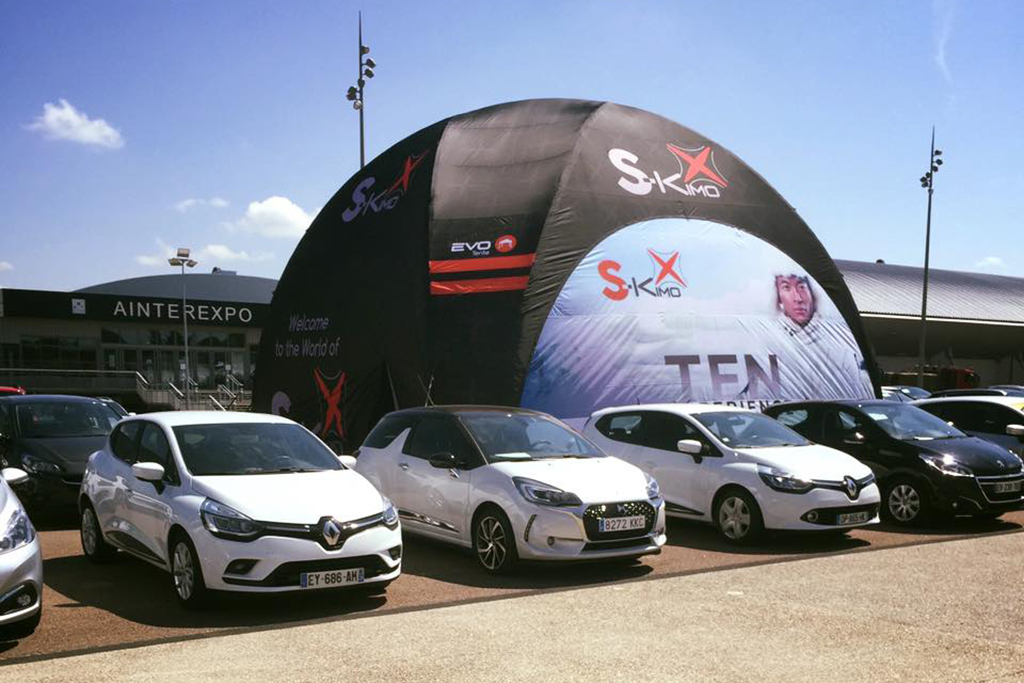
Dome Tents Used as a Car Park Display Line
A row of dark branded inflatable dome tents set up beside parked cars, turning a car park edge into a branded frontage.
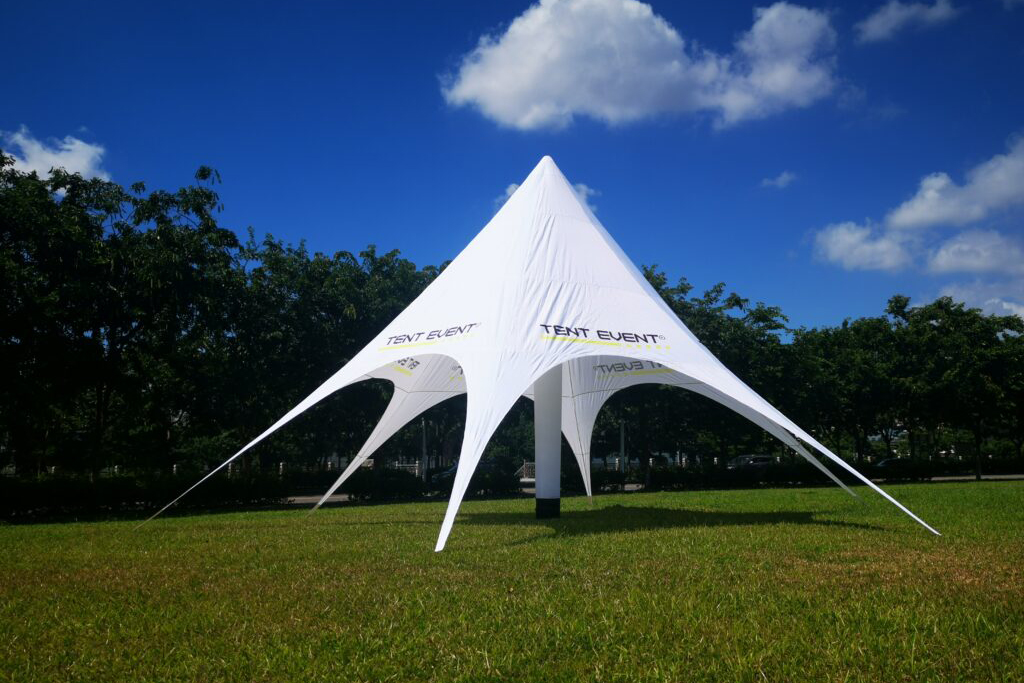
White Spider Tent with Roof-Panel Sponsor Marks
A white spider inflatable tent with sponsor marks on the roof panels, set on a lawn as a spectator-side structure.
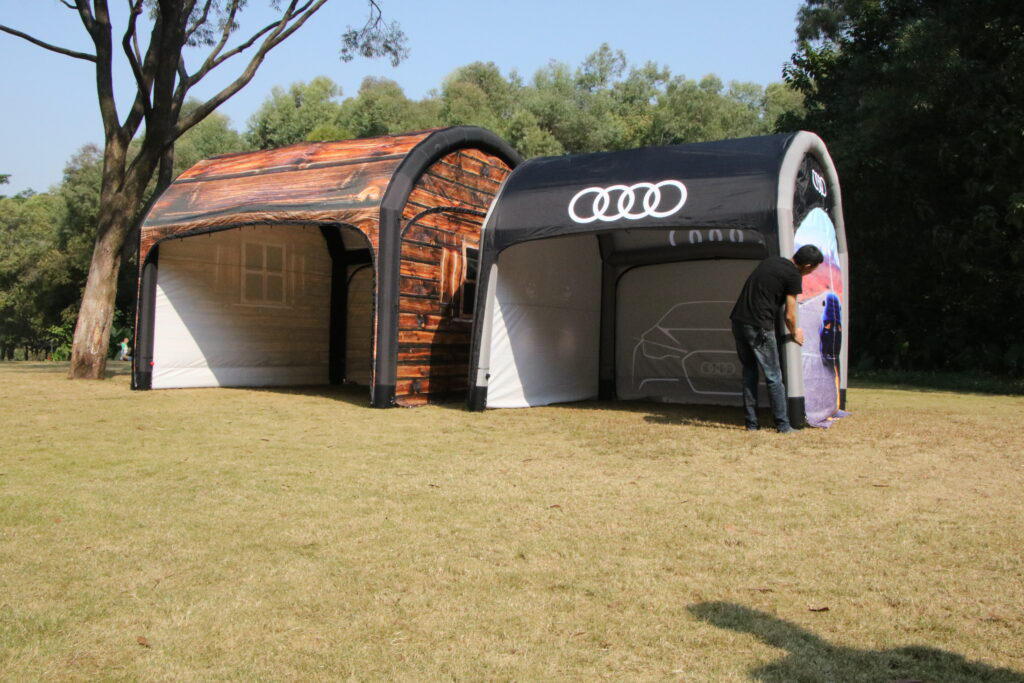
Tunnel Tent with an Orange Printed Front Panel
A white inflatable tunnel tent with an orange branded front panel, erected on grass at the edge of a public event site.

Linked Tunnel Tents Forming an Exhibition Row
Several branded inflatable tunnel tents linked in a row to make a continuous covered corridor at an exhibition site.
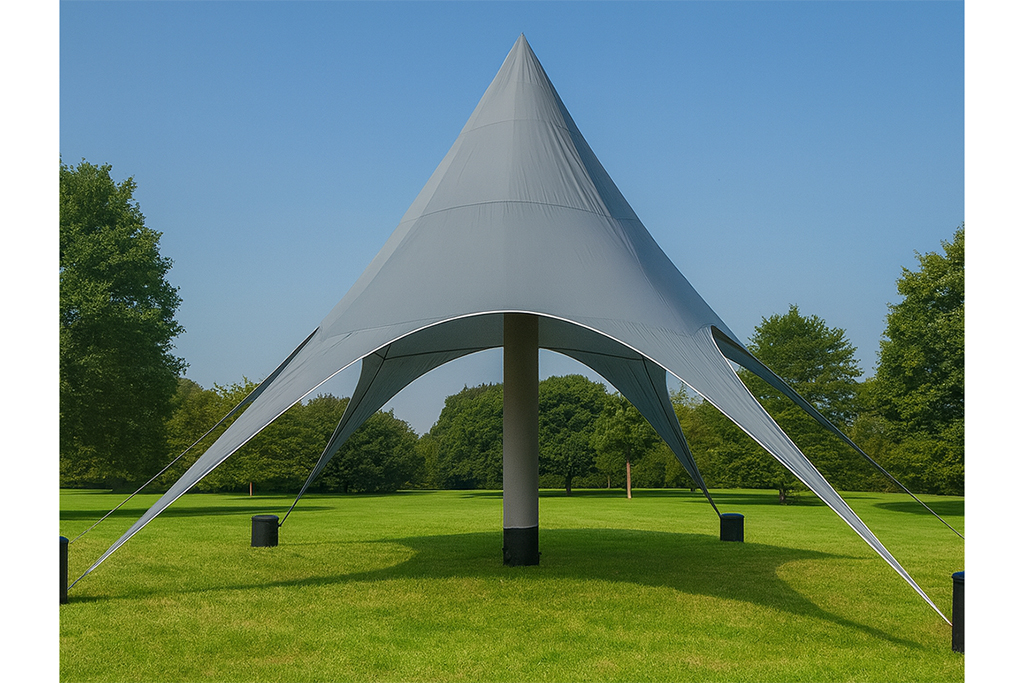
Star-Shaped Inflatable Structure as a Brand Display
A blue star-profile inflatable structure with printed peaks, used as a standalone brand marker on a lawn.
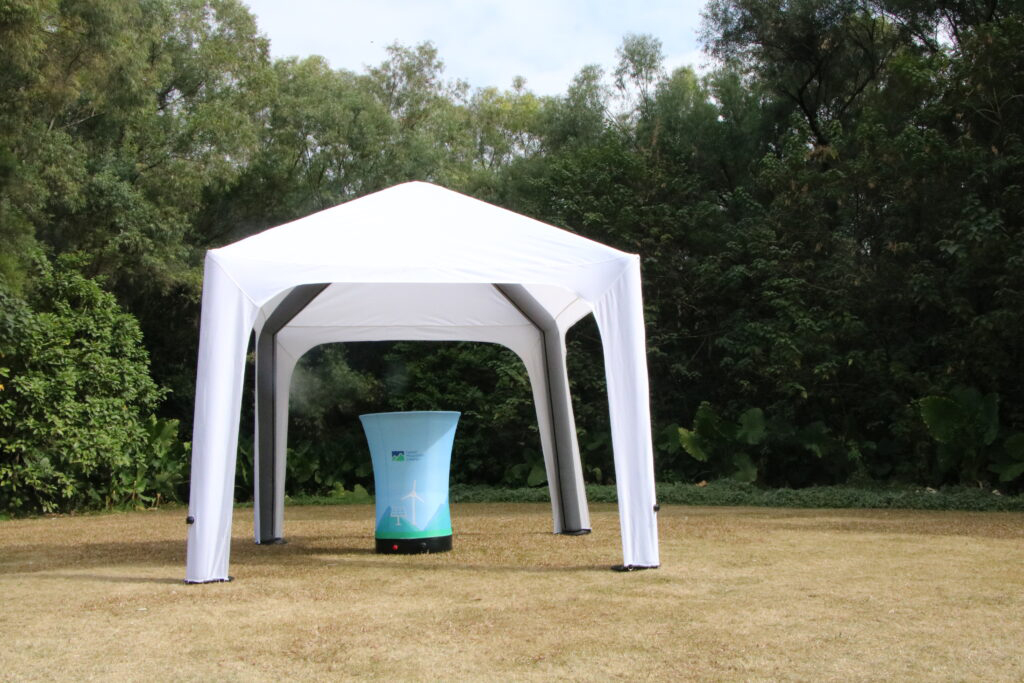
Four-Column Inflatable Pavilion with an Open Side
A white inflatable pavilion with four square columns and an open front, set up as a small stand with a bin inside.
What “Factory” Means Here
The word factory gets used loosely in this trade. A true custom inflatable tent factory is the company that owns the production floor: it turns your artwork into cut patterns, prints the canopy panels in-house, welds the TPU air tubes, assembles the tents, and inflates finished units before they are packed. A trading company, by contrast, relays your specification to someone else’s line and marks up the result.
The distinction matters for three practical reasons: design changes reach the patterning and printing teams directly instead of passing through middlemen; the physical sample comes from the same line that runs your bulk order; and the people answering your technical questions have the product manuals on their desk, because they wrote them.
KCCE has manufactured inflatable structures since 2006 — tents, columns and arches — across 13 documented tent platforms, with custom printing from a single unit and OEM/ODM support for private-label packing.
What the Factory Controls In-House
Four stages decide the quality of a custom inflatable tent — ask any supplier which of the four they actually perform.
Patterning & sampling
- Your artwork or sketch is translated into cut patterns before any fabric is cut.
- A physical sample can be produced from the same line that would run the bulk order.
Heat-transfer printing
- Canopy panels are printed in-house before assembly, which keeps registration and colour under factory control.
- Coverage runs from a single logo panel to a full branded wrap, walls included.
Air-frame welding
- The TPU inner liners that hold pressure on air-tight models are welded on site.
- Cloth covers for columns and arches are sewn to fit the same inner layers.
Inflation test & packing
- Every unit is inflated before packing — seals and valves are proven on the real product.
- OEM orders can ship in private-label packing with branded documentation.
The OEM / ODM Workflow
Six stages from first email to shipped cartons. Each has a defined hand-off, so nothing depends on a phone call you cannot reference later.
| Stage | What you provide | What the factory returns |
|---|---|---|
| 1. Enquiry | Footprint or platform, wall set, market, usage | Closest documented platform + a written quote |
| 2. Artwork | Vector files at final size | A print proof for your approval |
| 3. Approval | Written approval of proof and spec | Production slot on the line |
| 4. Production | — | In-house printing, welding, assembly |
| 5. Pre-shipment | — | Inflation test of every unit + production photos |
| 6. Shipment | Forwarder details (or ask for CIF) | Export documentation; FOB or CIF terms |
ODM projects start one step earlier: instead of finished artwork, you bring a market need and the factory proposes the platform, size and branding layout. Both routes end the same way — a written quote confirmed after design approval.
Reading the Product Manuals
The manuals are the single fastest credibility check in this trade.
What the manuals list per model
- The documented size ladder — e.g. AI runs 2.5M and 3M, the N series spans 3×3M to 5×10M.
- The number of installers needed to inflate, from 1 on the AI, AII and smallest U sizes to 4–6 on the XII at 10M.
- Valve counts per model — 1 on AII, 2 on U/F/N, up to 9 on the XII, inflated in numbered order.
What the accessories bag contains
- Eight ground stakes, eight guy ropes, two TPU repair patches.
- Spare inflation and safety valves matched to the model.
- A printed user manual — the same document you can request before ordering.
Why this matters when vetting
- A real factory can send these manuals before you commit — they are its own documents.
- The level of detail (numbered valve order, per-model valve counts) only comes from a maker that engineers the product.
- Resellers usually cannot produce manuals for the exact models they quote.
Vetting a Direct Source
Five checks, one round of emails. Score every candidate against the same list.
| Check | Ask for it | A real factory looks like |
|---|---|---|
| Live production video | A walk-through of cutting, printing and welding floors | Shows all three areas on one site, unedited |
| Process ownership | “Which of the four stages do you perform?” | Answers patterning, printing, welding and testing directly |
| Product manuals | Manuals for the exact models quoted | Sends printed KCCE manuals with per-model data |
| Sample source | “Which line runs my sample?” | Same line that runs bulk |
| Références | One client in your market segment | Provides a verifiable reference project |
One warning sign deserves its own mention: a supplier who claims generic material names instead of naming the fabric and TPU inner-liner construction. The build sheet — Oxford cloth canopy over welded TPU air tubes — is standard at KCCE and stated in writing on every quote.
Ordering & Communications
Clear inputs at enquiry stage are what keep the six-stage workflow on schedule.
Your first enquiry should include
- The footprint you need, or the platform if you already know it.
- Wall and accessory preference — open front, closed bay, awnings.
- Artwork status: final vector, or in design (ODM route).
- Your market and how the tent will be used.
How quoting works
- The request is mapped to the closest documented platform — no invented sizes.
- Pricing is quoted per project and confirmed in writing after design approval.
- MOQ for custom print is 1 unit; volume tiers apply as quantity grows.
Staying in control during production
- Request production photos of your units during the build.
- Keep the approved proof on file — it is the QC reference for print registration.
- Confirm packing and labelling requirements before production starts.
Platform Reference for Custom Orders
All figures come from the printed manuals. “Installers” is the crew needed to inflate the tent, not a capacity. Every platform accepts custom printing.
| Series | Documented sizes | Installers | Valves | Note |
|---|---|---|---|---|
| AI | 2.5M, 3M | 1 | 4 (reducible to 1) | Compact; hook-and-loop canopy |
| AII | 3M, 4M | 1 | 1 | Smallest; iron block supplied |
| U | 3M, 4M, 5M | 1 to 1-2 | 2 | Bar bag supplied |
| VI | 4M, 5M, 6M | 1 to 2-3 | 3 | Bar bag supplied |
| VII | 5M, 6M | 1-2 to 2-3 | 3 (reducible to 1) | Bar bag supplied |
| F | 3×3M, 4×4M | 2-3 | 2 | Square; reversible back wall options |
| N | 3×3M to 5×10M | 3 to 3-4 | 2 | Widest size ladder |
| X | 3M to 8M | 2 to 4-5 | Multiple | Connectors, awnings, banners |
| X6 | 5M to 8M | 2-4 to 3-4 | 6 | Connectors |
| XII | 4M, 6M, 8M, 10M | 1-2 to 4-6 | 9 (numbered order) | Largest documented sizes |
| XL-A | 4.5×3M to 7.5×4.8M | 1-2 to 2-3 | 5 (reducible) | Two connecting-cloth widths |
| XL-B | 8×4.5M, 9.4×5.5M | 2-3 | 7 (reducible) | Wide rectangular footprints |
| Inflatable XIC | Confirmed with your quote | — | Continuous blower | Blower-driven |
Custom Tents in Action
Factory builds in the field: an OEM colourway, a show-floor booth and a branded festival marquee.
Tent in a Client's Own Colourway
A fully customised inflatable tent produced in the client's OEM colour scheme, from canopy colour through printed graphics.
- Client colourway
- OEM build
- Full custom print
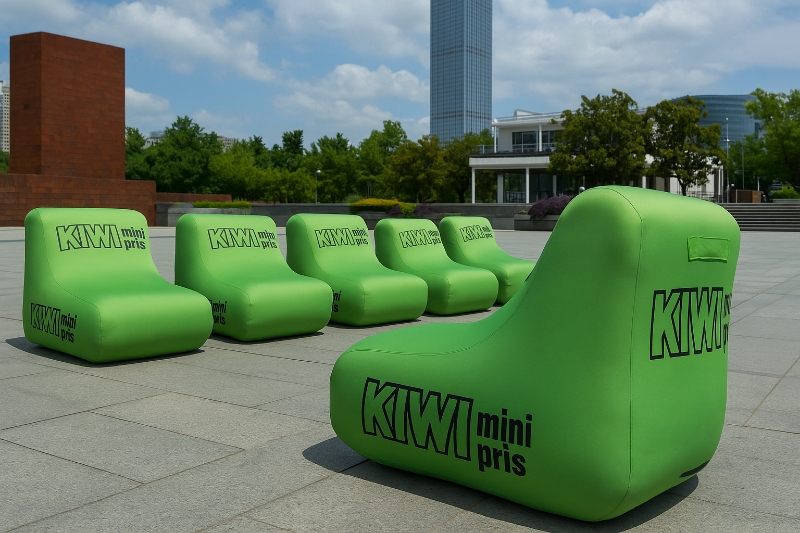
Booth Built for a Trade Show
An inflatable tent assembled as a working trade show booth, showing the factory build in its end-use environment on the show floor.
- Show-floor build
- Custom booth
- End-use verified
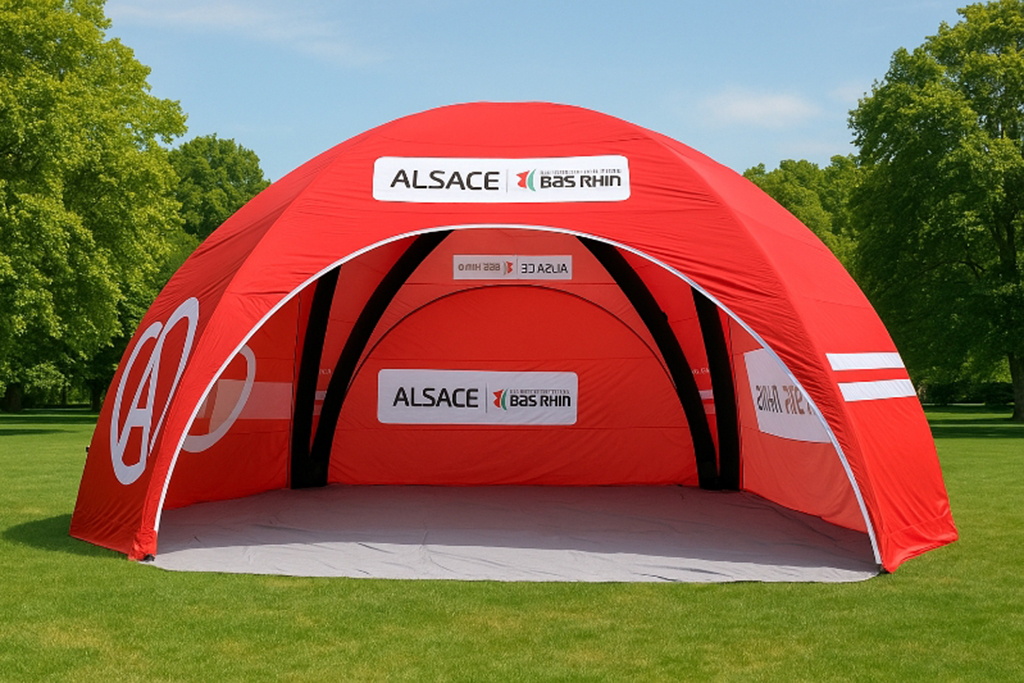
Branded Marquee for a Festival
A red branded event tent delivered as a festival marquee, printed and built to order by the factory for the organiser's artwork.
- Festival marquee
- Branded canopy
- Made to order
A: Four independent layers: the platform series (13 documented KCCE platforms from 2.5M to 10M), the size within that series' ladder, the wall and accessory configuration, and the printed artwork. Colour is chosen per order rather than picked from a shelf, and OEM/ODM projects add private-label packing and branded documentation.
A: Ask for a live video walk-through of the cutting, printing and welding floors; ask which processes are in-house; and ask for the printed product manuals for the models you are quoting — a maker has them, a reseller usually does not. You can also request production photos of your actual order during the build, which KCCE provides as standard.
A: You send vector artwork plus the platform, size and wall choices. The factory returns a print proof for approval; production starts after you approve the design in writing. During the build, units are inflated and checked before packing. Export documentation is prepared for your forwarder, with FOB and CIF options.
A: At KCCE the custom-print MOQ is 1 unit, so a single sample tent or a full fleet can come from the same production line. Volume orders receive tiered rates, and pricing is quoted per project rather than published as a fixed list.
A: KCCE's printed manuals list, per model: the documented size ladder, the number of installers needed to inflate, the valve count and numbered inflation order (nine on the XII), the standard accessories bag contents, and anchoring methods by surface. This is the level of detail a factory can prove and a middleman cannot.
A: Yes to both. On-site visits can be arranged through the sales team, and for buyers who cannot travel, live video tours and production photos of your order serve the same purpose — you see the same line that runs your build.
A: Materials are inspected before cutting and printing; artwork is compared against the approved proof for colour, scale and position; and every unit is inflated before packing so the air-frame seals and valves are proven on the real product, not on a sample.
A: The platform or footprint you have in mind, the wall and accessory set, your artwork status (final vector or in design), your market, and how you plan to use the tent. With that, the factory can map your request to the closest documented platform and quote it in writing — send it to [email protected] or via WhatsApp.


