Let’s be blunt right up front: most commercial tent suppliers won’t show you a price. You fill out a form, wait two days, and get a “request a quote” email that tells you nothing. That’s not an accident. It’s a sales tactic.
I’ve been sourcing and specifying tents for events, markets, and rental fleets for years now, and the pricing opacity in this industry still drives me up the wall. So this guide does the opposite. We’re going to talk grades, real cost tiers, bulk logistics, and how to compare suppliers without getting played. If you’re a decision-maker trying to figure out commercial tent supply, this is the version I wish someone had handed me on day one.
Quick Answer
Commercial tent supply covers the sourcing, pricing, and delivery of commercial-grade tents — typically 500D+ fabric, powder-coated or galvanized frames, and documented fire/wind ratings. Expect roughly $400–$700 for pop-ups, $1,000–$3,000 for frame tents, and $5,000+ for clearspan structures, with bulk orders and import lead times shaping the final number.
Commercial Tent Supply Comparison: Top Suppliers at a Glance
Here’s the thing about comparison tables in this niche — most of them are marketing fluff. I’m not going to invent brands I can’t verify. What I can give you is the honest structural comparison of supplier types, because that’s what actually determines your experience.
| Supplier Type | Tent Types | Typical MOQ | Pricing Transparency | Délai de livraison |
|---|---|---|---|---|
| Domestic rental-adjacent dealers | Pop-up, frame, some clearspan | 1–5 units | Low (quote-only) | 1–3 weeks |
| US-based manufacturers | Frame, clearspan, custom | 1–10 units | Medium (some list pricing) | 4–10 weeks |
| Overseas manufacturers (China, etc.) | Full range incl. inflatable | 1 pc–100+ pcs | Low to medium | 20–45 days + shipping |
| Marketplace resellers | Pop-up, canopy | 1 unit | High (listed prices) | 3–10 days |
You might be wondering why overseas MOQs sometimes show as “1 piece.” That’s real — plenty of Chinese factories list a one-piece minimum on sample or single orders. But the unit economics only make sense once you’re ordering volume. More on that below.
The takeaway: if you want commercial tent supply wholesale terms, you’re almost always going overseas or to a domestic manufacturer with a real factory behind them. Dealers and marketplace resellers are for one-offs.
What “Commercial Grade” Actually Means
This phrase gets thrown around like it’s a certification. It isn’t. There’s no single governing body stamping tents “commercial grade.” What you’re really looking at is a cluster of specs that, together, separate a tent that survives a season from one that fails the first time the wind picks up.
Four things matter:
- Fabric weight. Consumer canopies are often 200D–300D polyester. Commercial grade tents start around 500D and go up from there. Denier (the “D”) measures thread thickness — higher means heavier, tougher fabric.
- Frame gauge. Thin aluminum or steel tubing bends. Commercial frames use thicker-wall aluminum or galvanized steel, and the joints are welded or reinforced rather than crimped.
- Fire ratings. In the US, tent fabric is typically tested to NFPA 701, the standard for flame propagation of textiles and films. If a supplier can’t produce a test report, walk away.
- Wind ratings. This is the one buyers ignore most — and it’s the one that gets tents airborne. The industry body many manufacturers reference is IFAI (the Industrial Fabrics Association International), which publishes guidance on tent wind loads and anchoring. A tent without a stated wind rating is a liability, not an asset.
A commercial grade tent should come with a warranty that reflects these specs — commonly a multi-year frame warranty and a shorter fabric warranty. When you compare suppliers, the warranty terms tell you more about real quality than the marketing copy ever will. I’ve noticed that the suppliers confident in their fabric are the ones who put the denier and the test standard right on the spec sheet.
Commercial Tent Pricing: What You’ll Really Pay
Now the part everyone wants. How much does a commercial tent cost? Here are the tiers, and yes, these are ranges because pricing genuinely swings with size, fabric, and order volume.
| Tier | Typical Size Range | Price Range (per unit) | Idéal pour |
|---|---|---|---|
| Pop-up / canopy | 10×10 to 10×20 | ~$400–$700 | Markets, quick setups |
| Frame tent | 10×20 to 20×40 | ~$1,000–$3,000 | Catering, recurring events |
| Heavy-duty / high-wind | 20×30 and up | ~$2,500–$6,000+ | High-wind areas, rentals |
| Clearspan structure | 20×40 and up | ~$5,000–$20,000+ | Weddings, large venues |
Two caveats. First, that 20×30 canopy tent you see people asking about on forums sits right in the heavy-duty band — it’s not a pop-up, and it shouldn’t be priced like one. Second, custom printing and branding push you up the scale fast. If you need logos on the fabric, budget for it separately.
The cheapest tent and the longest-lasting tent are almost never the same product. I’ve watched rental operators buy the bargain option, replace it in 18 months, and spend more than if they’d bought heavy-duty from the start. Do the math over five years, not one.
Buying in Bulk: MOQs, Lead Times, Shipping
If you’re buying bulk commercial tents, three numbers decide your project: minimum order quantity, production lead time, and shipping.
MOQs vary wildly. Marketplace resellers sell singles. Domestic manufacturers often want 5–10 units for custom runs. Overseas factories frequently list low or even one-piece minimums, but the pricing advantage kicks in at volume. Ask directly — don’t assume.
Lead times follow a similar pattern:
- Domestic stock: days to a couple of weeks
- Domestic custom: 4–10 weeks
- Overseas production: 20–45 days, plus ocean freight
That “plus ocean freight” is where budgets die. Sea shipping adds weeks, and you’re responsible for customs clearance and duties. Air freight is faster but brutal on cost for anything bulky. For a rental fleet or a market operation, plan your order cycle around this — if you need tents in June, you’re not ordering in May.
One more thing on logistics: tents ship heavy and bulky. Get the packed dimensions and weight per unit avant you commit, because that number drives your freight quote and your storage plan.
China vs. USA Manufacturing: Trade-Offs
This is the decision that keeps buyers up at night, so let’s not dance around it.
China wins on cost and range. Commercial tent manufacturers there produce everything from basic canopies to full inflatable and clearspan lines, and the price gap versus US production is real. The trade-offs: longer lead times, shipping and tariff exposure, and the burden of verifying quality yourself. You need to vet certifications — CE and RoHS compliance, for instance, show up on legitimate factories’ documentation. Dongguan Dacheng Outdoor Products (KCCE), for example, is a manufacturer that states full CE and RoHS compliance and ships internationally, with Europe and the US as primary markets. That’s the kind of verifiable footprint you want to see before wiring money overseas.
USA wins on speed, support, and simpler compliance. You get faster lead times, easier returns, and specs already aligned to US standards like NFPA 701. You pay for it.
My honest take: for a first order or a small fleet, domestic often makes sense despite the price. For volume buyers with a repeatable spec and the patience to manage freight, overseas is where the margin is. Either way, demand the test reports and the warranty terms in writing.
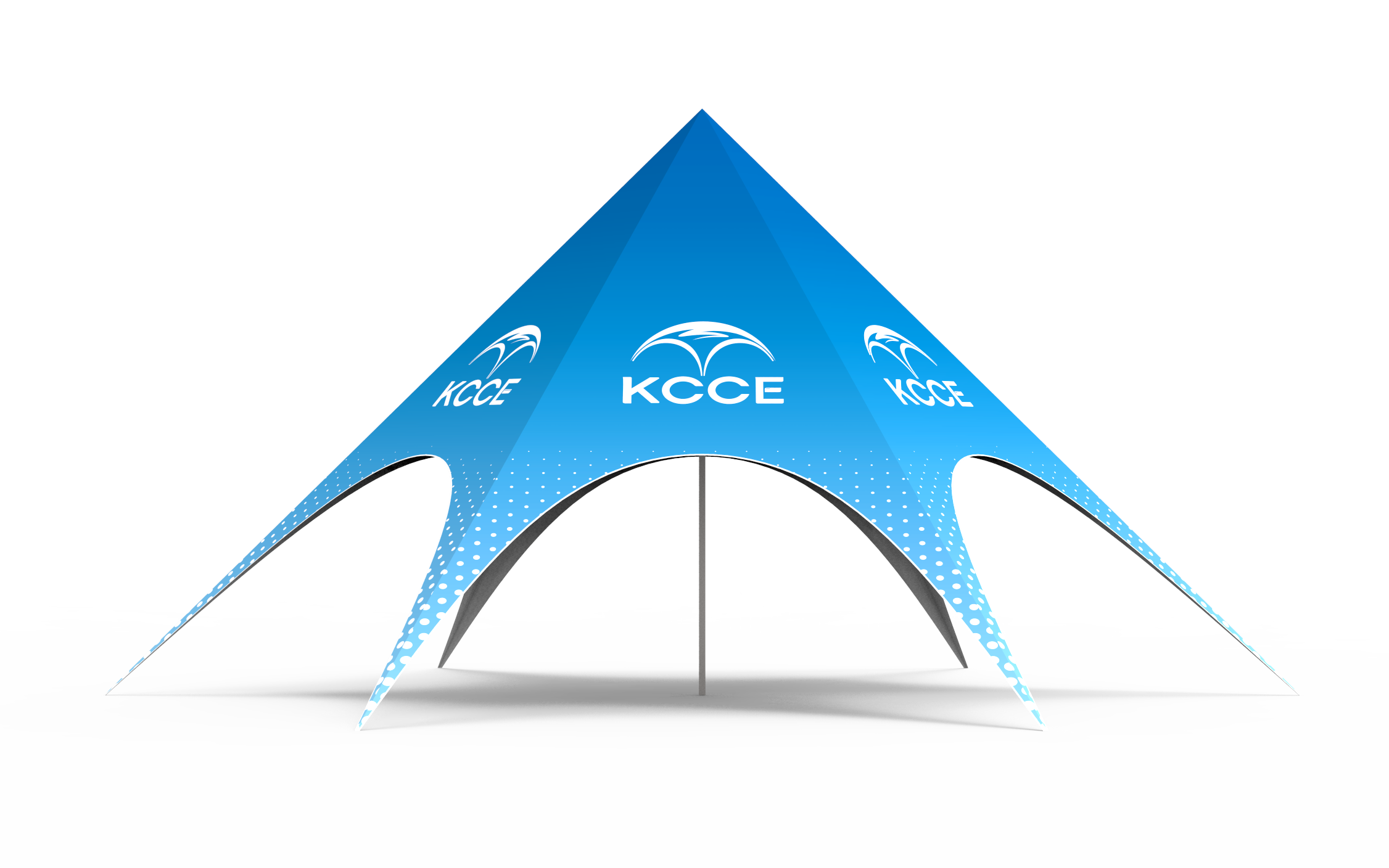
If your events lean toward visual impact and fast setup, it’s also worth looking at inflatable options — KCCE makes tentes gonflables sur mesure engineered for exhibitions and promotions, which is a different animal from a traditional frame tent but often a better fit for branding-heavy activations.
Choosing by Use Case: Rental, Catering, Market
Different buyers, different math. Let me break it down by what you’re actually doing.
Commercial tents for rental business. This is where ROI math matters most. A rental operator’s real cost isn’t the purchase price — it’s the purchase price divided by the number of events the tent survives. A cheap tent that lasts one season costs more per event than a heavy-duty tent that lasts five. Pair that with the fact that high-wind areas will destroy flimsy tents, and the case for buying up a tier is obvious. Rental clients also expect clean, sturdy event tents, so fabric quality shows up directly in your reviews.
Commercial tent for catering business. You need reliable setup, decent headroom, and fabric that handles grease, heat, and repeated cleaning. Frame tents in the 10×20 to 20×40 range are the workhorse here. Don’t cheap out on the frame — a bent leg mid-service is a disaster.
Commercial tent for outdoor market. Speed and stability. Pop-ups win on setup time, but if your market sits in a windy spot, you want the heavier fabric and a proper anchoring plan. Speaking of which —
Sizing and Setup Essentials
Getting commercial tent sizes wrong is expensive and annoying. Here’s a rough guide for seated events:
| Guest Count | Suggested Footprint |
|---|---|
| Up to 30 | 10×20 |
| 30–50 | 20×20 |
| 50–100 | 20×30 to 20×40 |
| 100–200 | 20×40 to 30×60 |
| 200+ | Multiple tents or clearspan |
These are starting points, not gospel. Seated dinners, cocktail setups, and vendor booths all need different space per person. Add room for tables, aisles, and any staging.
On anchoring: this is non-negotiable and it’s where cheap setups fail. Every tent needs a staking or weighting plan matched to your surface and your wind exposure. Grass gets stakes. Pavement gets weights — and enough of them. If you’re in a high-wind area, over-engineer this. A tent that lifts is a safety incident, not a bad day.
For a full breakdown of how one manufacturer approaches airtight, weather-resistant construction, there’s a useful Air Tight X Tent review that digs into the waterproofing and bug-proofing details — worth a read if weather resistance is your priority.
And one more option worth knowing about: the used commercial tent supply market. Rental companies retire fleets, and well-maintained used tents can be a smart entry point for a startup on a tight budget. Inspect the frame joints and fabric seams carefully — that’s where wear shows first.
Types of Commercial Tents
Let’s break down the actual categories you’ll see quoted, because “commercial tent” is a catch-all and suppliers use it loosely.
- High-peak (pole) tents. Center poles push fabric into a peak — the classic event silhouette. Sizes typically run 20×20 up to 40×40 and beyond. No interior clearance issues at center, but you lose usable floor space to the poles. Best for weddings and seated events where the look matters.
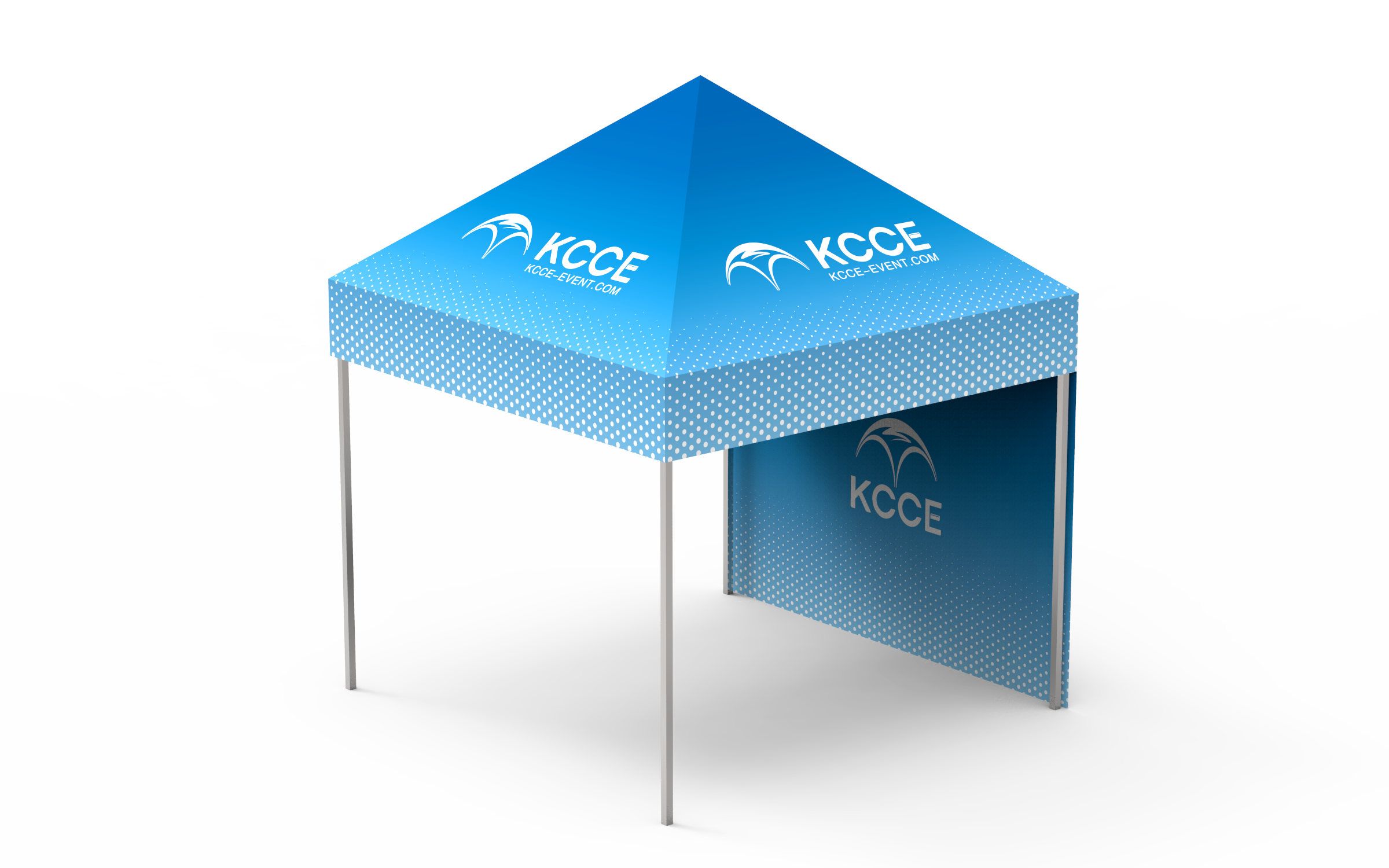
- Frame tents. A freestanding tube skeleton with no center poles — clear interior span. Common in 10×10 to 20×40 modules. This is the workhorse for markets and rental fleets because you can stake or ballast them and they expand in bays.
- Pole tents. The simplest tensioned design, guyed by ropes. Cheaper per square foot, but footprint-heavy and slower to set up.
- Clear-top / transparent tents. PVC or clear-span roofs for natural light. Great for evening events, brutal in summer heat unless you spec climate control.
- Custom / clearspan structures. Engineered aluminum box-beam frames, often 30m+ spans, wind-stamped by a structural engineer. This is the tier where permits and engineering letters become non-negotiable.
Most buyers start with frame or pole, then graduate to clearspan once they’re doing multi-day commercial events.
Key Factors When Choosing a Commercial Tent
Four variables decide whether a tent is right for you, and they’re the four most suppliers gloss over.
Taille. Match footprint to occupancy code, not vibes. A seated dinner needs roughly 10–12 sq ft per person; standing cocktail runs 6–8. A 20×40 frame tent is 800 sq ft — that’s about 65–70 seated guests with tables, less once you add a bar or stage.
Matériau. Fabric denier (500D minimum for commercial) and frame alloy matter more than color. Ask for the actual spec sheet, not “heavy duty.”
Durability. Look at frame wall thickness (measured in gauge or mm), joint construction, and whether replacement parts exist. A tent you can’t buy a replacement leg for is disposable.
Compliance. Fire rating (NFPA 701 in the US), wind rating with anchoring plan, and ADA access if it’s a public event. If a supplier can’t hand you a test report and an engineering letter on request, that’s your answer.
Commercial Tent Regulations and Permits
This is the section that saves you from a shutdown mid-event, so read it carefully.
Fire safety. In the US, tent fabric must pass NFPA 701 (Standard Methods of Fire Tests for Flame Propagation of Textiles and Films). Many jurisdictions also reference NFPA 102 (Assembly Occupancies) and the International Fire Code (IFC) Chapter 31, which governs tents over a certain size — often 400 sq ft or any tent occupied by 10+ people. The IFC requires flame-resistant materials, exit signage, and in many cases a fire watch. Your local fire marshal has final say, and they will ask for the NFPA 701 test report.
Wind loading. There’s no single national tent wind code, but ASCE 7 (Minimum Design Loads) is the engineering reference most structural engineers use to stamp clearspan tents. IFAI publishes the industry guidance manufacturers cite. Expect to need a sealed engineering letter for anything over roughly 400–700 sq ft in a permitted setting, stating the design wind speed for your region.
ADA. If the event is open to the public, the tent is a place of public accommodation. That means an accessible route, compliant entry (no steep ramps), and accessible interior circulation. The 2010 ADA Standards for Accessible Design apply — sections 206 (accessible routes) and 403 (walking surfaces) are the ones inspectors cite most.
Permis. Most municipalities require a temporary structure permit for tents above a size threshold, plus a separate fire permit if occupancy exceeds a set number. Budget 2–4 weeks for approvals. Skip this and you risk a stop-work order the morning of your event — which is a far more expensive lesson than the permit fee.
Foire aux questions
Q: What is a commercial grade tent?
R : A commercial grade tent is built to survive repeated use — typically 500D or heavier fabric, a reinforced frame, and documented fire and wind ratings such as NFPA 701 compliance. It’s not a specific certification; it’s a set of specs. If a supplier can’t show you test reports and warranty terms, it isn’t commercial grade no matter what the listing says.
Q: How much does a commercial tent cost?
R : It depends on tier. Pop-up commercial tents run roughly $400–$700. Frame tents land around $1,000–$3,000. Heavy-duty and high-wind models start around $2,500 and climb past $6,000. Clearspan structures begin around $5,000 and can exceed $20,000. Custom printing and bulk volume both shift these numbers.
Q: Where to buy commercial tents in bulk?
R : For wholesale terms, your realistic options are overseas manufacturers, US-based factories, or large domestic distributors. Compare MOQs, lead times, and shipping costs side by side. Overseas factories often list low minimums, but the pricing advantage appears at volume — and you’ll manage freight and duties yourself. Always request spec sheets and certifications before ordering.
Q: Are commercial tents worth it for rentals?
R : In my experience, yes — if you buy at the right tier. The math isn’t the purchase price; it’s cost per event over the tent’s lifespan. A cheap tent that dies in one season costs more per rental than a heavy-duty tent that lasts five. For a commercial tent for rental business, durability is the whole game.
Q: What size commercial tent do I need?
R : Start with guest count and setup style. Up to 30 seated guests fits a 10×20. Fifty to 100 needs a 20×30 to 20×40. Over 200 usually means multiple tents or a clearspan. Add space for tables, aisles, and staging. When in doubt, size up — cramped events feel worse than spacious ones.
Q: What’s the difference between commercial and standard tents?
R : Fabric weight, frame strength, and testing. Standard consumer tents use lighter fabric and thinner frames with no documented ratings. Commercial tents use heavier fabric, reinforced frames, and carry fire and wind ratings. That difference is why one survives a season and the other doesn’t.
Q: How long does it take to get bulk commercial tents?
R : Domestic stock ships in days to two weeks. Domestic custom runs take 4–10 weeks. Overseas production runs 20–45 days plus ocean freight and customs. Plan your order cycle backward from your event date — if you need tents in summer, order in spring.
Q: Should I buy new or used commercial tents?
R : Used can be a smart entry point, especially for startups. Rental companies retire fleets regularly, and well-maintained tents hold up. Inspect frame joints, fabric seams, and zippers closely. If the frame is bent or the fabric is thinning, pass — repairs cost more than the savings.
Conclusion
Here’s my one ask: don’t request a single quote. Shortlist three suppliers using the comparison table above, send each the same spec, and make them compete. You’ll learn more in that one exercise than in a month of browsing.
And keep the real question in front of you — cheapest tent or longest-lasting tent? Over five years, those two paths lead to very different bank balances.
Références
1. Research Policy – sciencedirect.com
2. EC study on new genomic techniques – food.ec.europa.eu
3. Congressional Research Service Careers – loc.gov
4. Research – brenebrown.com
5. FTC Surveillance Pricing Study – ftc.gov